
We often think of architecture as something static, steel, concrete, glass, and geometry. But human beings are not static. We are biological systems, deeply influenced by light, temperature, rhythm, and time.
This is where Circadian and neuroarchitecture enter the conversation: a design philosophy that aligns buildings with the body’s internal clock instead of ignoring it. At its core, circadian architecture asks a simple but powerful question:
What if buildings were designed not just for how we live, but for how our biology works?
What is Circadian Architecture?
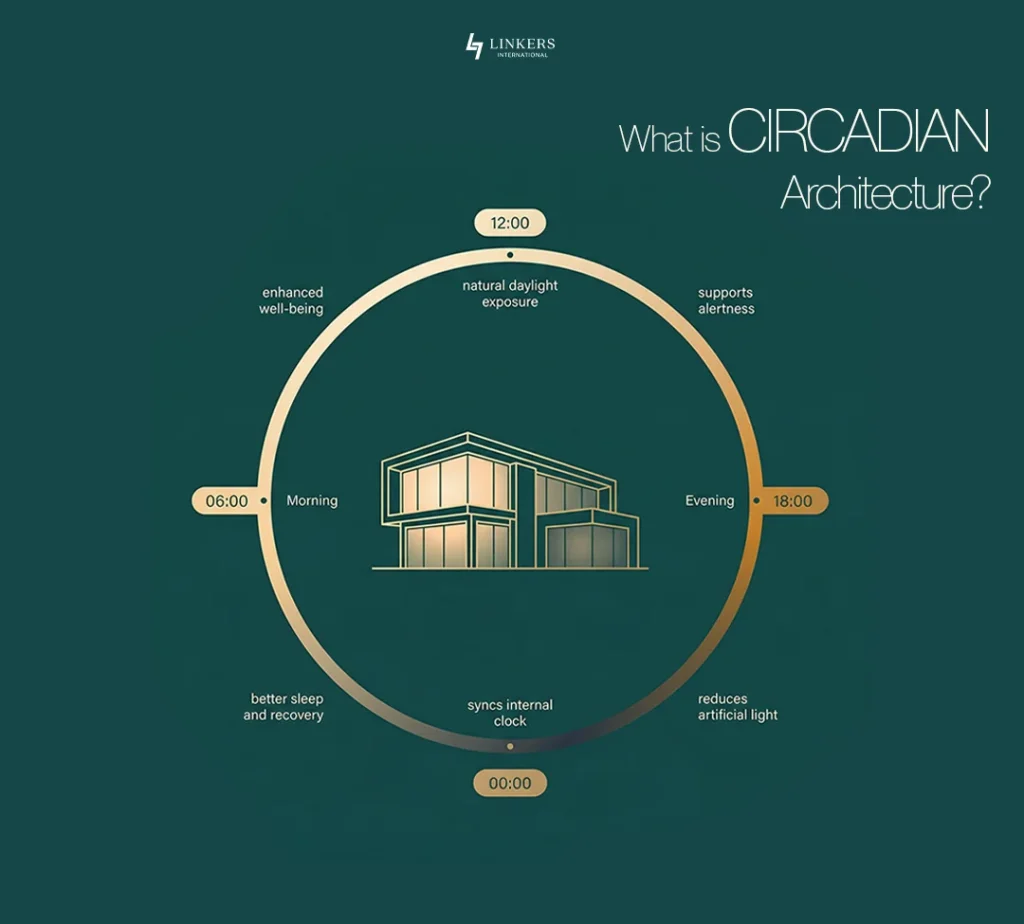
Circadian Architecture is a design approach that aligns buildings with the human body’s natural 24-hour biological rhythm. Instead of treating light, space, and environment as purely aesthetic or functional elements, it uses them as tools to support sleep, alertness, mood, and overall well-being.
By optimizing natural daylight exposure during the day, reducing disruptive artificial lighting in the evening, and carefully designing spatial orientation, circadian architecture helps the body stay in sync with its internal clock.
The result is not just visually appealing spaces, but healthier environments where people can think clearer, work better, and recover more naturally, turning architecture into a silent regulator of human biology.
The Science Behind Human Rhythms
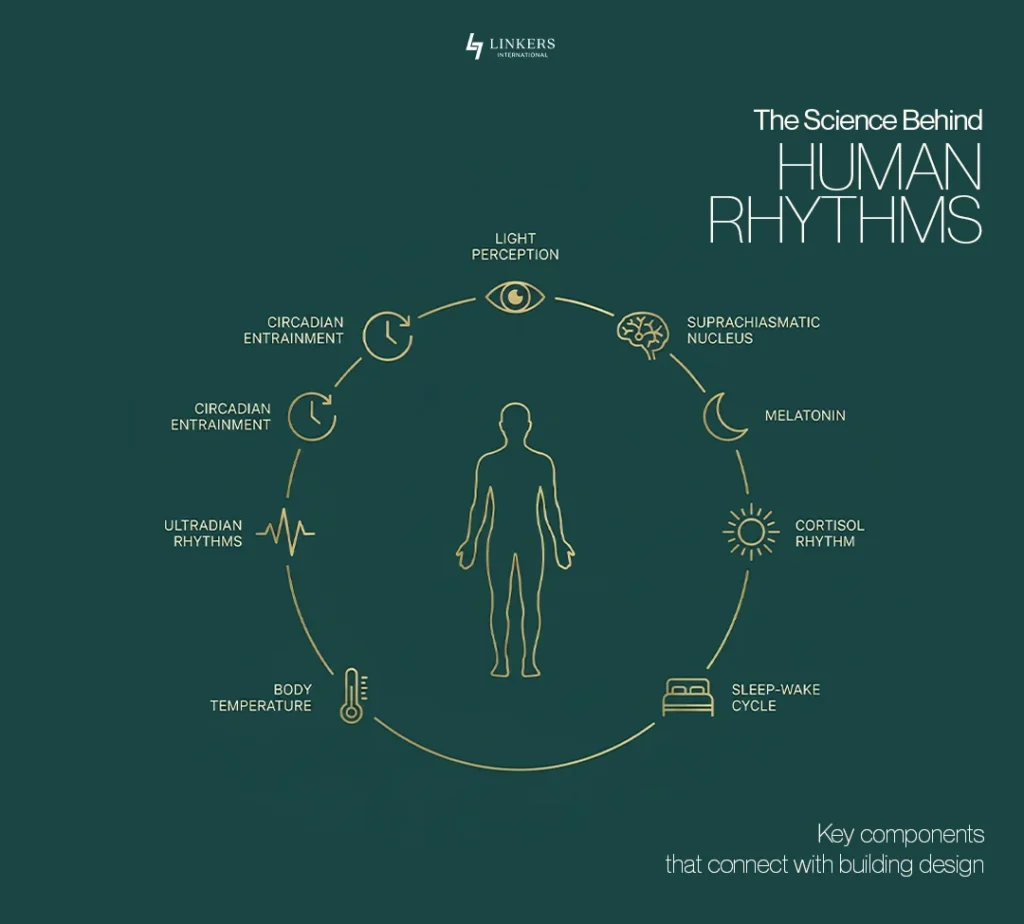
The human body runs on a roughly 24-hour cycle known as the circadian rhythm. This internal clock regulates sleep, alertness, hormone production, digestion, and even mood. Light is the most powerful signal that controls it. Modern buildings, however, are often designed with little regard for this biological system.
Here are the key components of the human circadian system that connect directly with the building design.
Light perception system (retina + brain response): controls alertness; linked to daylight, window design, and artificial lighting
Suprachiasmatic nucleus (SCN): the brain’s “master clock” that synchronizes body rhythms; influenced by consistent light-dark cycles in buildings
Melatonin production: sleep hormone affected by darkness and warm lighting; linked to evening lighting design
Cortisol rhythm: energy-boosting hormone peaking in the morning; supported by bright morning light in spaces
Sleep–wake cycle: daily rhythm guiding rest and activity; linked to bedroom darkness and quiet zoning
Body temperature rhythm: naturally rises and falls through the day; influenced by thermal comfort and ventilation design
Ultradian rhythms: short cycles of focus and fatigue (within the day); linked to workspace layout and break-friendly environments
Circadian entrainment (time syncing): how external cues reset the body clock; tied to daylight, lighting temperature, and orientation
One of the most cited examples of circadian-aware building designs are Apple Park and The Edge. Both use daylight-driven design and smart spatial planning to keep occupants aligned with natural circadian rhythms. They enhance well-being and productivity by integrating natural light, adaptive systems, and open, nature-connected work environments.
When Buildings Work Against the Body
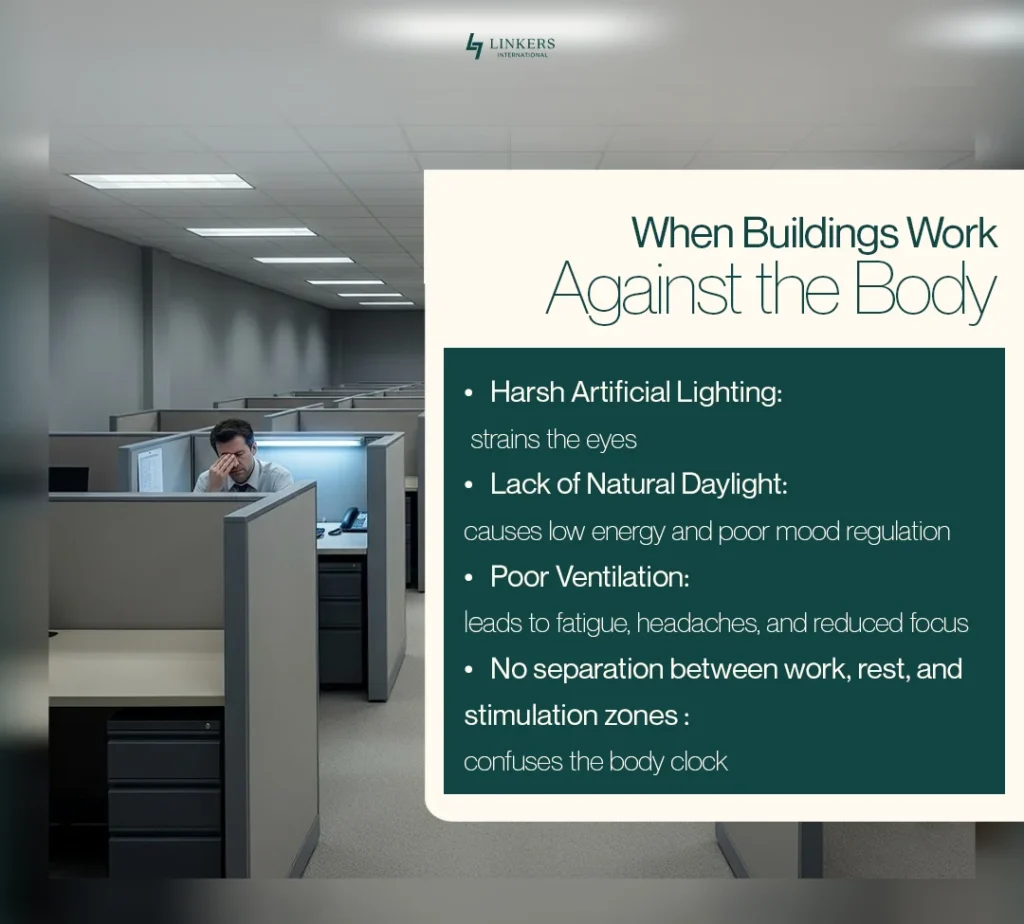
Walk into many office towers, shopping malls, or dense residential buildings and you’ll notice a pattern: artificial lighting dominates, natural light is limited, and time of day feels irrelevant.
This creates what researchers call “circadian disruption.”
Harsh artificial lighting that disrupts sleep cycles and strains the eyes
Lack of natural daylight causing low energy and poor mood regulation
Poor ventilation leading to fatigue, headaches, and reduced focus
No separation between work, rest, and stimulation zones, confusing the body clock
Constant noise and overstimulation preventing deep rest and recovery
Employees in windowless offices often report fatigue, reduced productivity, and poor sleep quality. Residents in poorly lit apartments experience similar effects, even without realizing the cause. Architecture, in these cases, is not neutral. It actively shapes human biology, often in the wrong direction.
How to Implement Principles of Circadian Architecture
Circadian architecture goes far beyond simply adding larger windows or decorative skylights to a building. It is a science-driven design philosophy that carefully integrates light, spatial orientation, material behavior, and time-based environmental responses into the architecture itself.
The goal is to create spaces using principles of circadian and architectural acoustics that work in harmony with the body’s natural biological rhythm rather than disrupting it. Every design decision, from window placement and ceiling height to lighting temperature and room orientation, is considered through the lens of human wellbeing, cognitive performance, and natural sleep-wake cycles.
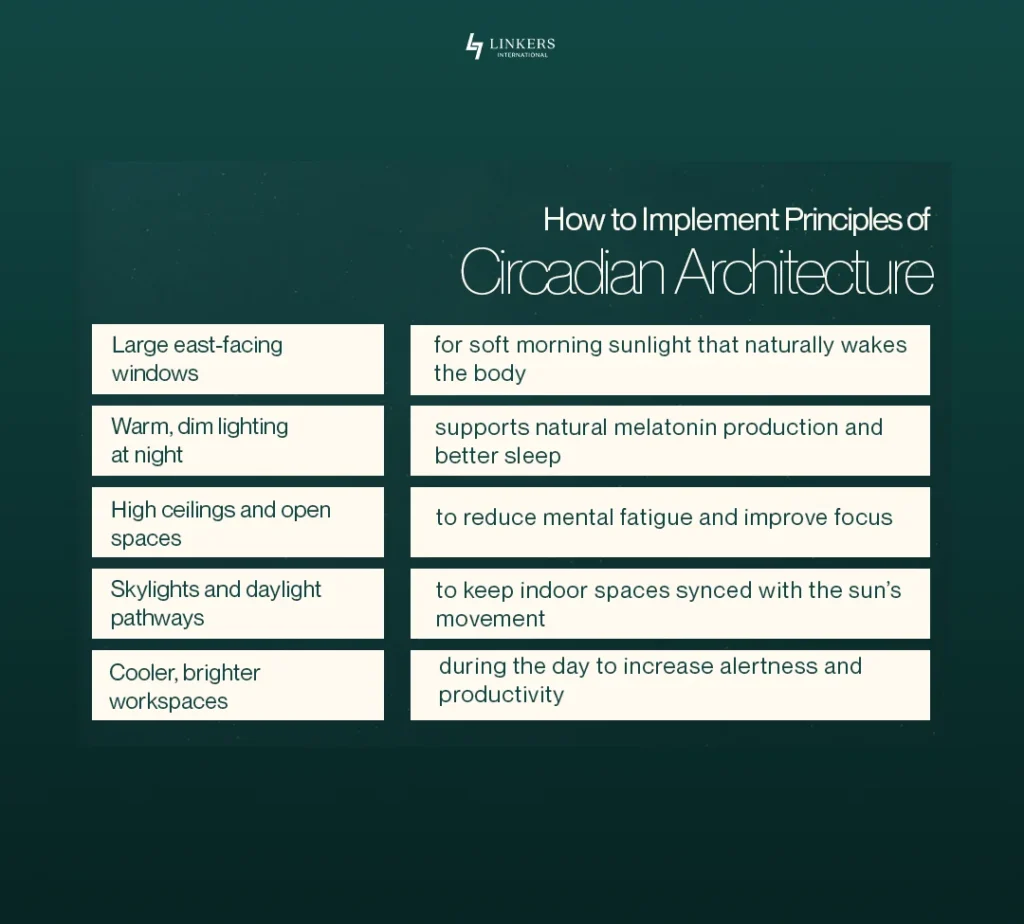
The principles of Circadian Architecture include;
- Large east-facing windows: for soft morning sunlight that naturally wakes the body
- Warm, dim lighting at night: to support natural melatonin production and better sleep
- High ceilings sails and open spaces: to reduce mental fatigue and improve focus
- Natural materials like wood, stone, and plants: to create a calming biological connection
- Skylights and daylight pathways: to keep indoor spaces synced with the sun’s movement
- Quiet, low-stimulation: bedrooms designed for deep rest and recovery
- Cooler, brighter workspaces: during the day to increase alertness and productivity
- Smart lighting systems: that change color temperature from morning to evening
- Outdoor views and courtyards: that reconnect people with natural time cycles
- Room orientations: planned around sunrise, sunset, and daily energy patterns
Residential Design and Human Recovery
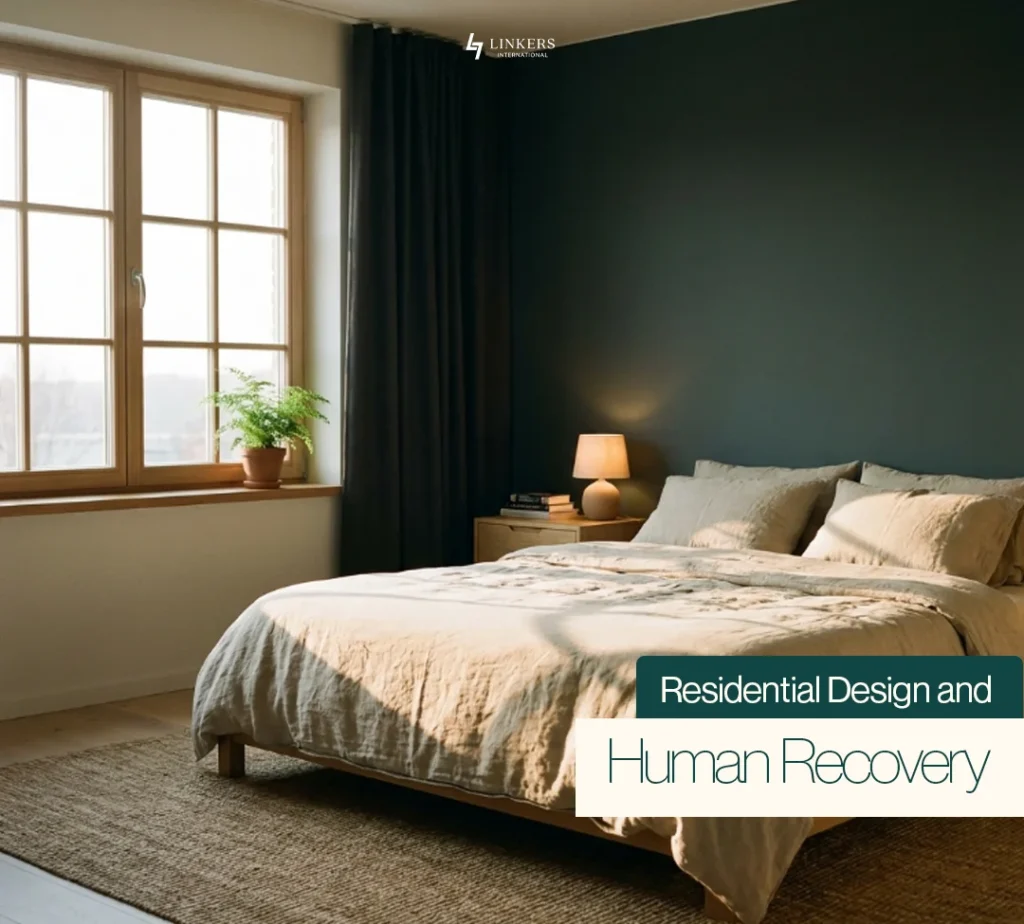
Circadian architecture is not limited to offices. It is equally important in residential environments. In modern housing developments, especially high-rise apartments, residents often experience limited morning light exposure. Bedrooms may be poorly oriented, and artificial lighting dominates evenings. In contrast, well-designed residential projects in parts of Scandinavia prioritize:
- East-facing bedrooms for morning light
- Large, unobstructed windows
- Warm, dimmable lighting systems in the evening
- Minimal light pollution during night hours
These subtle decisions significantly improve sleep quality and long-term well-being.
Why This Matters for Emerging Cities
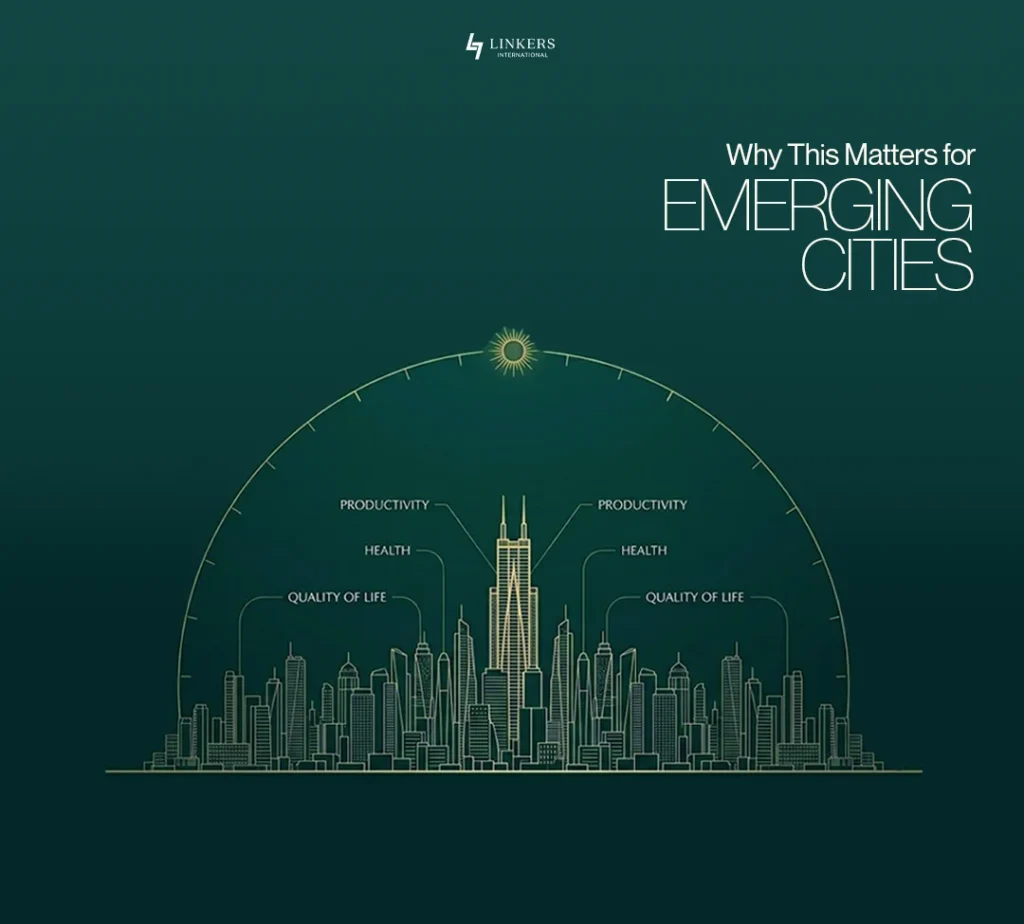
In rapidly growing urban environments, including cities in South Asia and the Middle East, architecture is often driven by density, cost efficiency, and land optimization. As a result, biological considerations are frequently ignored.
But as urban stress levels increase, people seek a post-congestion lifestyle, and circadian architecture becomes more relevant, not less. Poor sleep quality, burnout, and cognitive fatigue are no longer individual issues; they are urban design issues.
Therefore, buildings that integrate circadian principles into housing, offices, and public infrastructure will likely see measurable improvements in productivity, health outcomes, and quality of life.
The Future of Architecture Is Biological
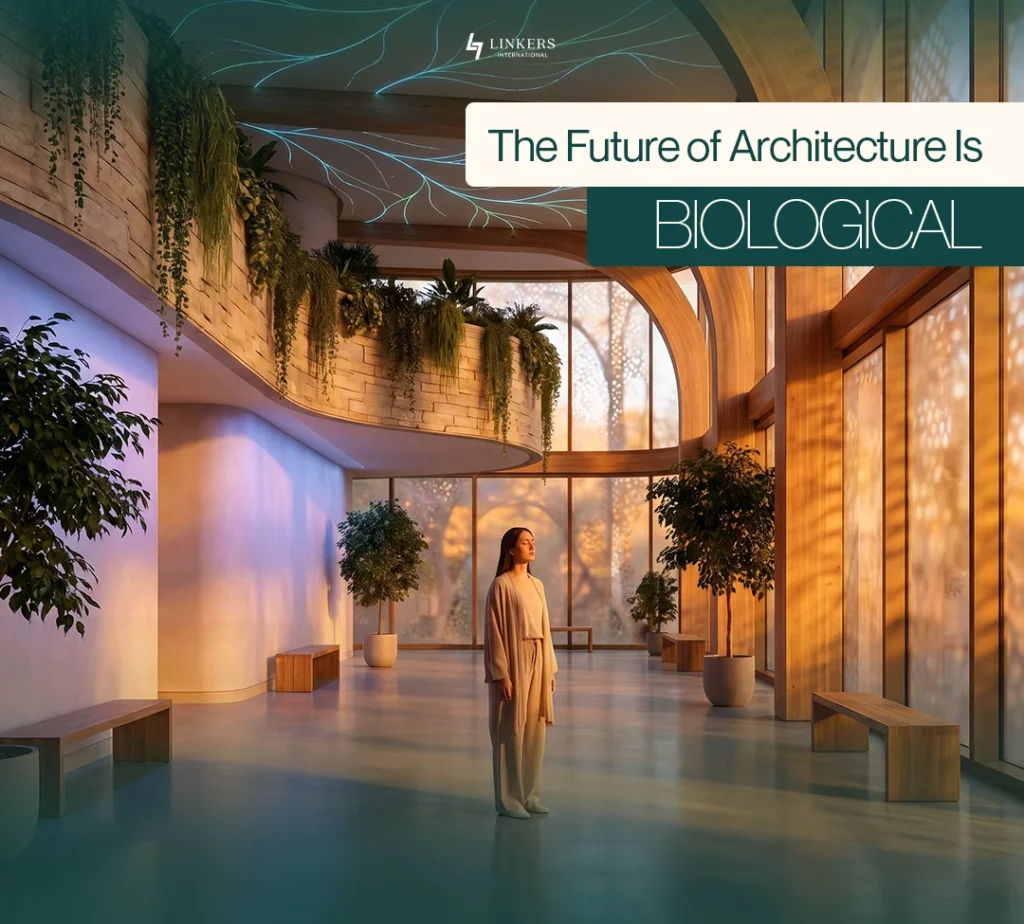
The next evolution of architecture is not just smart buildings or green buildings, it is biologically intelligent buildings. Circadian architecture represents a shift from designing spaces for function alone to designing them for human rhythm, recovery, and cognition.
In the future, we may evaluate buildings not only by square footage or aesthetics, but by a more fundamental question of whether this building supports the human body it contains?