
There’s good news for the property sector and investors, as the new real estate taxes in budget 2026 will reduce the cost of buying, selling, and developing property. These tax changes for the property sector are expected to encourage investment, improve affordability, and bring renewed momentum to the market.
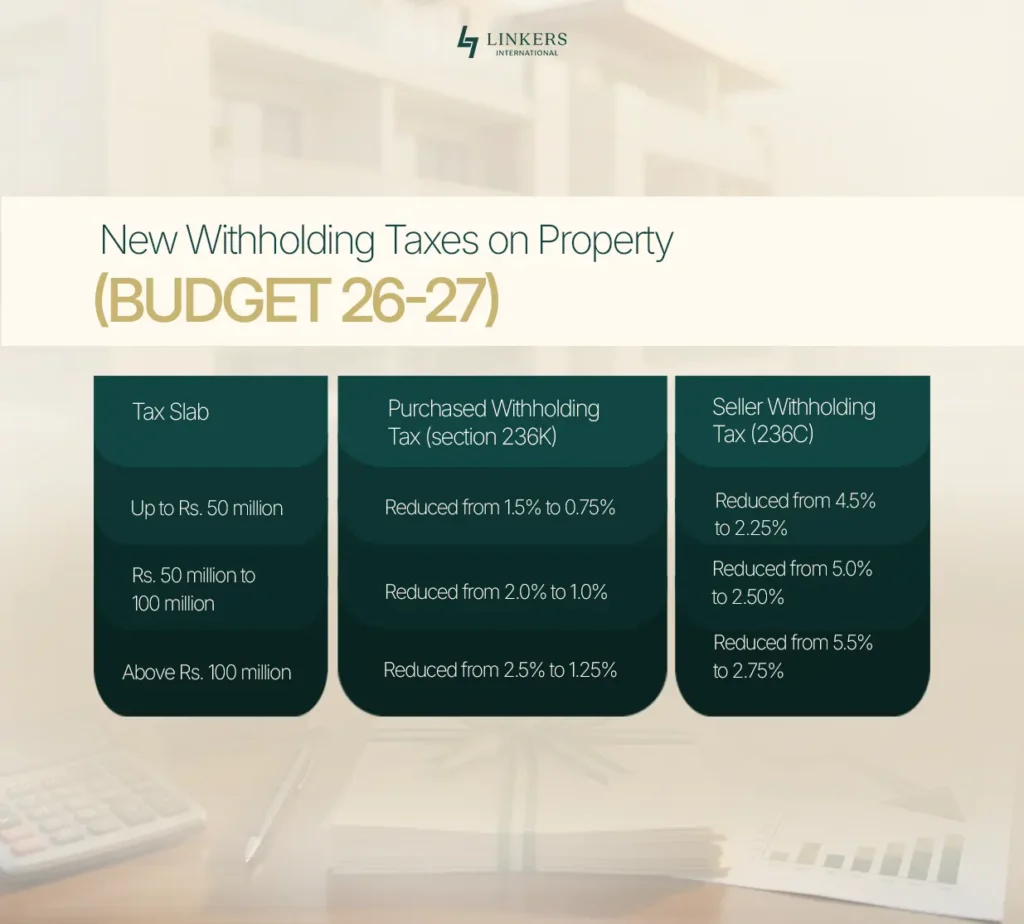
One of the most important updates in the property taxes in budget 2026 Pakistan is the reduction in withholding tax on property sales and purchases.
Previously, sellers faced a heavy tax burden of up to 5.5%. Under the new reforms, this has been significantly reduced, making property transactions more attractive and financially viable.
Pakistan Budget 2026–27 Real Estate Relief: What Has Changed?
After years of high transaction taxes, rising construction costs, and regulatory hurdles slowing down market activity, the government has finally reduced real estate taxes in budget 2026, aimed at providing much-needed relief.
Whether you’re an investor looking for better returns, a developer planning future projects in premium locations, or a family hoping to buy a home, the latest budget 2026 brings several changes worth paying attention to.
From reducing property-related taxes to offering incentives for the construction sector, these measures are designed to make real estate transactions more affordable, improve market liquidity, strengthen investor confidence, and encourage greater participation across the property market. The overall message is clear: the government wants to make Pakistan’s real estate sector more active, investment-friendly, and growth-oriented.
New Tax on Property Sale And Purchase: WHT Reduction

The reduction in WHT Withholding Tax on property purchases and sales lowers the overall cost of real estate transactions, making buying and selling more financially attractive. As transaction costs decrease, market activity is expected to increase, improving liquidity and encouraging greater participation from both investors and end-users.
- Withholding Tax on property purchase (236K) reduced from 2.5% to 1.25%
- Withholding Tax on property sale (236C) reduced from 5.5% to 2.75%
The reduction in real estate taxes in budget 2026 is a positive step toward improving affordability. This change directly supports middle-income families looking to own homes in urban centers.
Impact of WHT Reduction on Real Estate
- Lower upfront acquisition cost
- Easier entry for first-time buyers
- Improved demand for residential and commercial units
- Boost in overall housing activity
Impact of Removing Super Tax on Real Estate
The removal of Super Tax for builders and developers with annual sales of up to PKR 500 million provides significant relief to small and mid-sized players in the construction sector. This decrease in real estate taxes in budget 2026 is expected to encourage new development activity, while the fixed 8% rate for larger entities brings greater clarity and predictability to tax planning.
- Super Tax removed for developers earning up to 500 million annual sales
- Super Tax fixed at 8% for high-income entities above 500 million
Abolition of Section 7E: A Game-Changer for Real Estate Investors

One of the most impactful reforms in New Real Estate Taxes in Budget 2026 Pakistan is the removal of Section 7E, which previously imposed deemed income tax on idle properties. With the removal of Section 7E, property owners no longer have to pay tax on deemed income from idle properties.
This takes away a major concern for investors, making it easier to hold, buy, and invest in real estate with greater confidence and less tax-related pressure.
Benefits for Property Owners:
- Removes tax burden on unused properties
- Encourages long-term holding and investment
- Reduces speculative pressure
- Improves investor confidence
This move is expected to unlock significant dormant investment in Pakistan’s real estate sector.
Foreign Investment Benefits from CVT Removal
For years, investors holding foreign properties and offshore assets had to pay a 1% Capital Value Tax (CVT), even when the actual value of their investment had not increased. Since the tax was calculated on the asset’s value after conversion into Pakistani Rupees, a weaker PKR often meant a higher tax bill, regardless of whether the asset itself had gained any real value.
With the abolition of CVT on foreign assets in Budget 2026–27, this burden has been removed, offering much-needed relief to overseas Pakistanis and investors with international holdings.
Benefits include:
- Easier cross-border investment
- Increased foreign capital inflow
- Improved confidence among overseas Pakistanis
- Stronger international market positioning
Construction Sector Incentives
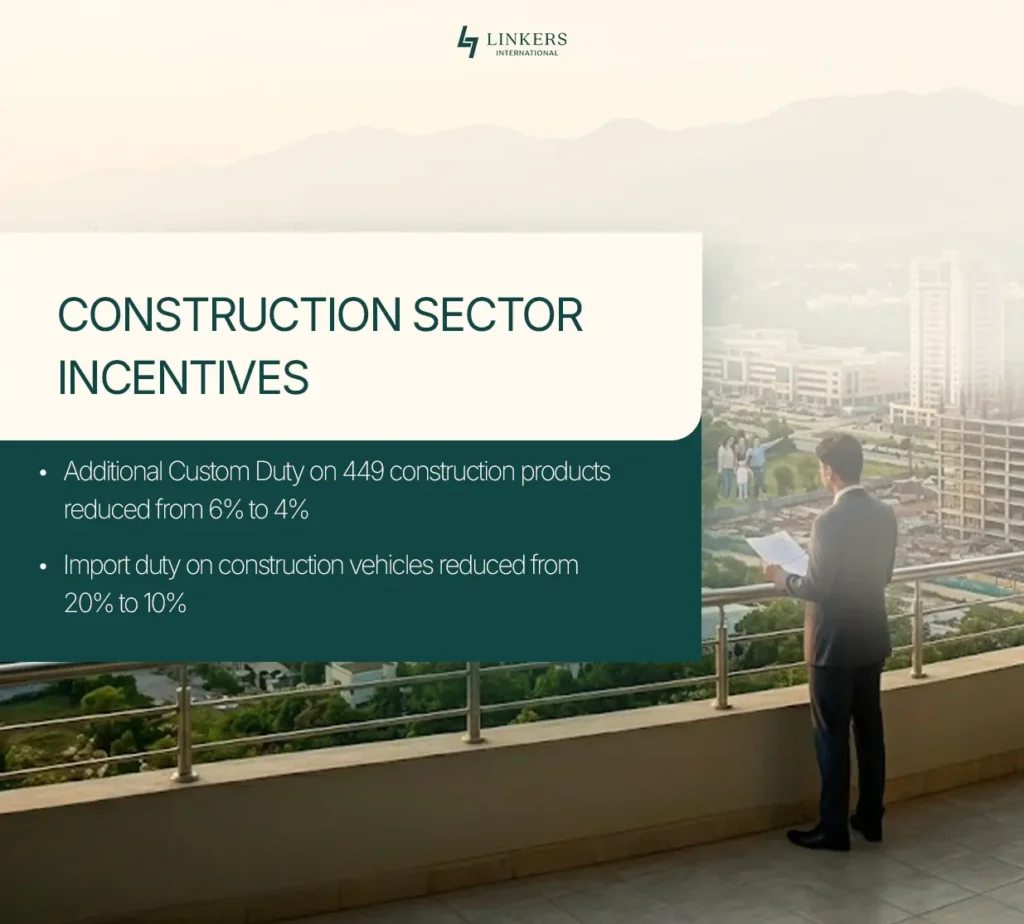
The reduction in Additional Custom Duty (ACD) on construction materials and the significant cut in import duty on construction vehicles are expected to lower overall development costs across the construction sector.
- Additional Custom Duty on 449 construction products has been reduced from 6% to 4%
- Import duty on construction vehicles reduced from 20% to 10%
This relief in real estate taxes in budget 2026 can help improve project feasibility, support faster development activity, and ultimately contribute to more competitive property pricing for buyers and investors.
Latest Budget 2026-27 Real Estate Relief: Market Impact Analysis

When transaction taxes come down, holding costs are reduced, and developers receive incentives, the result is usually the same: increased market activity. Investors find it easier to enter and exit the market, homebuyers face a lower financial burden, and developers are encouraged to launch new projects.
The combined impact of these reforms is expected to improve liquidity, boost buyer confidence, and create stronger demand across both residential and commercial segments.
Expected Market Outcomes:
- Increased transaction volumes
- Higher demand in residential and commercial segments
- Improved liquidity in property markets
- Stabilized pricing trends
- Stronger long-term capital appreciation
As more people return to the market, cities like Islamabad, Rawalpindi, Lahore, and Karachi could see a rise in transaction volumes, fresh investment, and long-term value appreciation. While no single reform can transform a market overnight, together these measures send a strong signal that the government is serious about supporting growth and making real estate a more attractive and investment-friendly sector.
What does this mean for Investors and Homebuyers?
For Investors:
- Lower taxes = higher net returns
- Easier entry and exit from investments
- Better long-term capital gains potential
For Homebuyers:
- Reduced acquisition cost
- Improved affordability
- Easier path to homeownership
Conclusion: A Comeback for Pakistan’s Real Estate Sector
The Pakistan Budget 2026–27 introduces one of the most significant real estate relief packages in recent years. With reduced withholding taxes, abolition of Section 7E, and construction-friendly incentives, the market is set for renewed momentum. This is more than just a tax adjustment; it is a strategic push toward revitalizing Pakistan’s property sector.
Lower Taxes. Higher Confidence. Stronger Market Growth.