
Modern residents want a post-congestion lifestyle, access without overload, nature without distance, and height without detachment. For most of the 20th century, urban aspiration was about living closer to the city, where proximity meant opportunity, work, culture, mobility, and status. But in the 21st century, particularly after rapid urbanization, digital acceleration, and lifestyle shifts, proximity alone is no longer enough.
Across the world, a new residential preference is emerging: filtered urban living, a way of life that remains connected to the city while deliberately buffering its noise, density, and sensory overload. This is not an escape from urban life, but a refinement of it.
What is a Post-congestion Filtered Lifestyle?
In cities like London, Singapore, Dubai, and Vancouver, high-rise residential developments are no longer judged only by location or height. Instead, they are evaluated by how well they filter the city:
- Filtering noise without isolating residents
- Filtering congestion without increasing commute friction
- Filtering visual chaos while maintaining panoramic openness
Globally, elevated residential towers near water bodies, green corridors, and natural topography are increasingly seen as the most rational form of luxury living, because they preserve access while restoring calm. This marks the beginning of what urban theorists describe as the post-congestion lifestyle.
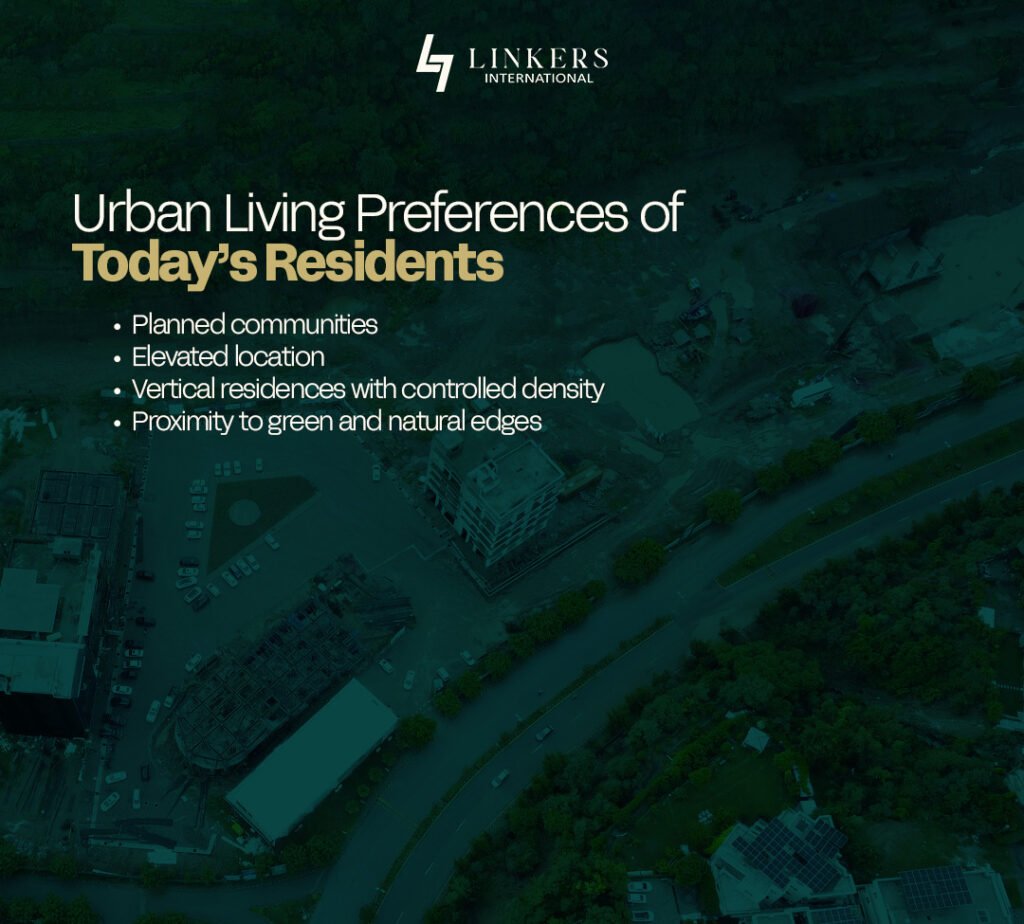
Urban Living Preferences of Today’s Residents in Pakistan
Pakistan’s major cities, Karachi, Lahore, and Islamabad, are experiencing a similar inflection point. As density increases and cities expand horizontally, residents are becoming acutely aware that congestion costs them time, mental clarity, privacy, and environmental comfort.
In response, a new class of residents, professionals, overseas Pakistanis, and upwardly mobile families, is not moving away from cities. They are moving above and alongside them. This explains the growing preference for:
- Planned communities
- Elevated plots
- Vertical residences with controlled density
- Proximity to green and natural edges
Unlike many global capitals, Islamabad was conceived with order, zoning, and landscape in mind. Yet even here, growth has introduced congestion into central sectors.
As a result, areas like DHA Islamabad, particularly its Overseas Block, have emerged as zones of selective connectivity: close enough to the city’s infrastructure, yet buffered by distance, elevation, and planning. DHA has converted filtered urban living into a geographic reality.
Architecture as a Filter in Post-Congestion Lifestyle
This is where architecture plays a crucial role. Contemporary residential design is moving away from aggressive monumentality and toward calm intelligence, buildings that regulate light, movement, views, and interaction with the environment. A compelling example of this approach is Zenith by Linkers International, a 22-storey high-rise in DHA Islamabad Overseas Block.
Zenith’s architectural language deliberately avoids rigid geometry. Instead, it embraces soft curves, layered volumes, and fluid motion, a response to its surroundings:
- The nearby river (water body)
- The hilly, sloping terrain of DHA Overseas Block
- The open green landscape
- The developed city around
This approach allows the tower to stand out without overpowering its context. It becomes part of the skyline, not an intrusion into it. The result is a structure that feels refined, composed, and calm, qualities increasingly valued in post-congestion urban living.
Zenith Elevation Design
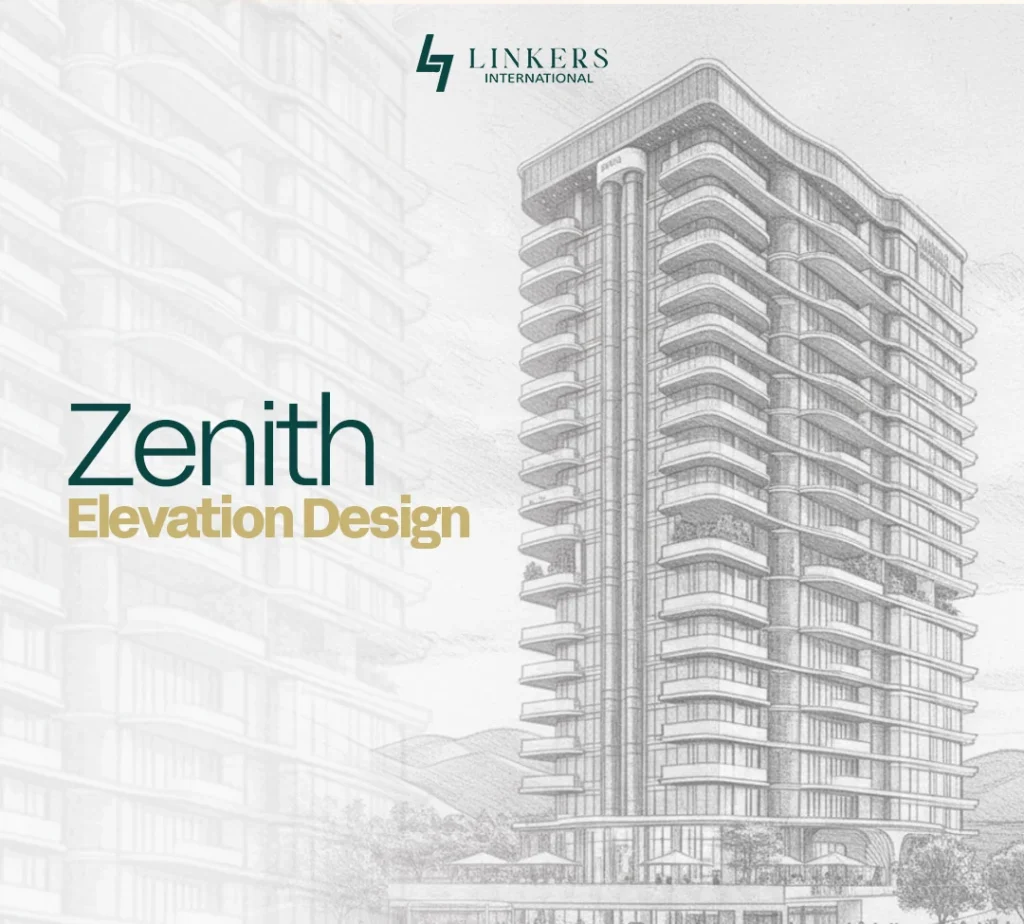
At 22 storeys, Zenith is among the tallest residential buildings in DHA Islamabad Overseas Block. Yet its elevation is carefully articulated to avoid visual heaviness. This design strategy aligns with global best practices, where tall residential buildings are designed to feel approachable, rather than intimidating. It reduces height anxiety and increases the human scale.
- Strong horizontal lines, created through terraces and extended balconies, visually break down the height
- Rounded edges replace sharp corners, giving the tower an aerodynamic, contemporary character
- Layering introduces rhythm, balance, and a sense of movement
Light, Views, and the Privilege of Perspective
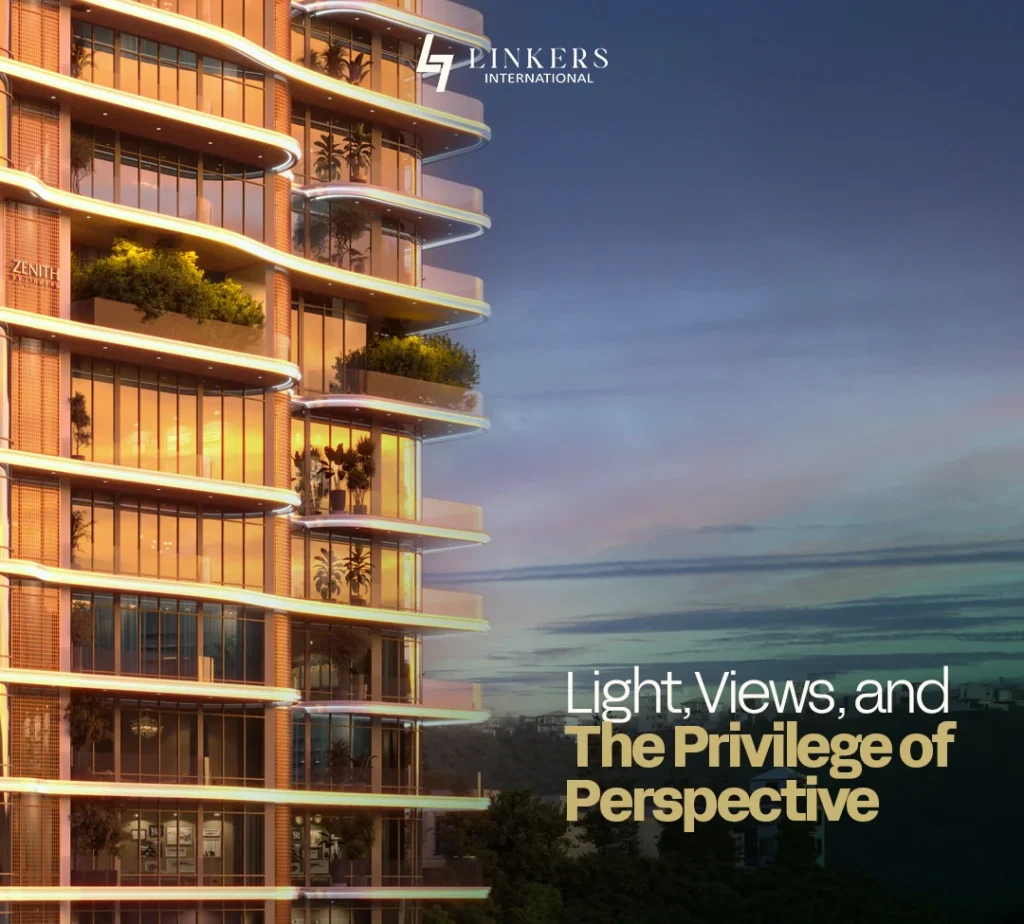
One of the defining features of filtered urban living is controlled openness. Zenith incorporates extensive floor-to-ceiling glazing, allowing daylight to penetrate deep into the apartments. This not only enhances interior comfort but also reinforces a daily connection with the outside world.
From within, residents experience green landscapes, rolling hills, the river, and a distant city skyline. This shift, from street-level intensity to horizon-level calm, fundamentally changes how residents perceive time, space, and daily life.
Location as a Filter in Post-Congestion Lifestyle
In the post-congestion lifestyle, location functions as a filter, balancing access and calm. DHA Islamabad Overseas Block exemplifies this principle. Centrally positioned between Phase 1’s Orchard area (C-Block) and the emerging Phase 4, it offers residents both established convenience and future growth potential.
- 15 minutes away from GT Road
- Adjacent to DHA Phase 1 Orchard Area (C-Block) Commercial
- Linked to Askrai 14 from the south-eastern edge
- Public transport access is expected via Morgah Road
- Located approximately 3.8 km from the Rawalpindi Ring Road alignment
- Adjacent to major housing schemes such as DHA, Bahria Town Phases 7 and 8
- Easy access to city landmarks, Saddar, MH & CMH, and Ayub Park, Shifa Eye Trust
- Long-distance connectivity is enhanced through links to the M-1 and M-2 Motorways
The elevated terrain, hilly contours, and green landscape of DHA Islamabad Overseas Block naturally buffer noise, visual clutter, and the pace of city life. In this way, the location itself becomes a curated filter, allowing residents to selectively engage with the urban environment while maintaining privacy, tranquility, and a heightened sense of control over their living experience.
Zenith is About Living Above Congestion, Not Apart from the City
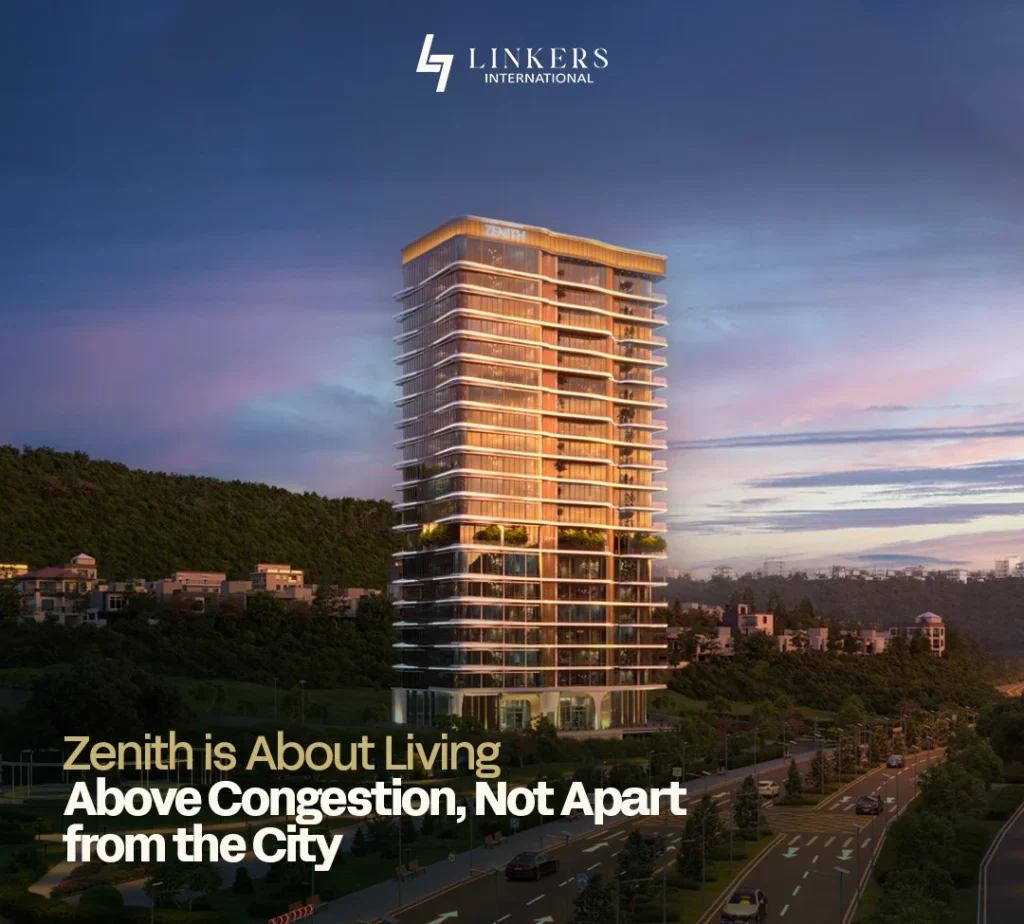
Residents in a building like Zenith remain connected to Islamabad’s infrastructure, social life, and opportunities, yet return home to an environment that restores rather than exhausts. What Zenith by Linkers represents, ultimately, is not luxury as excess, but luxury as regulation:
- Regulation of noise
- Regulation of density
- Regulation of visual clutter
- Regulation of engagement with the city
People Don’t Want Less City; They Want Less Chaos
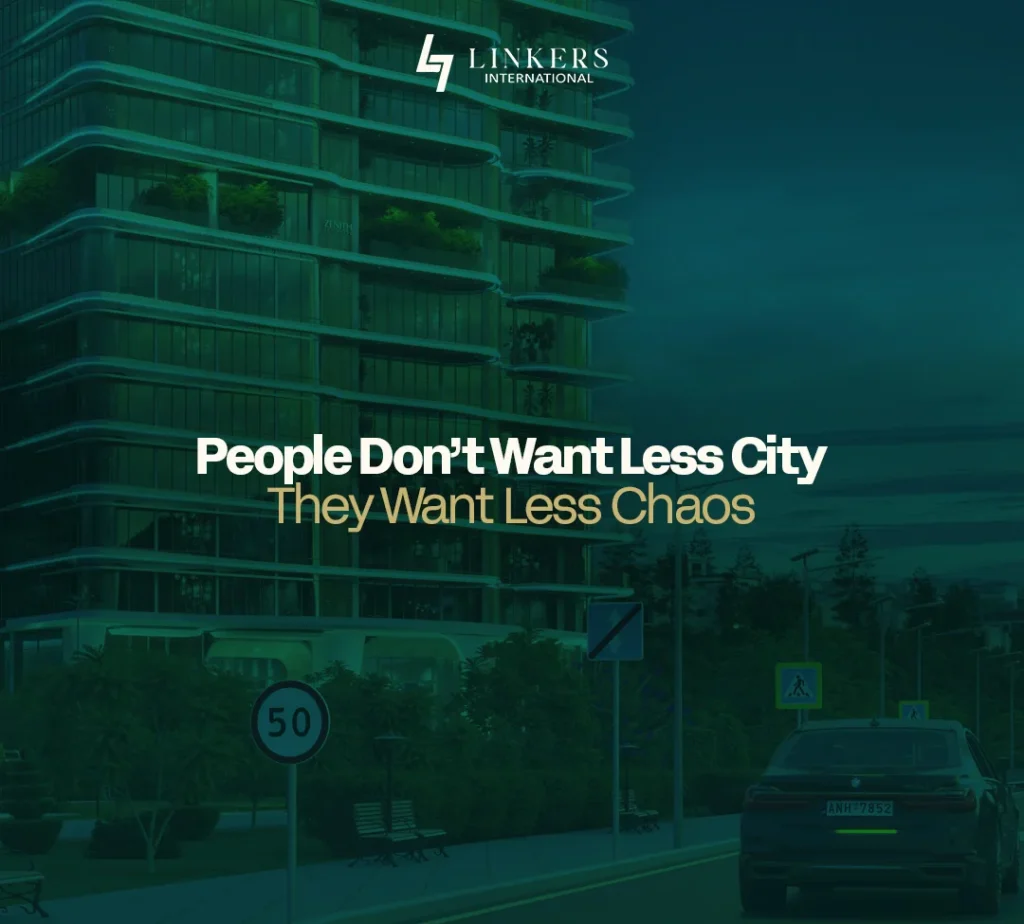
As Pakistani cities continue to grow, the most successful residential projects will not be those that promise isolation, nor those embedded in chaos. They will be those who understand the post-congestion mindset:
In this evolving landscape, developments like Zenith by Linkers International point toward a more mature form of urban living, one where architecture, location, and lifestyle work together to filter the city, not fight it.