
Across the world, cities are moving away from car-dependent lifestyles and embracing a “return to proximity,” where urban communities are built around accessibility, convenience, sustainability, and quality of life. Today’s modern city life often feels defined by traffic jams, long commutes, and the constant rush from one destination to another.
Whether it’s reaching the office, dropping children at school, visiting a doctor, or simply buying groceries, daily routines in large cities can consume hours of valuable time.
This growing urban fatigue is exactly why the idea of the 15-minute neighborhood is gaining global attention. For countries like Pakistan, where rapid urbanization in big cities has created congestion, pollution, and infrastructure pressure, the concept is becoming increasingly relevant.
What Exactly Is a 15-Minute Neighborhood?
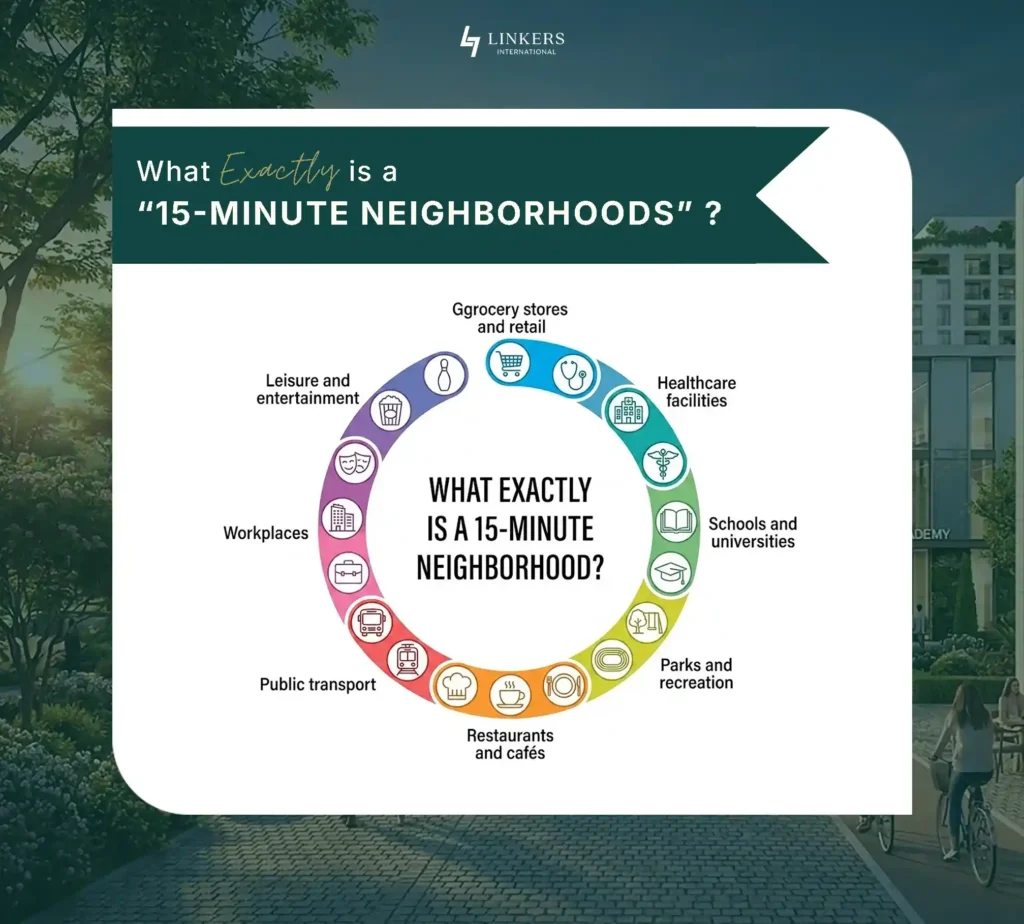
A 15-minute neighborhood is an urban planning concept designed around the idea that residents should be able to conveniently access most of their essential daily needs within a short walk, bicycle ride, or quick commute from their homes.
These essentials include:
- Workplaces
- Schools and universities
- Healthcare facilities
- Grocery stores and retail
- Parks and recreation
- Restaurants and cafés
- Public transport
- Leisure and entertainment
The goal is simple: reduce unnecessary travel while improving daily convenience and overall well-being. Instead of cities being divided into isolated residential and commercial zones, the 15-minute model promotes integrated, mixed-use communities where people can live, work, and socialize within the same urban ecosystem.
The World Is Making “A Return To Proximity”
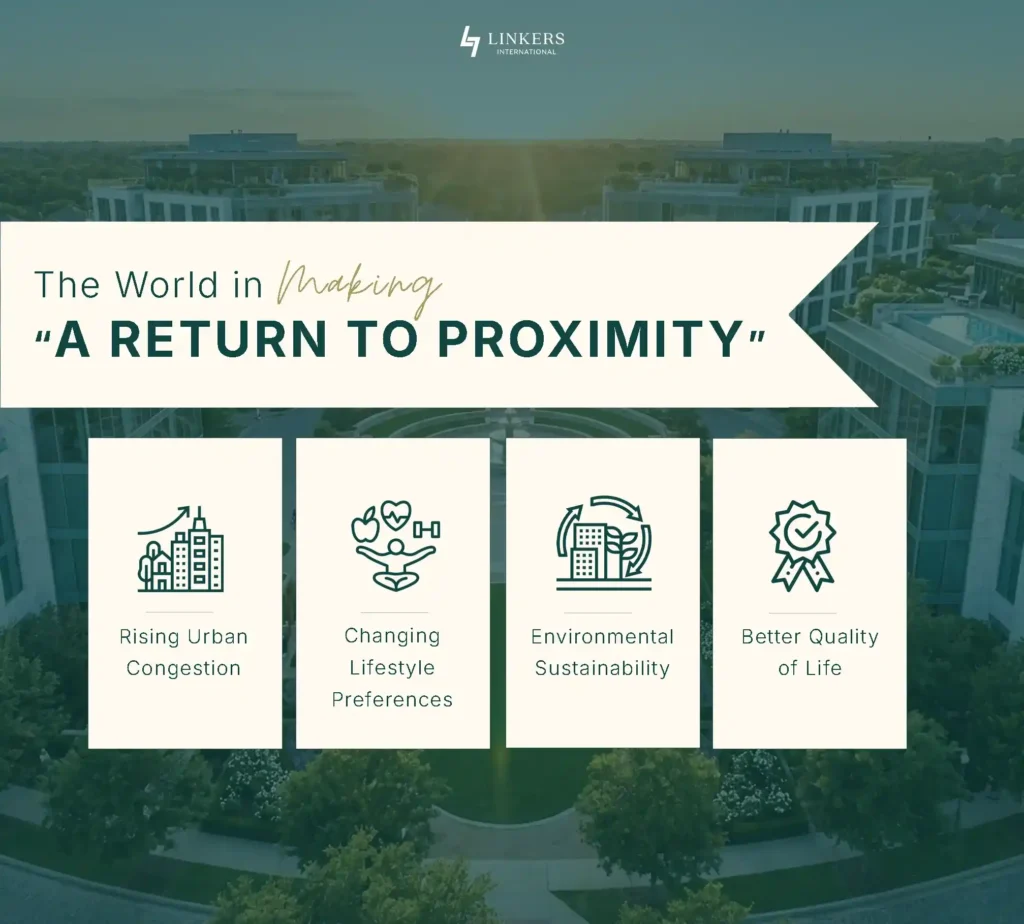
As cities expand outward, people are realizing that bigger cities do not always mean better living. Modern urban lifestyles are changing rapidly, and today’s urban residents value time, convenience, and flexibility more than ever before. Long commutes are increasingly viewed as unproductive and stressful. Traffic congestion affects mental health, productivity, fuel costs, and family time.
Rising Urban Congestion
Changing Lifestyle Preferences
Environmental Sustainability
Better Quality of Life
This shift in mindset has accelerated demand for neighborhoods where everything is within quick reach. For busy professionals, young families, entrepreneurs, and even retirees, accessibility is becoming one of the most important factors when choosing where to live.
Two Pillars of 15-minute neighborhoods Design: Social and Environmental
The growing popularity of 15-minute neighborhoods is not only changing how cities are designed, but also reshaping the way people experience urban life. At the heart of this concept lies a broader vision of creating cities that are more livable, sustainable, and people-centered.
Rather than focusing solely on infrastructure and expansion, the model emphasizes improving everyday life while reducing the environmental burden caused by rapid urbanization. This approach is built upon two key foundations: social sustainability and ecological sustainability, both of which play a vital role in creating healthier and more resilient urban communities.
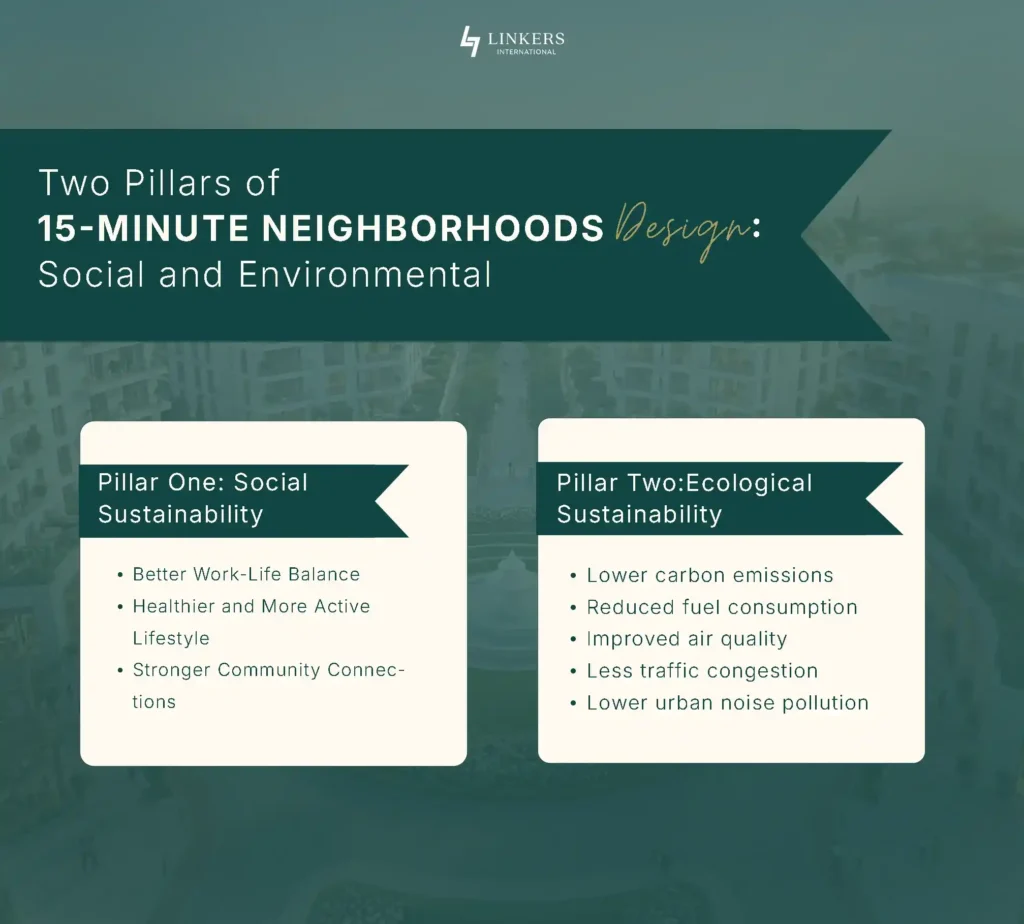
Pillar One: Social Sustainability
One of the most important benefits of 15-minute neighborhoods is their ability to improve social well-being and strengthen community living. By placing schools, workplaces, healthcare facilities, parks, retail centers, and recreational spaces within close proximity, residents can spend less time commuting and more time engaging with their families, communities, and personal lives.
Walkable neighborhoods encourage greater social interaction, stronger local relationships, and a sense of belonging that is often lost in highly congested urban environments.
- Better Work-Life Balance
- Healthier and More Active Lifestyle
- Stronger Community Connections
These communities also support healthier lifestyles by encouraging walking, cycling, and outdoor activities instead of dependence on vehicles. Reduced commuting stress, better access to public spaces, and improved work-life balance contribute significantly to residents’ mental and physical well-being.
Pillar Two: Ecological Sustainability
From an environmental perspective, the 15-minute neighborhood concept offers a more sustainable approach to urban development by reducing the need for long-distance travel and excessive vehicle usage. Shorter commutes mean lower fuel consumption, reduced traffic congestion, and fewer carbon emissions, all of which contribute to cleaner and healthier cities.
As climate concerns and urban pollution continue to rise globally, proximity-based living provides an effective way to minimize the environmental impact of expanding urban populations.
- Lower carbon emissions
- Reduced fuel consumption
- Improved air quality
- Less traffic congestion
- Lower urban noise pollution
The model also encourages efficient land use, mixed-use developments, and better integration of green spaces within cities. By reducing reliance on cars and promoting accessible public infrastructure, cities can lower pollution levels, improve air quality, and create more environmentally responsible urban environments.
The Four Core Principles of 15-Minute Neighbourhood
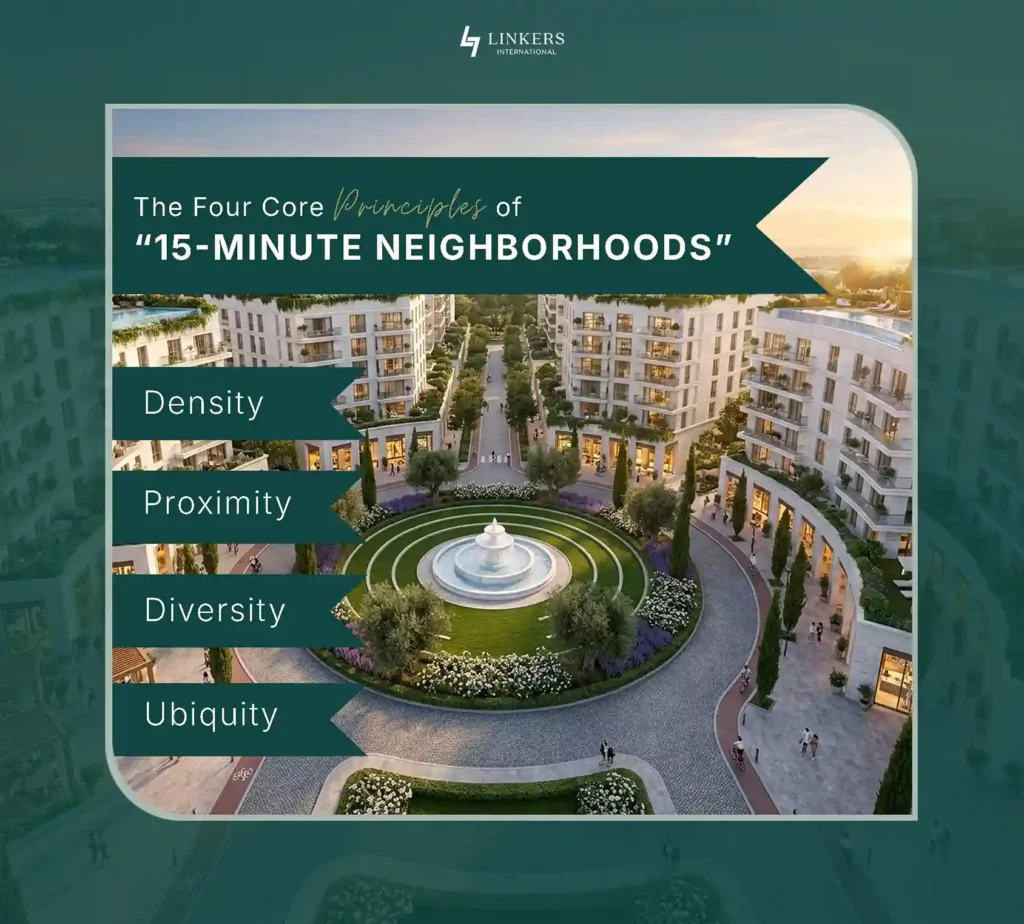
Urban planners assess the effectiveness of 15-minute neighborhoods through a set of guiding principles that shape how cities are designed and function at a local level. These principles focus on creating well-balanced urban environments where daily life becomes more convenient, accessible, and efficient for residents.
Instead of separating essential services across distant parts of a city, the approach emphasizes thoughtful planning that brings key activities closer to where people live. The core principles are;
Density: Cities need an optimal population density that supports economic activity, public transport, social interaction, and environmental efficiency without overwhelming infrastructure. Well-balanced density creates vibrant neighborhoods instead of isolated urban sprawl.
Proximity: Essential activities such as housing, commerce, healthcare, education, work, and leisure should remain close and easily accessible. The idea is to reduce dependence on long-distance travel for daily needs.
Diversity: Mixed land use is critical. Residential, commercial, recreational, and cultural spaces should coexist within the same neighborhood. Diversity also includes cultural inclusion, social interaction, and economic variety.
Ubiquity: These benefits should not be limited to elite communities alone. The vision is to make accessible neighborhoods widespread throughout the city, creating equal opportunities for all residents.
Buyers Willing to Pay More for Locations That Simplify Daily Life (our projects)
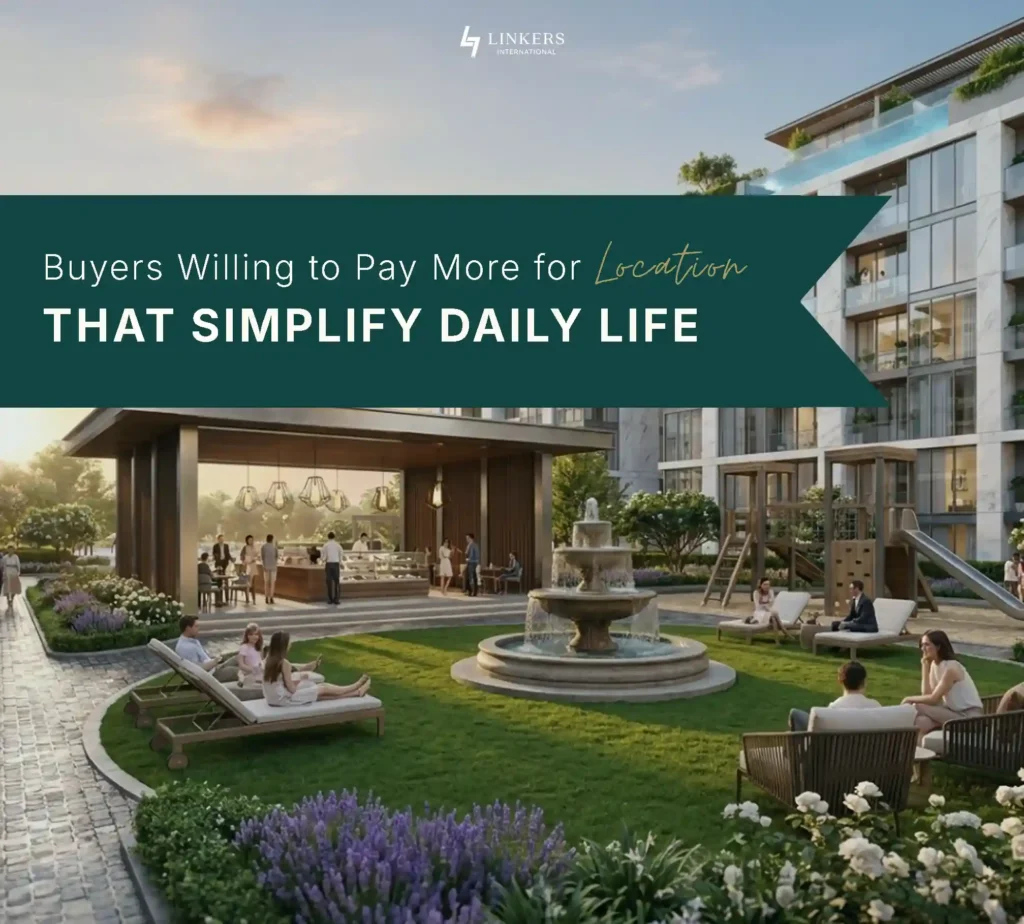
One of the clearest indicators of this urban shift is changing buyer behavior, as today’s buyers are no longer just purchasing homes but are actively investing in convenience, accessibility, and overall lifestyle quality. Residential projects and commercial properties located near workplaces, schools, hospitals, retail centers, parks, and transport networks consistently attract stronger demand because they make everyday living simpler, faster, and more efficient.
This shift is driven by the increasing value people place on time and quality of life, where location has become just as important as the property itself.
- For families: It reduces daily stress and allows more quality time together instead of spending hours in traffic.
- For professionals: It means shorter commutes, better productivity, and improved work-life balance.
- For businesses: It creates stronger customer access, higher foot traffic, and more vibrant local economic activity.
As a result, well-connected and accessible neighborhoods tend to command higher property values and stronger long-term appreciation compared to isolated or poorly connected developments.
Long-term Investment Potential in Such Neighborhoods
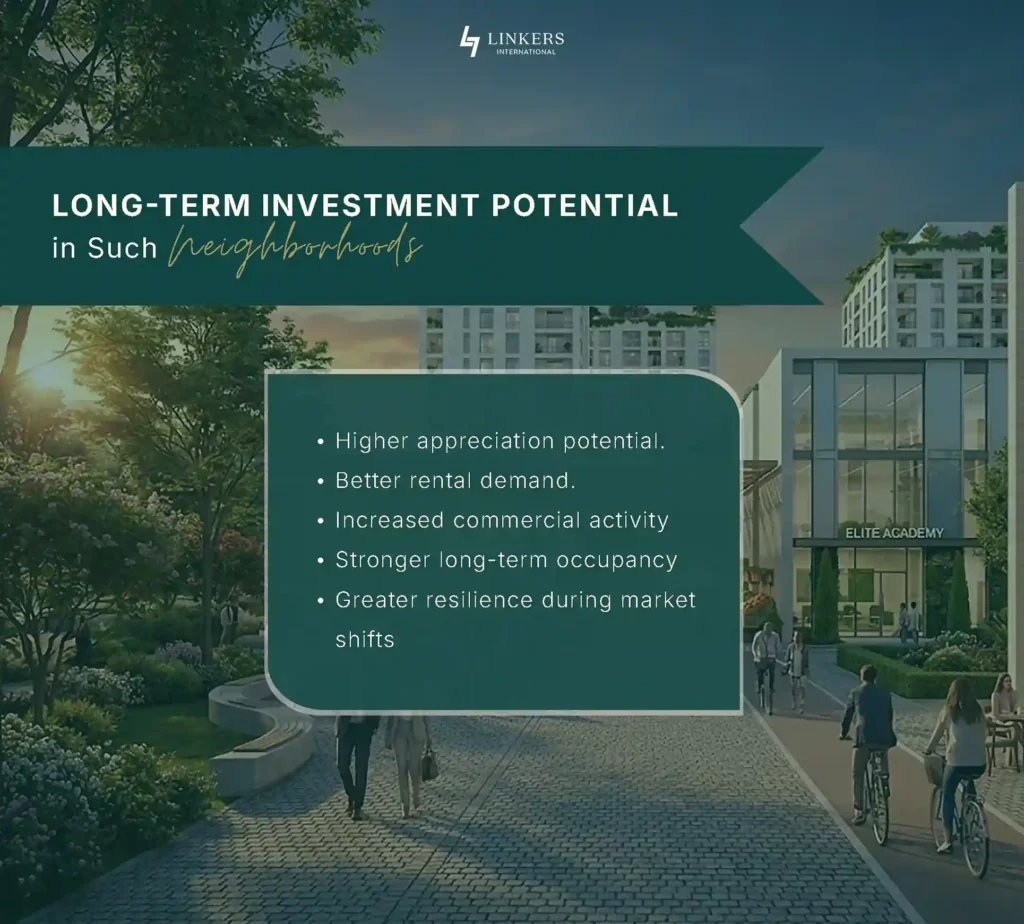
From a real estate perspective, the rise of 15-minute neighborhoods presents strong long-term investment potential as urban populations continue to grow and infrastructure pressure increases, driving sustained demand for well-connected, accessible, and convenience-oriented communities.
As cities expand and daily commuting challenges intensify, properties located in these neighborhoods are expected to become even more desirable, not just for end-users but also for investors looking at stable, long-term returns.
Over time, such areas tend to evolve into self-sustaining micro-economies, attracting both residential and commercial interest, which further strengthens their real estate fundamentals and long-term price stability.
- Higher appreciation potential.
- Better rental demand.
- Increased commercial activity
- Stronger long-term occupancy
- Greater resilience during market shifts
The appeal lies in the fact that these locations naturally align with modern lifestyle needs, making them more resilient and future-ready compared to conventional, car-dependent developments. As urban planning continues to evolve, 15-minute neighborhoods are likely to emerge as some of the most sought-after and strategically valuable real estate segments in growing cities.
Challenges in Implementing 15-Minute Neighborhoods
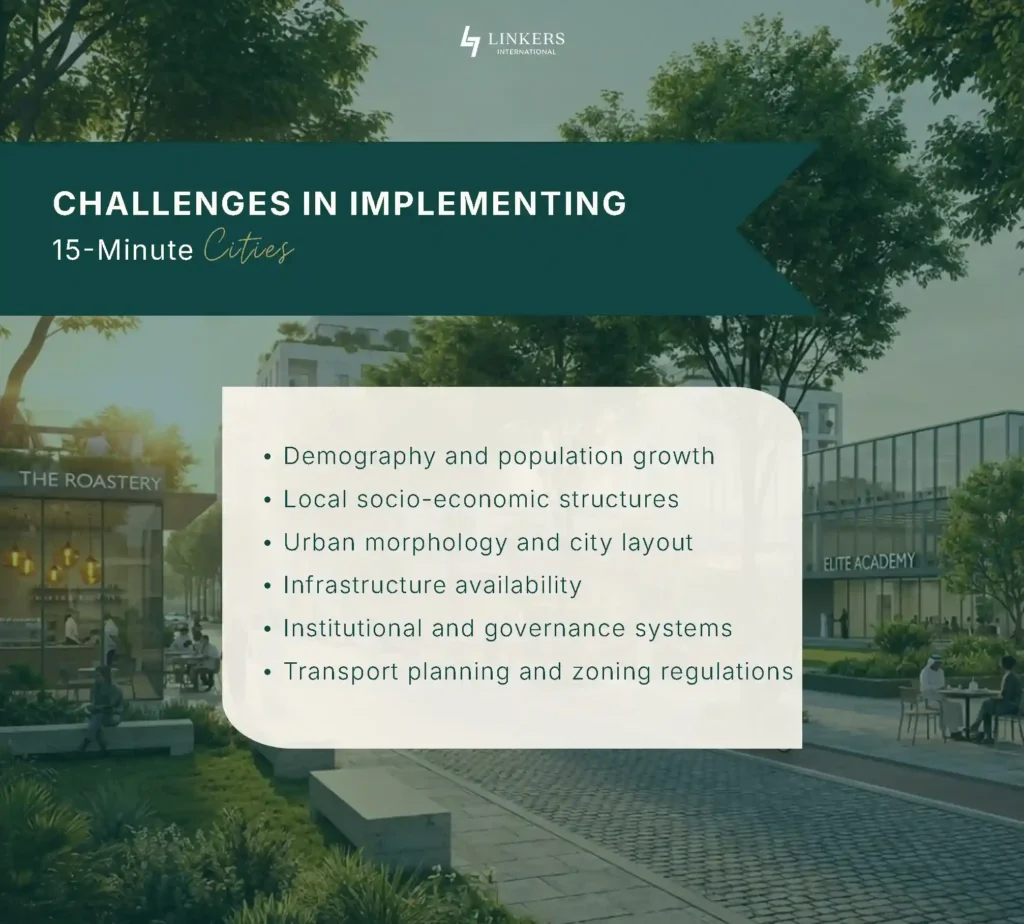
Despite its advantages, implementing the 15-minute city model is not without challenges. Older cities with unplanned expansion often face greater difficulties in restructuring infrastructure compared to planned urban centers. In Pakistan, inconsistent urban planning, traffic management issues, and uneven infrastructure development remain key obstacles. Several factors affect how successfully cities can adopt this approach, including:
- Demography and population growth
- Local socio-economic structures
- Urban morphology and city layout
- Infrastructure availability
- Institutional and governance systems
- Transport planning and zoning regulations
However, growing awareness around sustainable urban development is slowly pushing both public and private sectors toward smarter city planning.