
What happens when water becomes a luxury in today’s age? For decades, luxury has been easy to recognize. It came in the form of grand entrances, imported marble, private clubs, rooftop pools, waterfront views, smart homes, and prestigious addresses. The real estate industry built entire categories around these features, and buyers willingly paid premiums to access them.
But what if the definition of luxury is changing?
What if the most desirable feature in a residential or commercial development is no longer a rooftop infinity pool, but the certainty that water will flow from the tap every day and every minute?
It may sound like a distant possibility, yet history suggests otherwise. Civilizations have always flourished where water was abundant and declined when it became scarce. Ancient cities emerged around rivers, wells, and trade routes linked to reliable water sources. Long before luxury became a selling point, water was the resource that determined where people lived, worked, and prospered.
Today, as climate pressures, population growth, urban expansion, and aging infrastructure place increasing strain on freshwater resources, water as a new oil is quietly re-entering the conversation, not just as a utility, but as a valuable asset.
The question is no longer whether water matters. The question is: What happens when water becomes a luxury?
Not Abundance, But Anything Scarce Becomes the Luxury
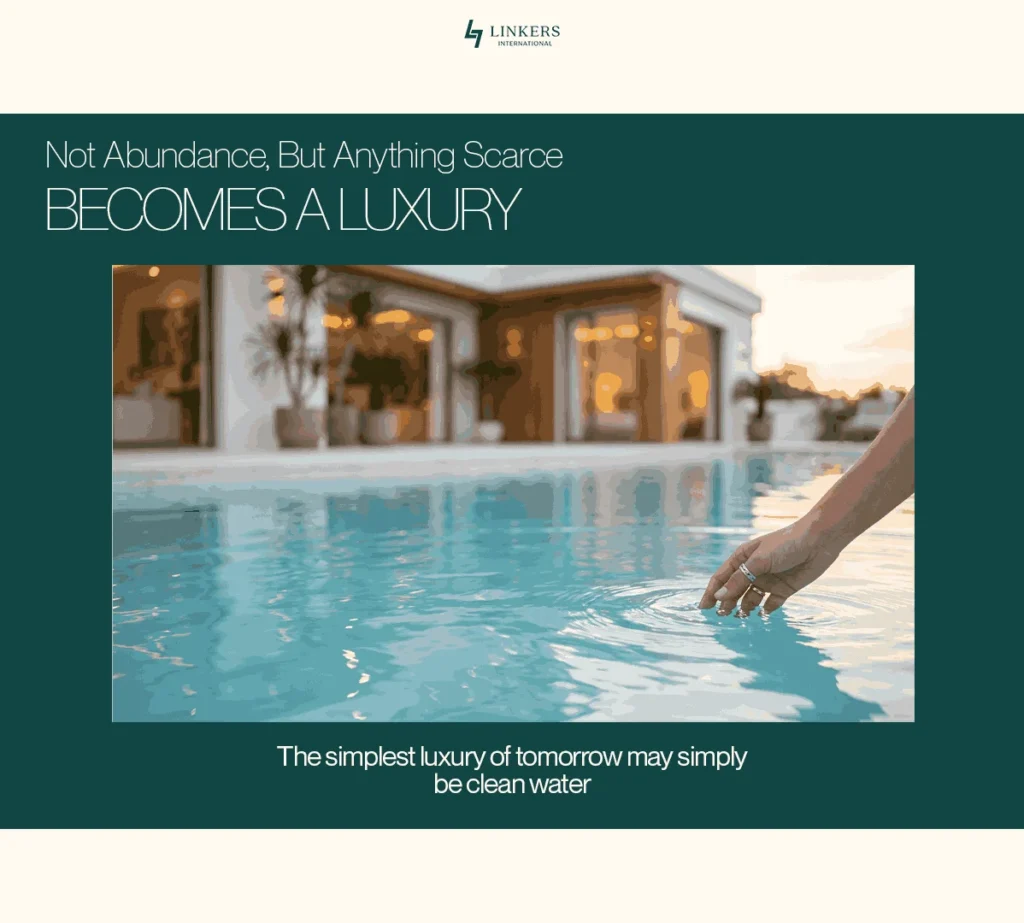
Luxury is not a fixed concept. It evolves with society’s needs. A century ago, electricity was considered a luxury in many parts of the world. Indoor plumbing was once available only to the wealthy. Air conditioning was an exclusive feature found primarily in premium properties and commercial buildings.
Over time, these amenities became necessities. The same pattern can be observed throughout history. Features that are abundant are rarely considered luxurious. It is scarcity that creates value.
As access to clean, reliable water becomes increasingly uncertain in many regions, water security is beginning to follow a similar path. Something once taken for granted is becoming an increasingly important differentiator. In other words, tomorrow’s luxury may not be what looks impressive. It may be what continues to function when resources are under pressure.
Why Water Is Now a Strategic Resource
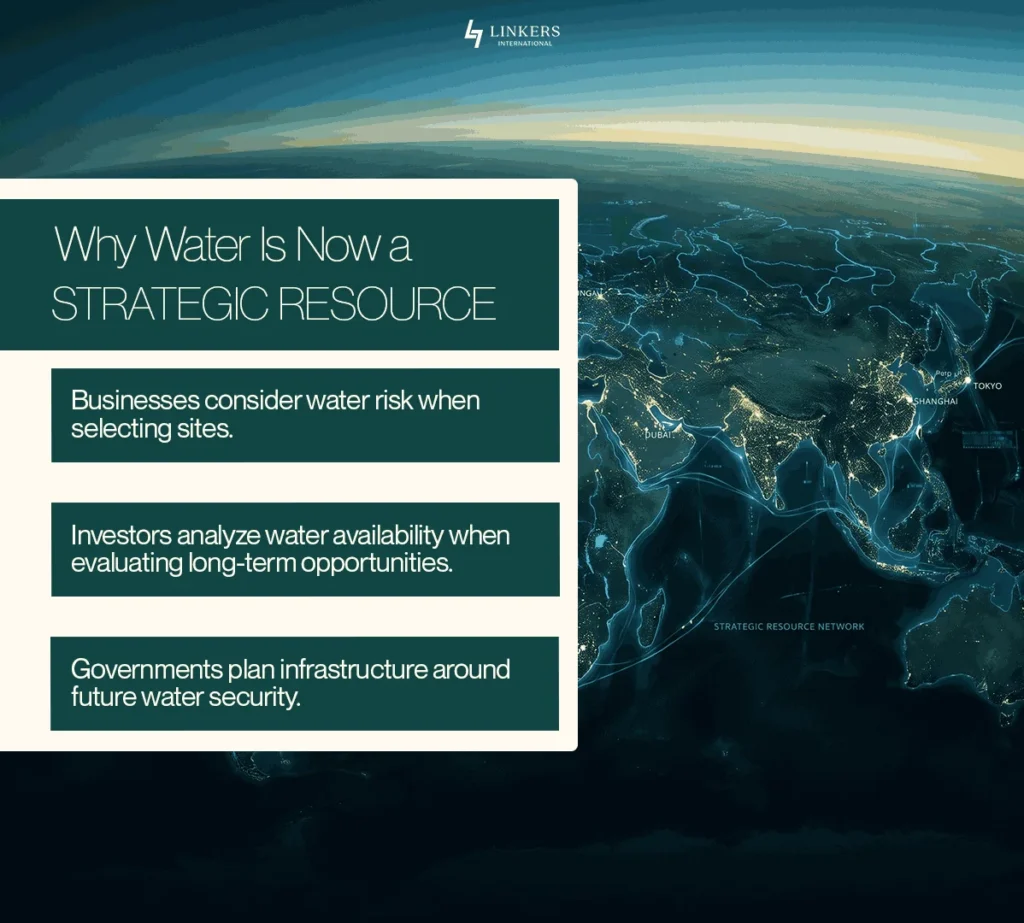
The world is using more water than ever before. Global population growth, industrial expansion, agricultural demand, and urban development continue to increase pressure on freshwater supplies. At the same time, climate change is altering rainfall patterns, intensifying droughts in some regions while increasing flooding in others.
- Businesses consider water risk when selecting sites.
- Investors analyze water availability when evaluating long-term opportunities.
- Governments plan infrastructure around future water security.
Real estate is beginning to follow the same path. According to international water agencies and environmental research organizations, billions of people already experience periods of water stress each year. Many major cities are investing heavily in water infrastructure, conservation programs, and alternative supply systems to secure future demand.
The challenge is not necessarily that the planet is running out of water. Rather, clean and accessible freshwater is becoming increasingly difficult, expensive, and complex to manage. As a result, water is transitioning from an operational concern to a strategic one.
Water Becomes Part of What Defines a Great Location
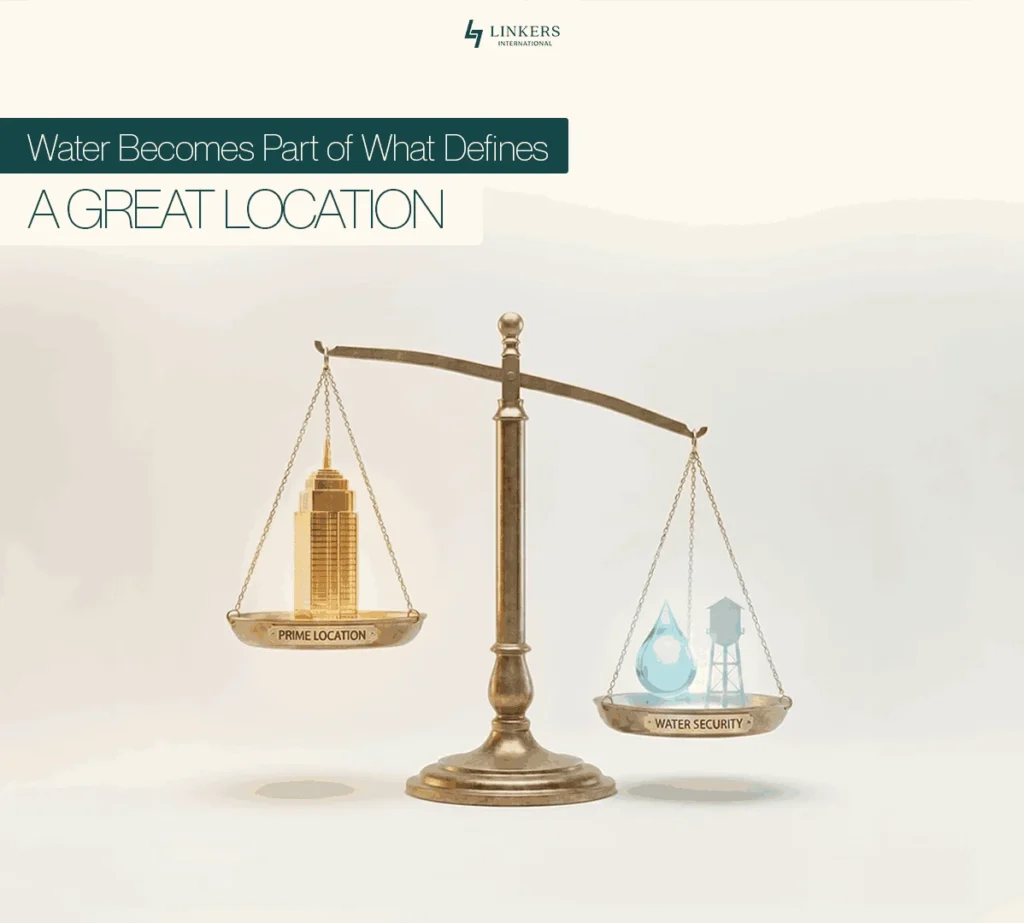
For generations, the real estate industry’s most famous rule has been simple: Location. Location. Location. A prime location traditionally meant proximity to jobs, transportation networks, schools, retail districts, and commercial centers. These factors remain important, but a new layer is emerging beneath them. What good is a prime location if it struggles to provide reliable water?
Imagine two communities. The first offers excellent connectivity, premium amenities, and a prestigious address but regularly experiences water shortages or increasing utility restrictions. The second is slightly less central but has resilient infrastructure, efficient water management systems, storage capacity, and reliable long-term supply.
Which community will be more attractive twenty years from now? The answer may surprise many investors. Increasingly, location quality is becoming intertwined with resource security. A desirable address is no longer defined solely by where it is. It is also defined by how well it can support future residents and businesses. In this sense, water is not replacing location as a driver of value. It is becoming part of what defines a great location.
The Rise of Water-Conscious Communities
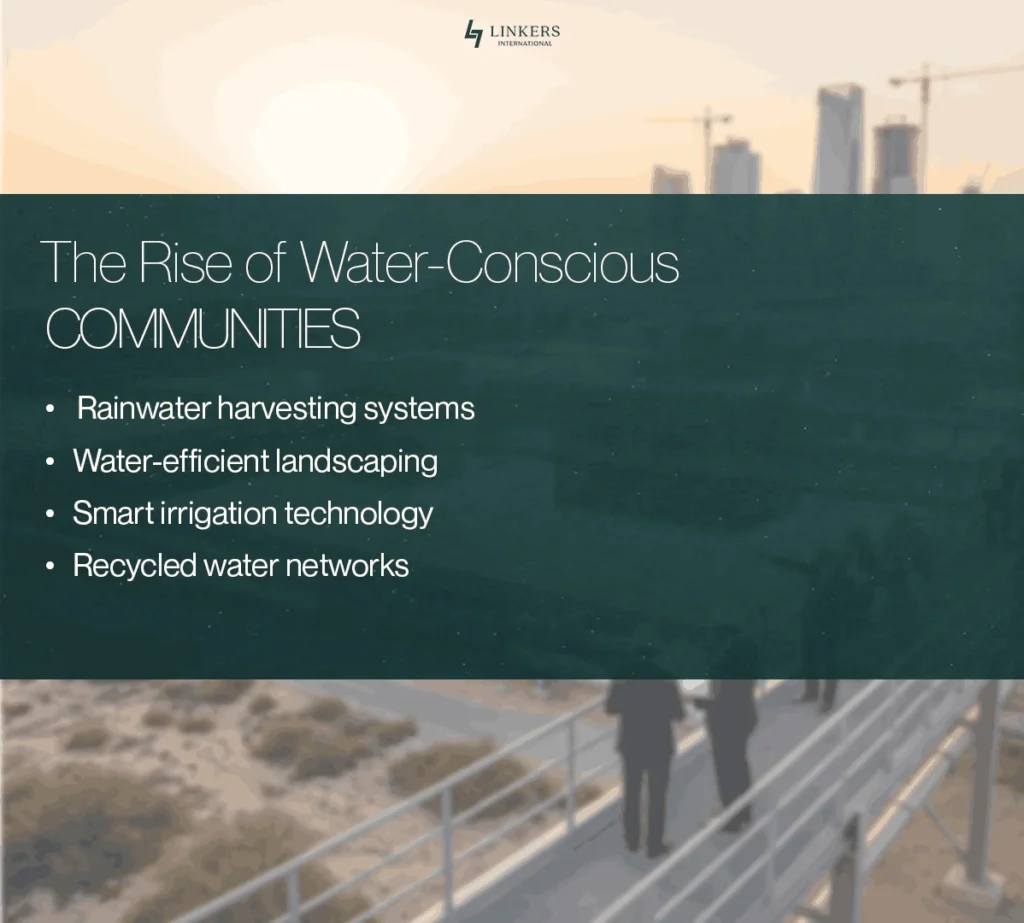
As water security becomes a growing concern across cities worldwide, developers are rethinking what makes a community truly future-ready. The focus is gradually shifting from offering more amenities to creating environments that can sustain themselves efficiently over the long term.
Communities designed with water-smart architecture, conservation and resource management in mind are no longer viewed as niche sustainability projects, they are increasingly becoming a practical response to changing environmental and economic realities. Forward-thinking developments around the world are already adapting to this reality. Many new communities incorporate:
- Rainwater harvesting systems
- Water-efficient landscaping
- Smart irrigation technology
- Recycled water networks
- Greywater reuse systems
- Advanced storage infrastructure
- Water-efficient fixtures and appliances
These features may not generate the same immediate excitement as luxury amenities, but they contribute to something increasingly valuable: resilience.
As buyers become more informed about environmental risks and utility costs, communities that can demonstrate long-term resource efficiency may gain a competitive advantage. The future buyer may ask fewer questions about imported finishes and more questions about sustainability, infrastructure, and reliability.
The Hidden Cost of Water Scarcity
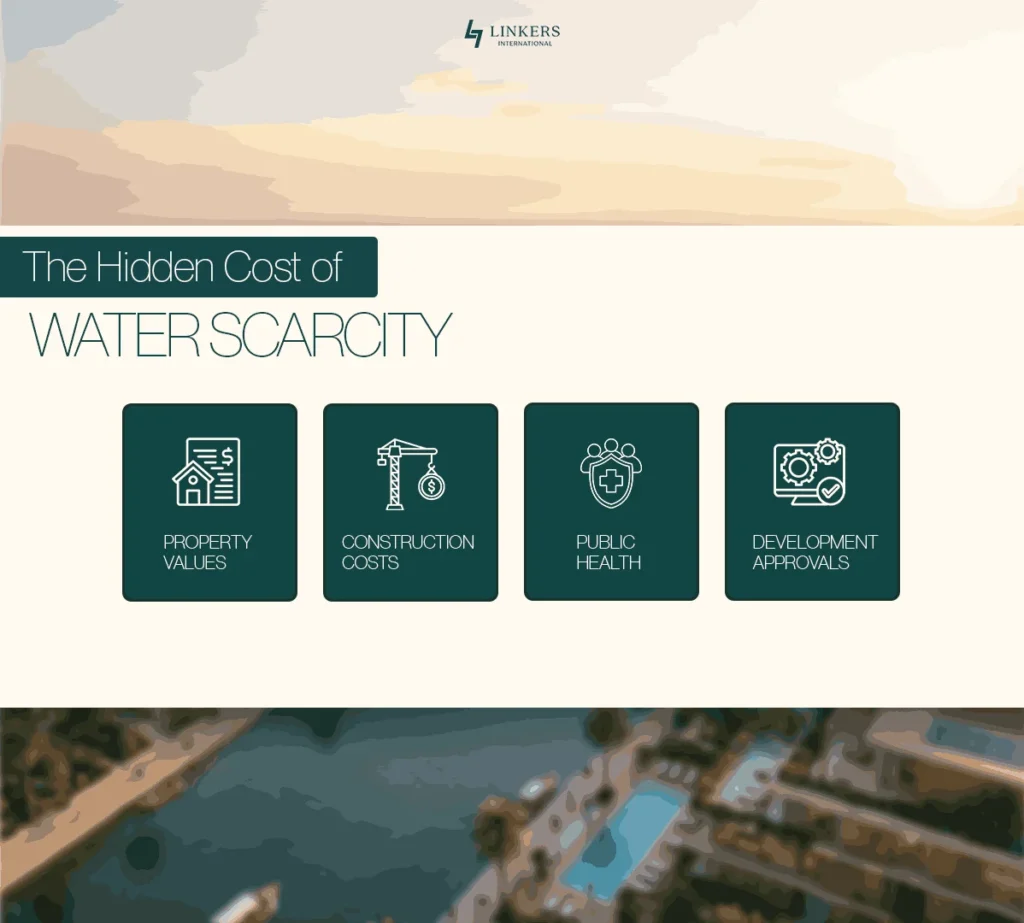
Water scarcity is often discussed as an environmental issue, but its consequences extend far beyond the natural world. It has become an economic challenge that influences how cities grow, how businesses operate, and how real estate markets perform. While the effects may not always be immediately visible, limited access to water can create ripple effects across entire communities, increasing costs, slowing development, and shaping long-term investment decisions.
- For developers, securing reliable water infrastructure can influence project feasibility.
- For businesses, operational disruptions can create significant financial losses.
- For homeowners, increasing utility costs and supply uncertainty can affect quality of life and long-term affordability.
Understanding these hidden impacts is essential to understanding why water is becoming one of the most valuable resources of the future. When people think about water shortages, they often imagine inconvenience. The reality is much broader. Water scarcity affects:
- Property values
- Construction costs
- Development approvals
- Business operations
- Industrial productivity
- Public health
- Urban growth potential
As these pressures increase, water availability begins to influence economic decisions at every level. Developers may hesitate to invest in areas where future water supply is uncertain, while businesses increasingly assess water reliability before selecting locations for operations, manufacturing facilities, or offices. At the same time, local authorities may introduce stricter regulations, infrastructure requirements, or usage restrictions in water-stressed regions, adding complexity and cost to future development.
The Pakistan Perspective
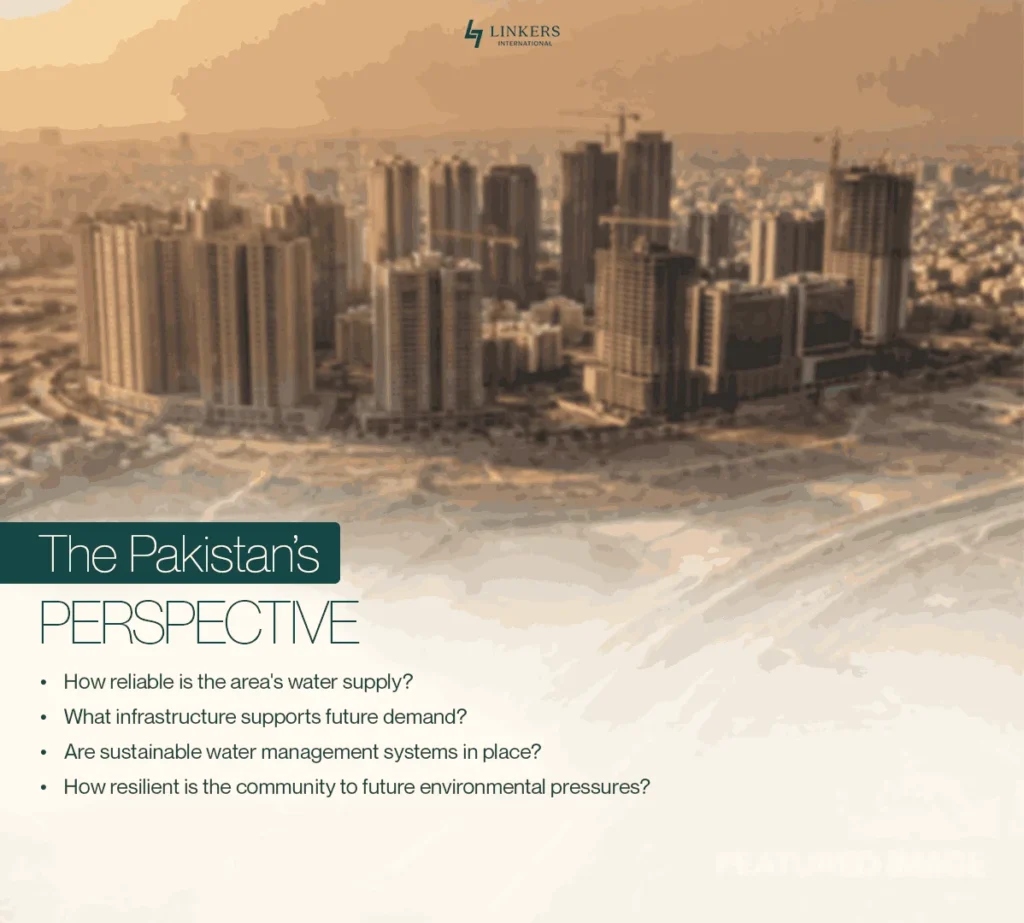
The conversation around water security is particularly relevant in Pakistan. The country faces a combination of rapid urbanization, population growth, climate variability, groundwater depletion in several urban areas, and increasing pressure on water infrastructure. Cities continue to expand while demand for reliable water services rises. Therefore, proper Questions that once focused solely on location, accessibility, and pricing may soon include:
- How reliable is the area’s water supply?
- What infrastructure supports future demand?
- Are sustainable water management systems in place?
- How resilient is the community to future environmental pressures?
These considerations are likely to play a growing role in real estate decision-making over the coming decades. At the same time, both droughts and floods have highlighted the importance of resilient infrastructure and long-term planning. For developers, investors, and homebuyers, water considerations are becoming increasingly important.
As water security becomes a defining factor in urban resilience, Pakistan needs to move toward performance-based zoning that evaluates developments not just by land use, but by how effectively they manage critical resources such as water, energy, and infrastructure.
What It All Means
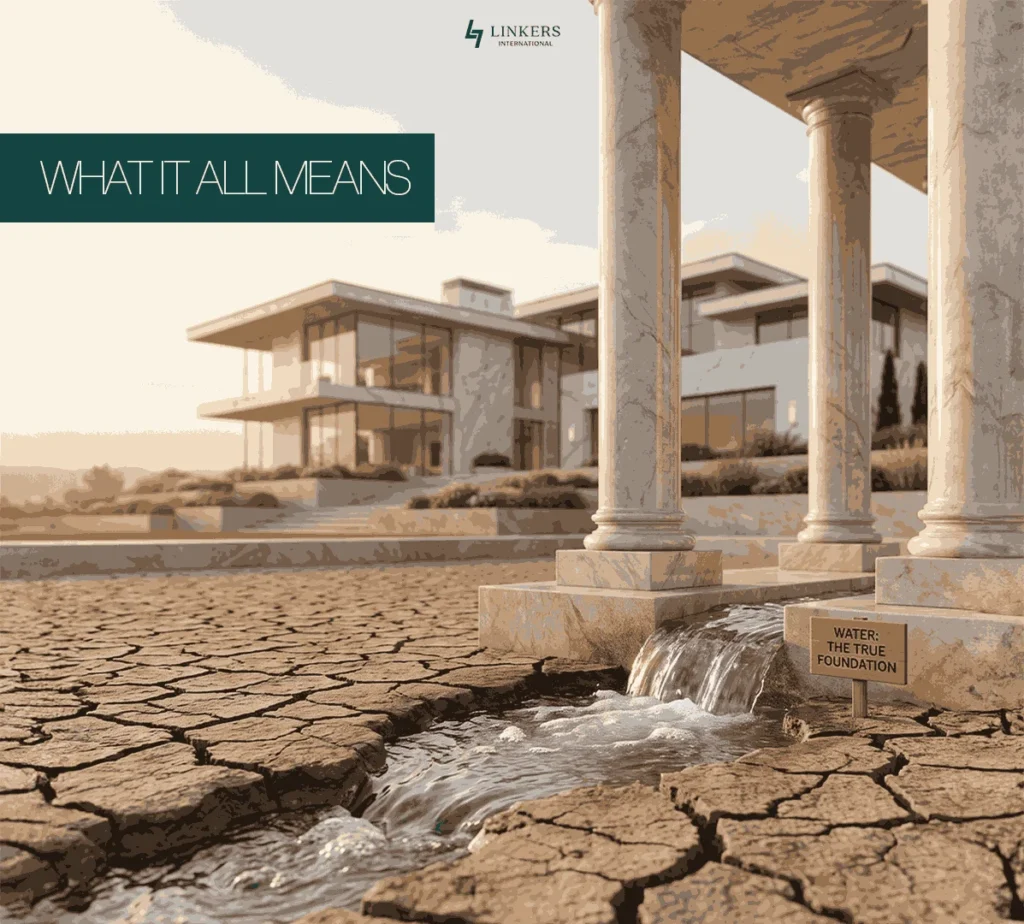
Water is unlikely to replace luxury altogether. People will always value beautiful architecture, premium amenities, and prestigious locations. However, the foundations of value are shifting. As resource pressures grow and environmental realities become more visible, buyers and investors may begin to view water security not as a utility issue but as a core component of quality, resilience, and long-term value.
The most successful developments of the future may not be those with the most extravagant features. They may be the ones that recognize a simple truth that civilizations have understood for thousands of years: When water is secure, communities thrive. When it is not, even luxury has limits.