
Water is no longer just a basic human need, it is becoming one of the world’s most critical and contested resources. Water is the new oil, as growing populations, climate change, industrial overuse, pollution, and poor resource management place unprecedented pressure on freshwater supplies. Unlike oil, which can increasingly be replaced by renewable energy, water has no substitute. Every crop, every factory, every household, and every living being depends on it, making access to clean and reliable water fundamental to the future of economies, cities, and societies.
As shortages grow more severe, what we once took for granted is shaping economies, triggering conflicts, and deciding the future of global stability. Welcome to a world where water is the new oil and the next great power struggle may be over a glass of it.
US Agricultural Groundwater Depletion
The United States offers a clear example of how agricultural productivity can come at the cost of groundwater security. Across major farming regions, groundwater has become essential for maintaining crop production, particularly where rainfall is limited or surface-water supplies are unreliable. As irrigation demand continues, the challenge is no longer simply having enough water for agriculture, but ensuring that aquifers are not being depleted faster than they can naturally recover.
Key facts:
- Around 71% of groundwater withdrawals in the United States are used for irrigating croplands.
- The High Plains Aquifer, which includes the Ogallala Aquifer, is one of the country’s most important agricultural water sources. About 27% of U.S. irrigated land overlies the aquifer, which supplies roughly 30% of the groundwater used for U.S. crop irrigation.
- In many parts of the High Plains, groundwater withdrawals exceed natural recharge, causing significant declines in water levels. Some areas have experienced declines of more than 100 feet.
- The irrigated High Plains and California Central Valley together account for approximately 50% of U.S. groundwater depletion since 1900.
- In the southern High Plains, approximately 330 cubic kilometres of largely ancient groundwater has been depleted, according to USGS research.
- California’s Central Valley has experienced significant groundwater depletion since the 1960s, particularly during droughts when farmers turn more heavily to groundwater.
Moreover, the United States water reserve stock is not simply a measure of how much water exists, but of how much usable water is stored in aquifers and other natural systems, how quickly those reserves are replenished, and how rapidly they are being depleted. Groundwater aquifers function as critical water reserves for drinking, irrigation and other uses, making their long-term condition an important part of U.S. water security
The American experience demonstrates that groundwater can quietly support an agricultural economy for decades while its reserves decline beneath the surface. Once extraction consistently exceeds natural recharge, the consequences can extend beyond falling water tables to reduced irrigation capacity and greater pressure on future agricultural production.
The challenge, therefore, is not simply to pump less water, but to rethink how agriculture, groundwater management and long-term food security are planned together. Water beneath the ground may be invisible, but its depletion can eventually become an economic and food-security crisis above it.
Water is the New Oil. Why?
Although Water is essentially not replaceable like fuel alternatives. Unlike oil, which can be substituted or phased out with renewable energy sources like solar, wind, or electric power, water has no other alternative. There is no artificial replacement for fresh water. Every industry from agriculture to tech depends on it. Every lifeform needs it to survive. And as populations grow and climate change accelerates, this once-abundant resource is becoming alarmingly scarce.
Oil once defined geopolitics, economies, and global power. Now, it’s water. Countries are starting to take ownership of water rights, similar to how they did with oil reserves. Water stress is affecting migration movements, conflicts, and even city planning. Water is no longer just a humanitarian issue; it’s also an economic, political, and environmental issue. The point? You can find new energy sources, but you can’t make water.
1- Rising demand due to population growth, agriculture, and industrial use
As the global population races past 8 billion, the water demand is skyrocketing — not just for drinking, but for everything we consume and produce.
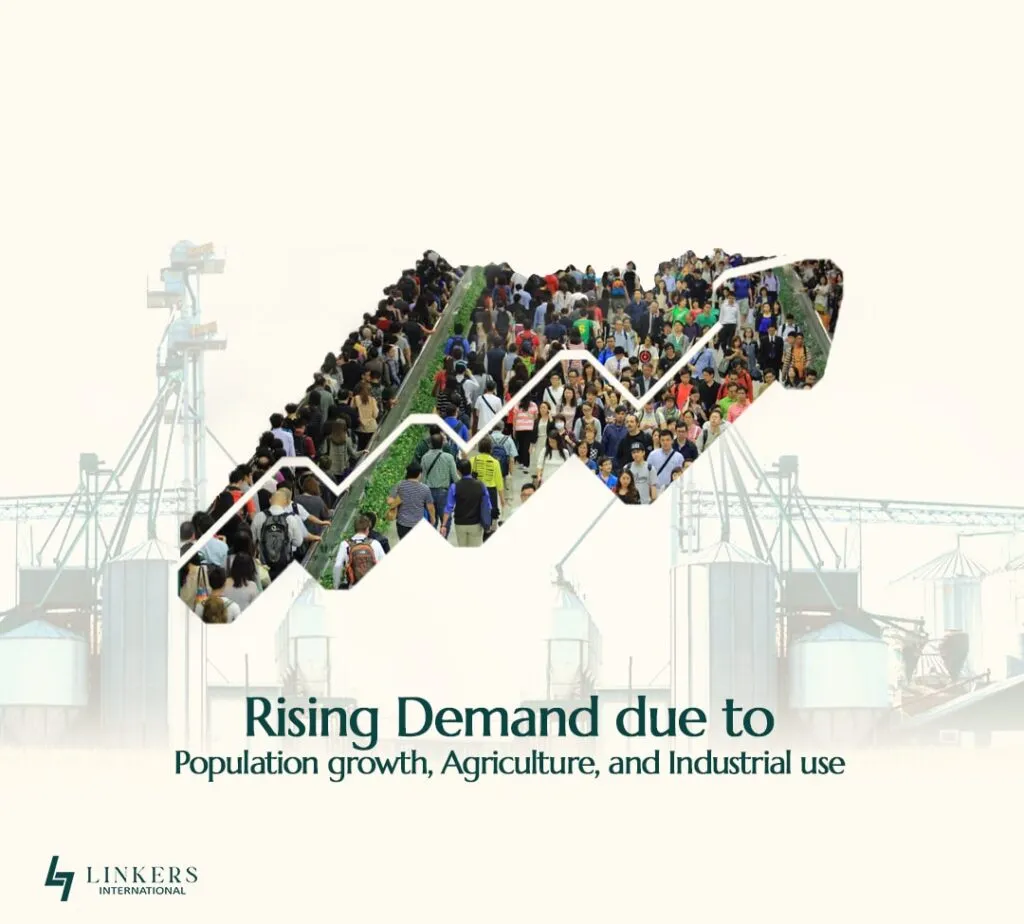
- Population Growth: More people means more homes, more food, more energy — and all of that requires water.
- Agriculture: Around 70% of global freshwater is used for agriculture. As diets shift and food demands increase, so does the pressure on water systems.
- Industrial Use: From manufacturing to energy production, industries rely heavily on water for cooling, cleaning, processing, and more. The rise of urbanization and development is making water use even more intensive.
The catch? While demand keeps rising, freshwater supply is limited and unevenly distributed. We’re drawing more water from aquifers and rivers than nature can replenish. In short: We’re using water like it’s infinite, but it’s not. And as demand continues to rise, water will define the future of food security, economic stability, and global peace.
2- Unequal distribution of freshwater resources, some regions drown, others dry up
Water is not just in short supply, but is also poorly distributed. While some parts of the world face devastating floods, other parts face significantly drier lands and dry taps. This uneven geographic variation exacerbates global inequity and fuels conflict.
- Abundance vs. Absence: Countries like Canada and Brazil have huge freshwater sources available to their citizens. But in countries in the Middle East, North Africa, and South Asia, water availability is critically challenged.
- Climatic Extremes: Climate change has created more severe “levels” of inequity, by flooding one part of a country while concurrently creating droughts in other parts.
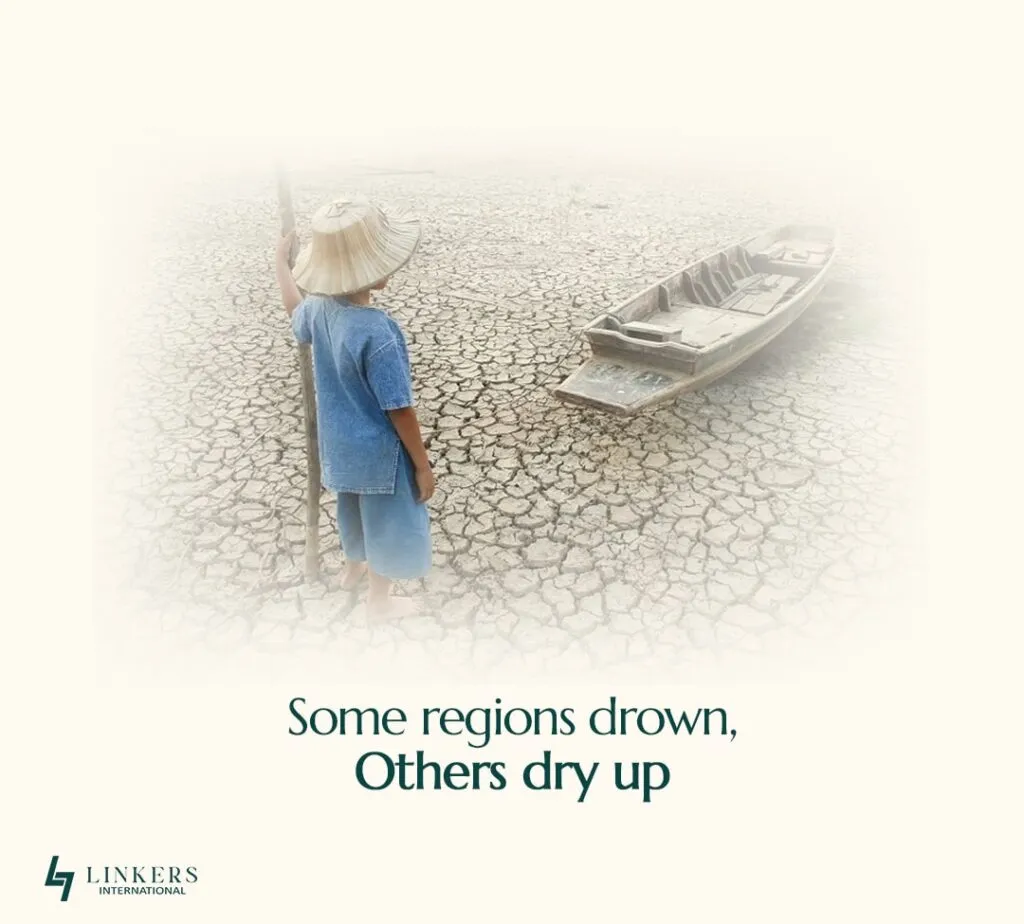
- Urban-Rural Divide: In many countries, urban populations are often provided preferential access to water resources compared to rural populations, which may suffer from unreliable supply chains and unsafe water supplies
This unequal distribution leads to striking economic disparities, food insecurity, and social unrest. For too many areas of the world, increasingly severe drought conditions are already leading to community displacement and conflict. Water is the new oil; not merely a local resource, it is a power fault line. And alongside the distribution inequities, the allocation of water resources may set the future power pathways for the globe.
Signs we are heading into a water crisis
Water crises are hitting every corner of the world, from wealthy cities to rural villages, proving that no one is safe from scarcity. From the world’s most developed economies to struggling third-world nations, water scarcity is not selective, but its consequences are far more devastating where infrastructure and resources are lacking. In every sense, water is the new oil.
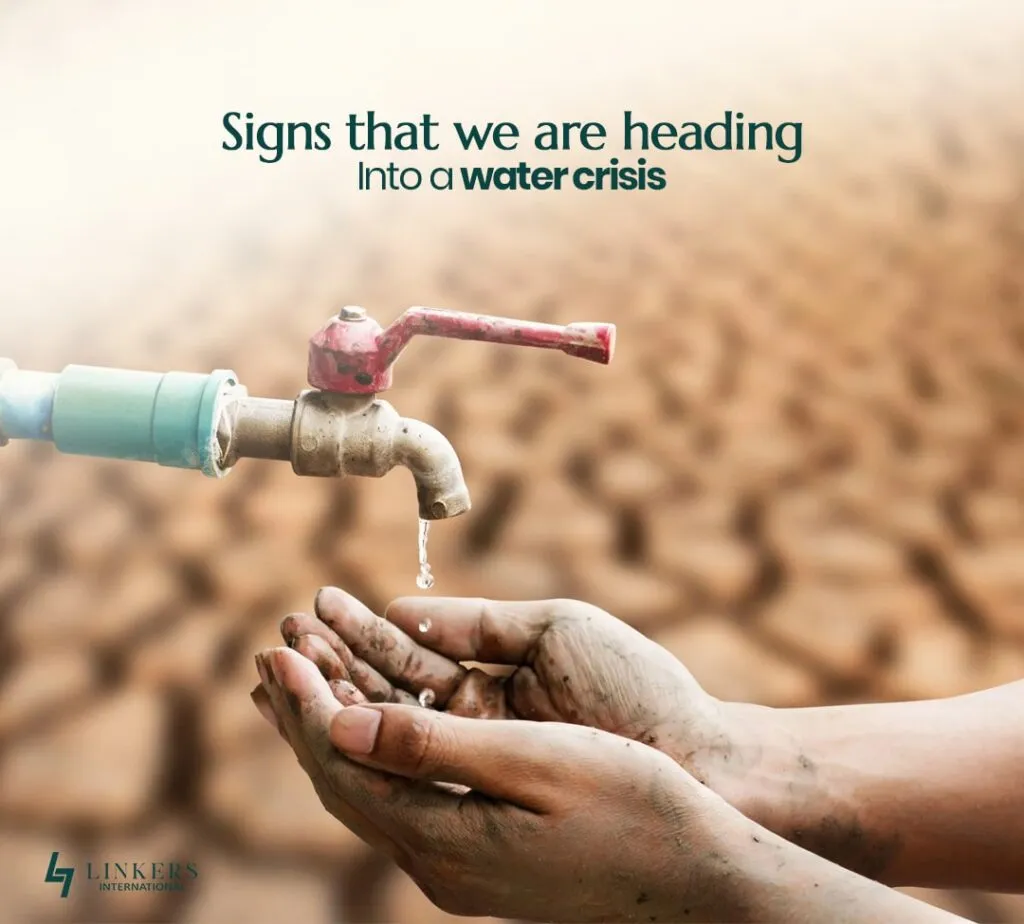
- California has faced historic droughts, leading to strict water rationing, massive agricultural losses, and raging wildfires.
- South Africa’s “Day Zero” in Cape Town was a global alarm bell, a modern metropolis on the verge of its taps running completely dry.
- The Colorado River, which supports over 40 million Americans, is shrinking rapidly due to overuse and climate shifts threatening cities, agriculture, and ecosystems.
- In Pakistan, a country once rich in river systems, the situation is reaching crisis levels. The Indus River, Pakistan’s primary water source, is under immense pressure from melting glaciers, mismanagement, and over-extraction. According to the IMF, Pakistan could run dry by 2040 if immediate action isn’t taken.
Wealthy nations can invest in desalination, advanced irrigation, or water recycling, but developing countries usually don’t have that same fallback.
- Pakistan was a water-rich country and is now one of the most stressed countries on the planet. The country’s most utilized freshwater resource – the Indus River, which provides water for drinking and for agriculture – is shrinking as glaciers melt and poor management and human overuse continue.
- Third-world countries across Africa and South Asia face similar realities: no infrastructure, poor water governance, and high vulnerability to climate shifts. Millions rely on groundwater that’s rapidly depleting, or unsafe surface water that spreads disease.
In these regions, water scarcity isn’t just an environmental issue; it’s a matter of public health, food security, and national stability. And without urgent action, these “Day Zeros” will no longer be rare headlines; they’ll be the norm.
1- Groundwater depletion due to over-pumping
Groundwater is the hidden reservoir beneath our feet — and for billions of people, it’s their primary source of drinking and irrigation water. But it’s being extracted faster than nature can recharge it.
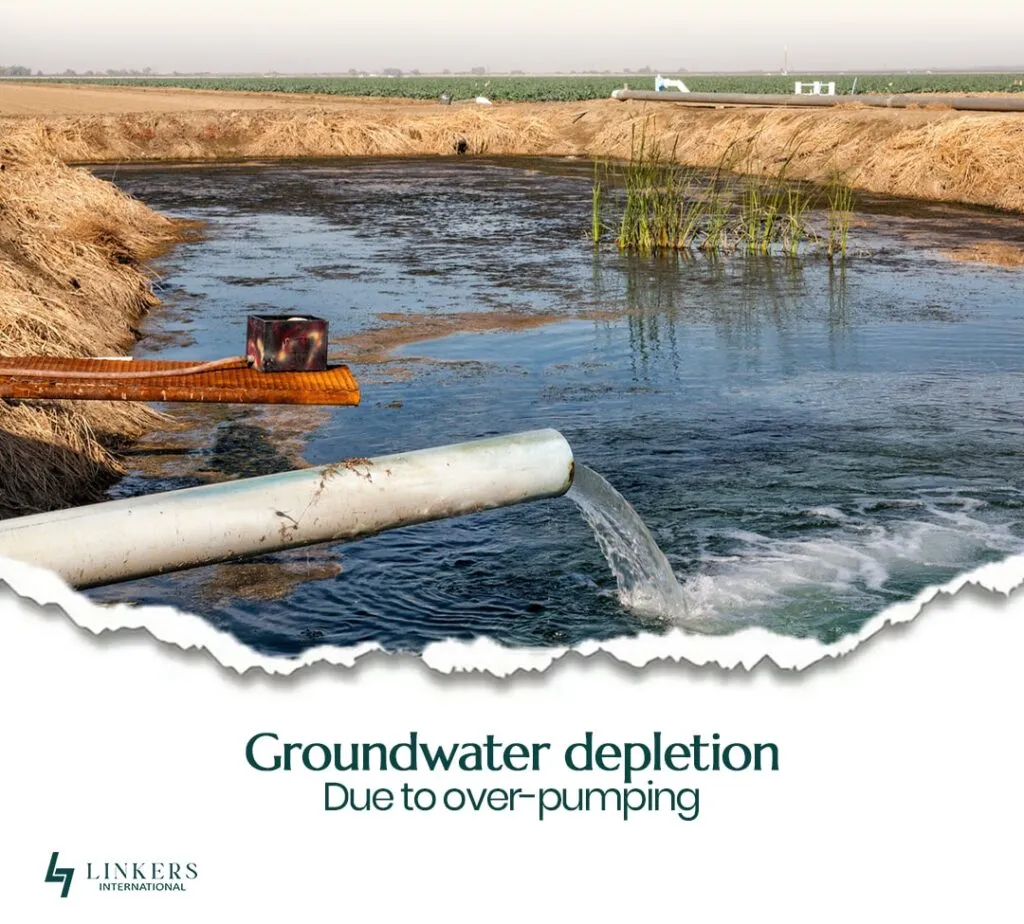
- Over-pumping for agriculture is one of the biggest culprits. To meet rising food demands, farms around the world are drilling deeper and deeper.
- In countries like India, Pakistan, and Iran, groundwater is disappearing at an alarming rate, leaving behind dry wells and salt-contaminated soil.
- Once these aquifers are depleted, they can take centuries or longer to recover.
Unchecked extraction today is silently building tomorrow’s crisis. Once the groundwater is gone, there is no backup.
2- Water pollution makes available sources unusable
Even where water is available in Pakistan, much of it is too polluted to be safely used, contaminated by industrial discharge, agricultural chemicals, untreated sewage, and plastic waste.
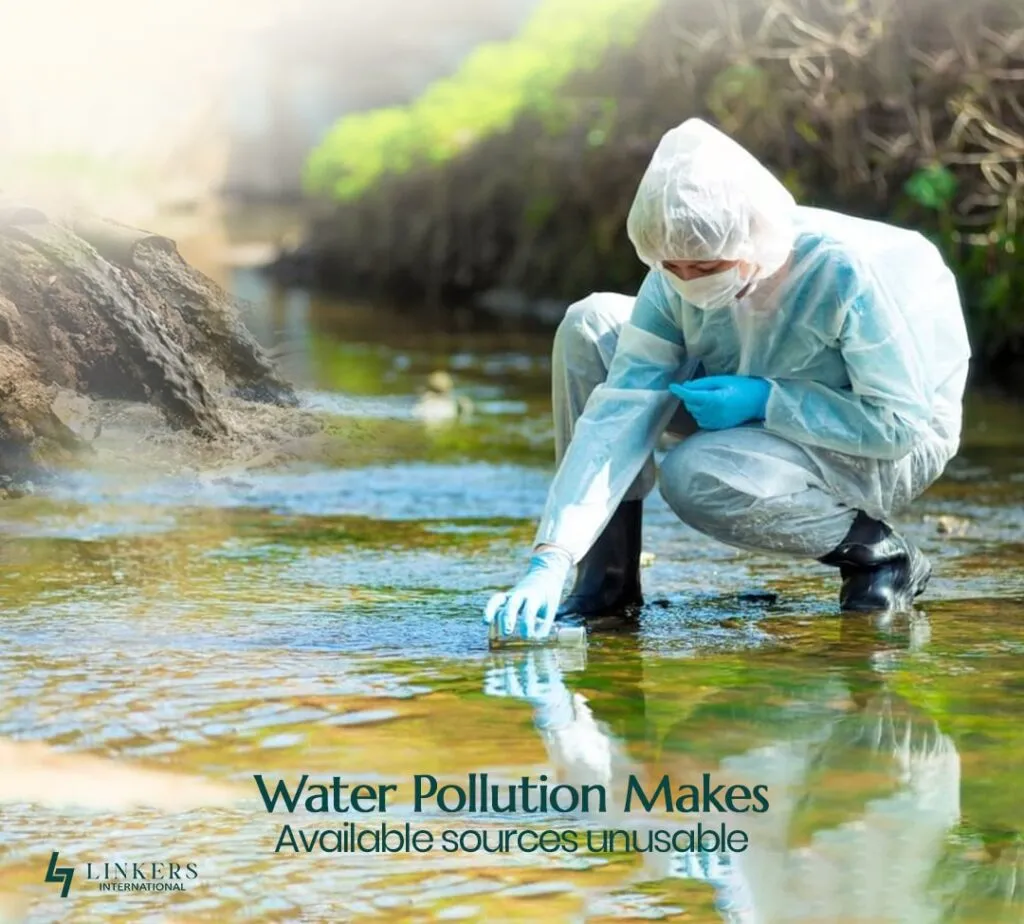
- According to the Pakistan Council of Research in Water Resources (PCRWR), up to 70% of the country’s water sources are unsafe for drinking.
- Industrial zones in cities like Lahore, Karachi, and Faisalabad often release untreated chemicals directly into rivers and canals, especially the Ravi and Lyari rivers, turning once-vital water bodies into toxic channels.
- Agricultural runoff loaded with pesticides and fertilizers further contaminates groundwater, particularly in Punjab and Sindh, where tube wells are common.
- The absence of proper waste management means that sewage and garbage often mix with drinking water supplies, especially in low-income urban and rural areas.
As a result, waterborne diseases like diarrhea, cholera, typhoid, and hepatitis are widespread — particularly among children. An estimated 50,000 children under five die every year in Pakistan due to contaminated water (UNICEF).In Pakistan, the water crisis isn’t just about scarcity it’s about safety. And polluted water is silently stealing lives every day.
3- Climate change is worsening rainfall patterns and glacier melt
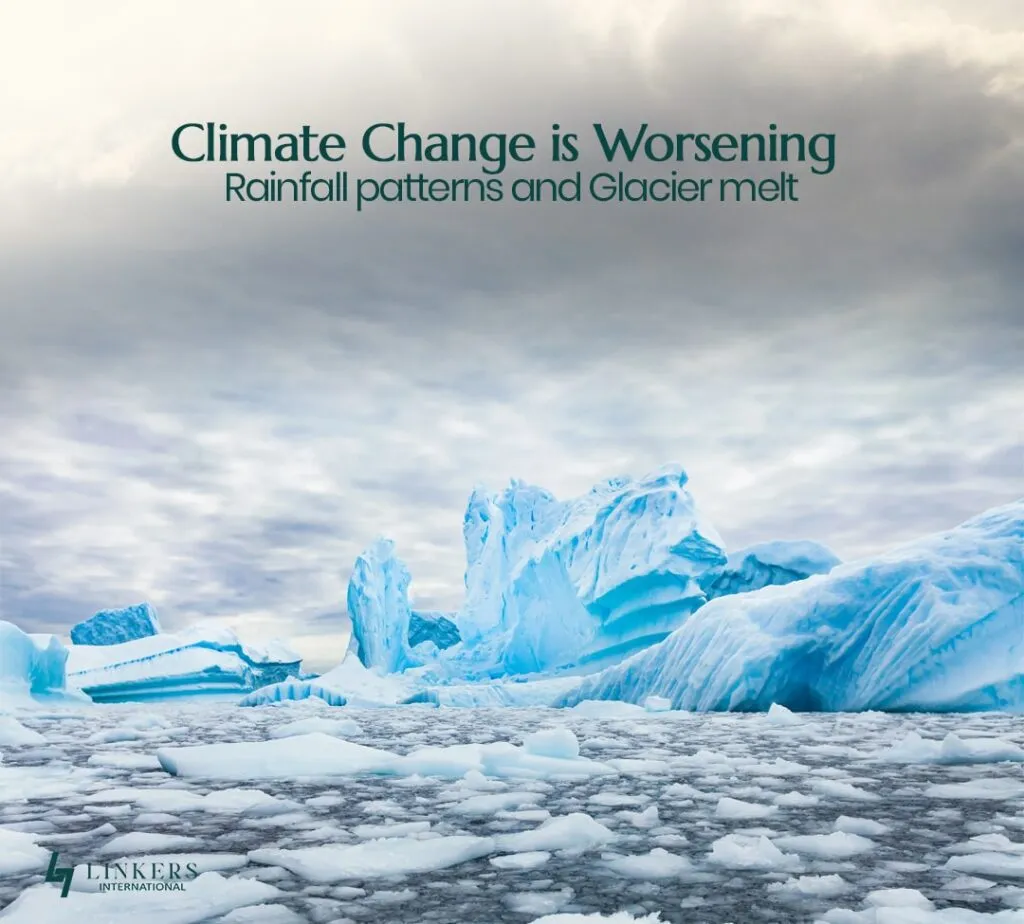
Climate change is no longer a matter of “what if” for Pakistan; it has materialized into an everyday lived experience, one that is already transforming how, when, and where water is accessible. Rainfall patterns are now starkly unreliable! In the last decade alone, Pakistan has experienced extreme droughts and catastrophic floods. In 2022, record monsoon rains fell in such volume that more than one-third of the country was flooded, affecting over 33 million people, but in other years, key agricultural areas are the result of prolonged dry spells, so what is happening to the annual snow melt and food production?
The glaciers of the Himalayas, Karakoram, and Hindu Kush (the natural source of the Indus River Basin) are now melting faster than ever before. The International Centre for Integrated Mountain Development (ICIMOD) reported that Pakistan’s glaciers are losing mass between 0.3 and 1 meter each year in the Himalayas, and Pakistan’s loss will impact long-term agriculture and drinking water supply.
Overall, with temperature increases, evaporation rates are increasing along with soil moisture decline, which also means droughts and floods are becoming more severe and harder to predict. With all of this uncertainty, it has direct effects on food, rural livelihoods, and national water security.
Pakistan is within the top ten most vulnerable countries to climate change (Global Climate Risk Index) but with less than 1% of global greenhouse gas emissions. Climate change is going to break Pakistan’s natural water cycle, and a hydraulic system, once a dependable river system, is going to look very different in the near future.
Global Consequences to Expect
- While everyone knows that water is a critical, basic human need, it’s also the foundation of the entire global economy. Believe it or not, without steady and predictable access to water, the economy comes into jeopardy. Water is utilized by every major industry, from farming to manufacturing to energy production. Let’s start with the industry that consumes most of our freshwater – agriculture, which accounts for about 70 percent of global freshwater use. When there isn’t enough water, crop production declines, food prices go up, and food insecurity increases.
- Manufacturing industries that rely on water for processing and cooling include textile, steel, pharmaceuticals, and electronics. If we cannot provide enough water, the production line stops, and costs may go up.
- For energy production, water is key, especially for hydropower and thermal power plants. In 2022, droughts in Europe caused a 19% drop in hydropower generation, leaving countries with no choice but to depend on fossil fuels.
- Water scarcity could cost some areas, according to the World Bank, up to 6% of GDP by 2050 due to lost agricultural productivity, health impacts, and lower industrial output. In water-stressed countries such as Pakistan, India, and parts of Sub-Saharan Africa, this economic threat is already taking shape, compromising jobs, incomes, and national development goals. No water means no crops. No cooling. No manufacturing. No power. Water scarcity is not just an environmental crisis. It is an economic one.
1- Conflict & Migration: Water wars between nations or within communities
As water becomes scarcer, it’s not just an environmental or economic issue — it’s a source of conflict and displacement. When rivers dry up or groundwater disappears, tensions rise — between countries, within communities, and even among neighbors.
- International tensions are growing over shared rivers like the Indus (Pakistan & India), the Nile (Ethiopia, Sudan & Egypt), and the Jordan River (Israel & neighboring countries). Competing needs, dam-building, and water control have already sparked diplomatic standoffs — and in some cases, threats of violence.
- Within nations, water disputes between provinces or ethnic groups are intensifying. In Pakistan, for instance, provinces like Sindh and Punjab often clash over water distribution, creating political rifts and public unrest.
- Rural-to-urban migration is accelerating as farmers and herders abandon water-starved lands. According to the UN, climate-related disasters, including water scarcity, could displace over 700 million people by 2030.
These are not fears in the distance; they are happening now. Water is both a weapon and a trigger for conflict, instability, and forced migration. Wars were fought over lands, oil, and power; now they are being fought over water. And as the pressure increases, access to clean water could be the determining factor for peace in many regions.
2- Public Health
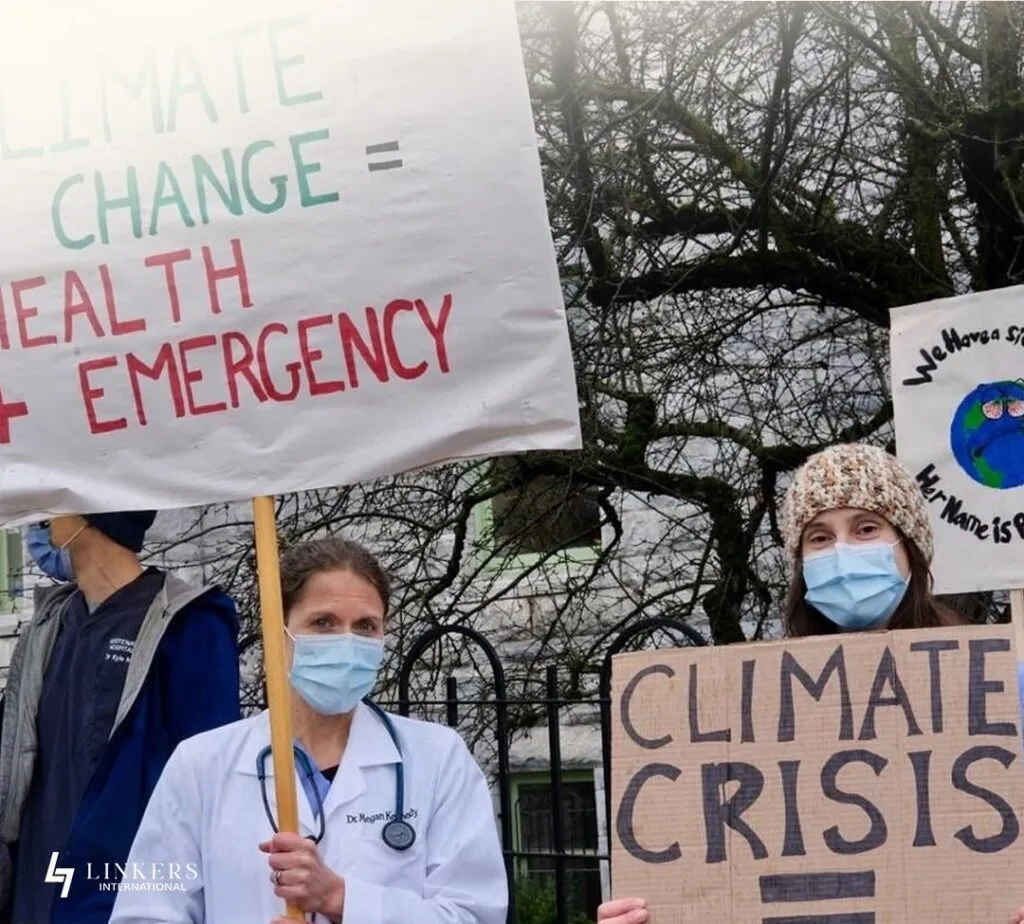
Waterborne conditions, lack of sanitation, and insecurity related to food. The water crisis in Pakistan isn’t only a crisis of water scarcity – it’s truly a public health crisis. Contaminated water, sometimes poor sanitation, and unreliable access to available water are creating a health disaster that is going unnoticed.
- Unsafe Drinking Water: Over 70% of households in Pakistan consume water that is unsafe for human consumption, according to the Pakistan Council of Research in Water Resources (PCRWR). This water is often polluted with sewage, arsenic, or industrial waste.
- Waterborne Diseases: Diarrhea, typhoid, cholera, and hepatitis A & E are rampant — particularly among children. Each year, more than 50,000 children under the age of five die in Pakistan due to diarrhea caused by contaminated water (UNICEF).
- Poor Sanitation: With inadequate sewage systems and low awareness, communities lack the infrastructure to manage waste properly. This allows dirty water to mix with drinking supplies, creating a vicious cycle of infection and illness.
- Food Insecurity: Water shortages also impact crops and livestock, reducing food production. This results in nutritional deficiencies, rising food prices, and increased vulnerability among low-income populations especially in rural areas.
When water is poorly managed becomes a disease vector instead of a life source. In Pakistan, access to clean water and sanitation is not only a development goal, but it is also survival.
Who is at more risk?
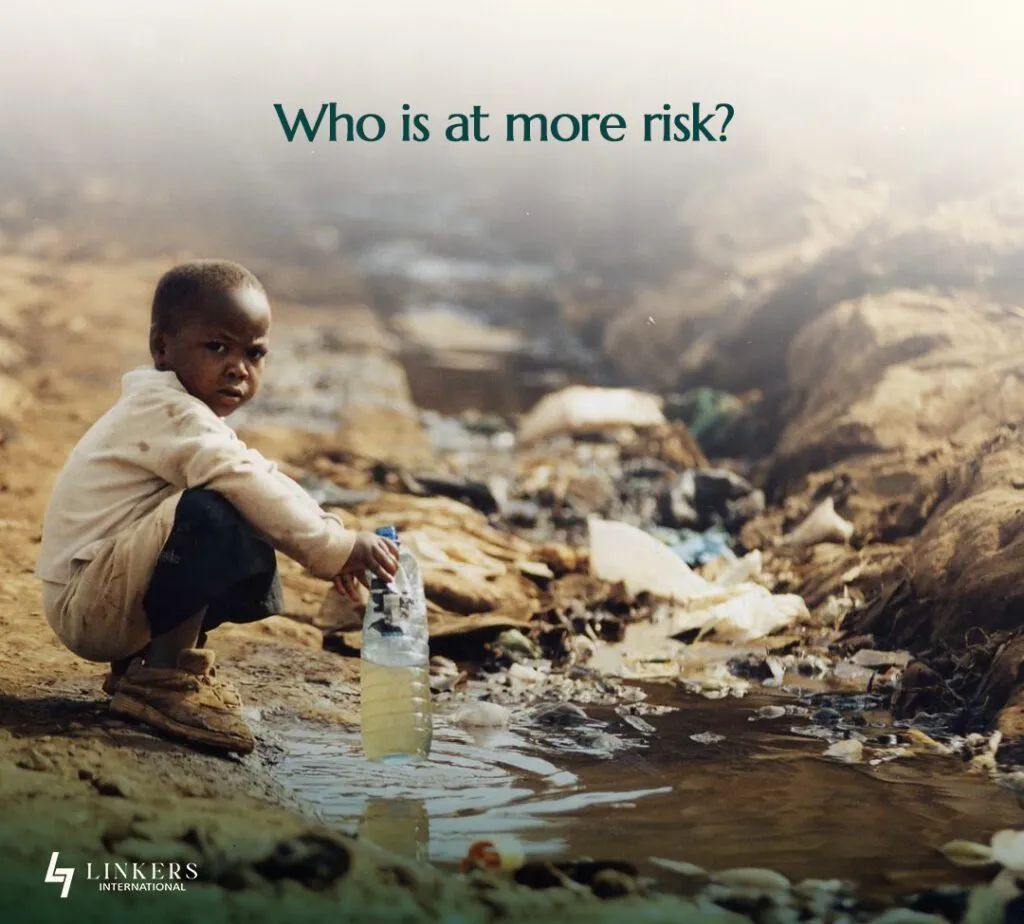
Regions like Sub-Saharan Africa, South Asia, and countries such as Pakistan face the brunt of water scarcity due to weak water management systems, aging infrastructure, and limited access to clean water.
- Only 58% of people in Sub-Saharan Africa have access to basic drinking water services (World Bank).
- In Pakistan, nearly 22 million people lack access to clean drinking water (WaterAid 2023).
- Poor water storage, leakage, and contamination due to broken pipelines are common in rural and urban areas alike, making even available water sources unreliable.
Without the means to build sustainable infrastructure, these countries are locked in a cycle of scarcity, disease, and poverty.
1- Mega cities with fast urban growth
Fast-growing urban centers — like Karachi, Lagos, Mumbai, Dhaka, and Jakarta — are running out of water as populations explode and infrastructure fails to keep up.
- Karachi, Pakistan’s largest city, faces a daily water shortfall of over 600 million gallons.
- By 2030, global demand for water in cities is expected to rise by 50%, yet many major cities already face chronic shortages.
- Informal settlements and slums — where a large portion of urban populations live — often lack piped water and rely on expensive, unsafe alternatives.
Urban water crises often result in social unrest, health emergencies, and economic paralysis.
2- Farming-dependent economies
Countries heavily reliant on agriculture are extremely vulnerable, as water is essential for irrigation and livestock.
- Over 60% of Pakistan’s population is directly or indirectly dependent on agriculture — yet the sector consumes over 90% of the nation’s water, mostly through inefficient canal systems.
- In India, agriculture employs more than 40% of the workforce, and shrinking groundwater levels are threatening both food production and farmer livelihoods.
- Droughts in East Africa have led to mass livestock deaths and widespread hunger, displacing thousands.
As climate change intensifies and water becomes unreliable, farming-dependent economies face a triple threat: food insecurity, economic loss, and mass displacement.
What is the Solution?
Tackling the global water crisis demands urgent, coordinated action at every level from policymakers to everyday individuals. As the UN suggests, Governments must adopt smart water governance by implementing fair pricing, reducing waste, and prioritizing sustainable use. Cross-border cooperation is crucial to strengthening international water-sharing agreements and preventing conflict. Investment in infrastructure, such as improved storage systems, water recycling, and desalination technologies, can help bolster supply.
Innovation also plays a vital role: water-smart infrastructure and farming techniques like drip irrigation and sensor-based monitoring can significantly reduce agricultural water waste, while recycling systems and AI-powered tools can optimize usage, detect leaks, and manage distribution efficiently. On a personal level, everyone has a role to play, from fixing household leaks and installing water-efficient appliances to supporting local conservation efforts and choosing low-water-footprint diets. Water is the next oil, and solving the water crisis isn’t just about big reforms; it’s about collective responsibility and smart action at every scale.