

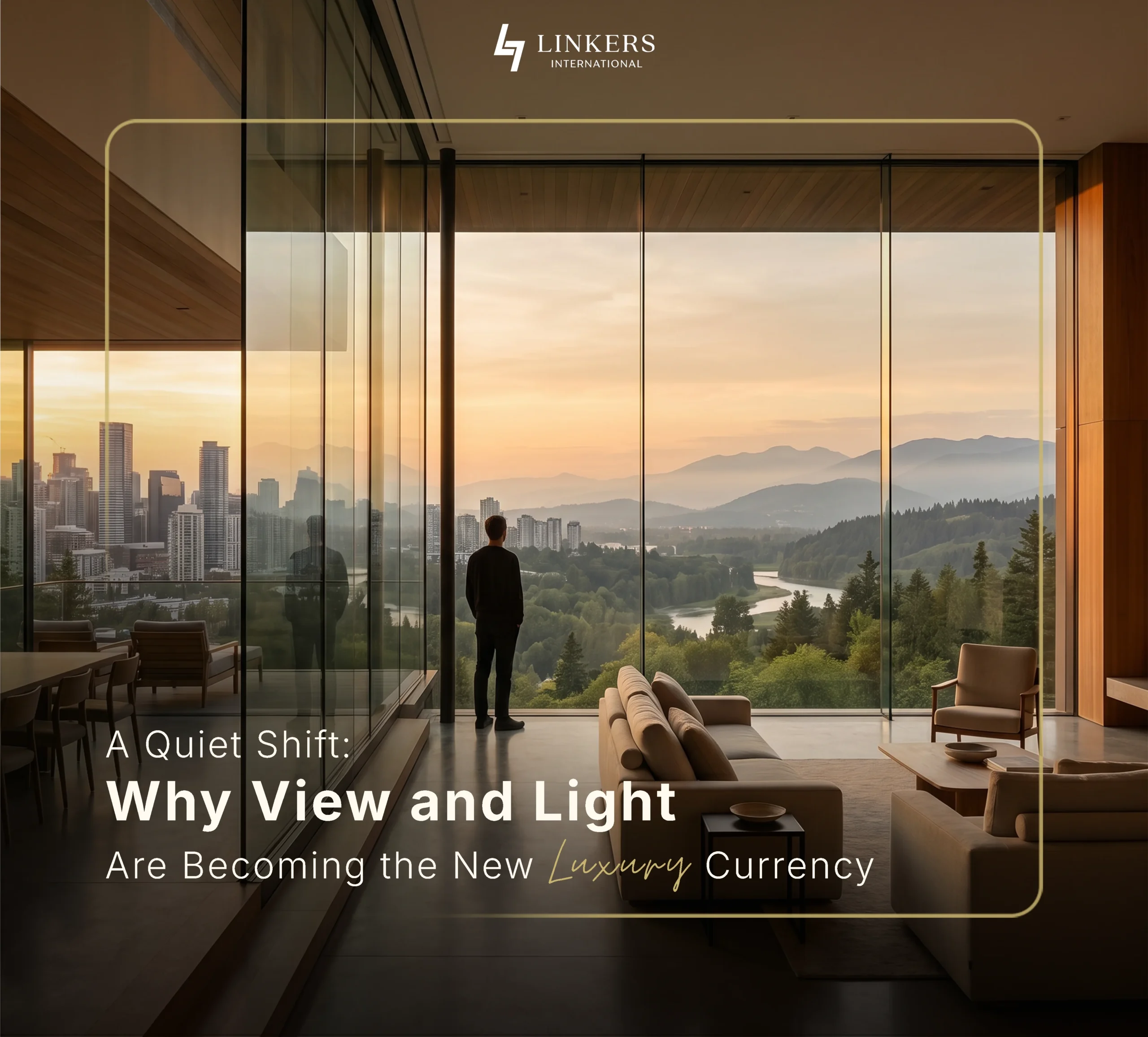
The new luxury in architecture is undergoing a quiet shift. Where marble finishes, imported materials, and grand lobbies once defined exclusivity, today’s most valuable asset is far less tangible. Now it is the access to natural light and meaningful views.
In a world where people spend most of their time indoors, such as in offices, homes, malls, and service centers, the quality of light and visual connection to the outside has become a defining factor of how we experience space.
This transformation in modern facades is not just aesthetic; it is scientific, psychological, and deeply human. Let’s understand why light and views are now the new luxury.
A Shift From Material Luxury to Experiential Luxury
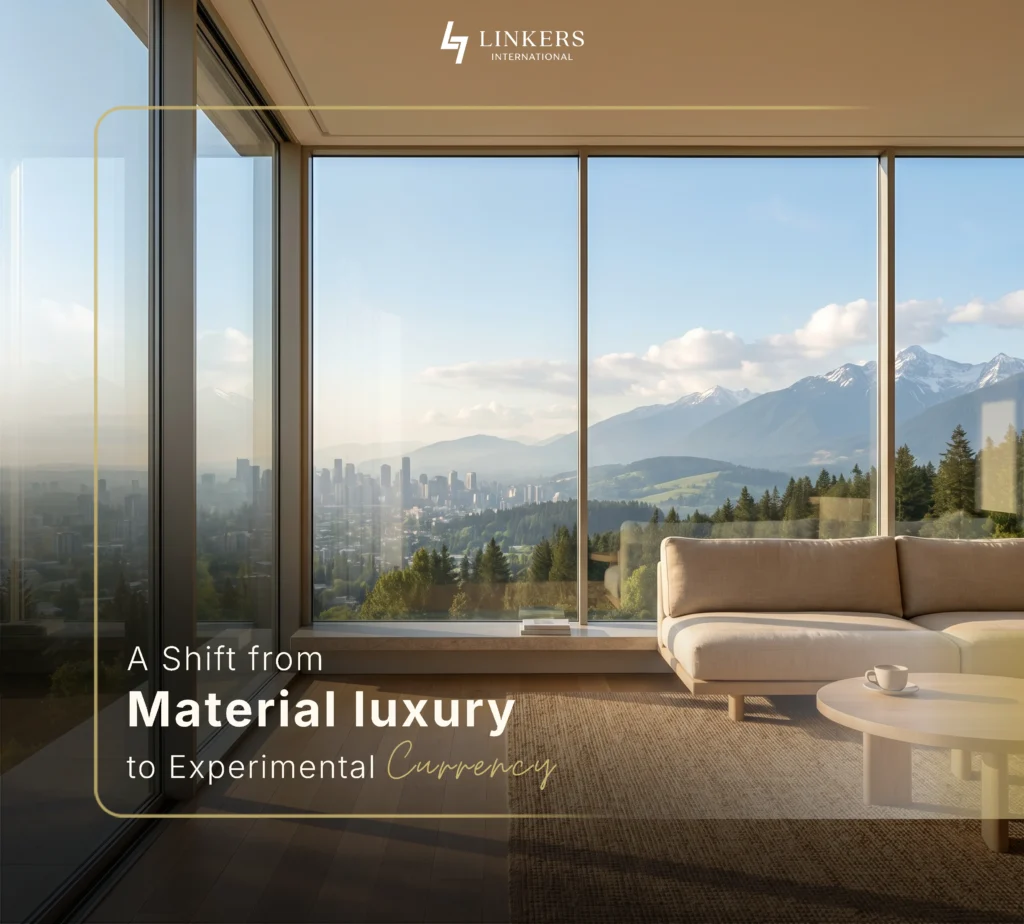
The definition of luxury has evolved from physical richness to experiential quality. People no longer judge spaces solely by finishes or materials. Urban buyers judge modern apartments for sale by how they make them feel over time. Light and views play a central role in this shift because they influence comfort, perception, and overall well-being in ways that static materials cannot.
Natural daylight reduces reliance on artificial lighting, improves energy performance, and enhances indoor environmental quality, thus future-proofing the buildings from the climate impact. At the same time, access to views, whether urban skylines or natural landscapes, creates a sense of openness and spatial depth. Some of the benefits are;
- Enhances occupant comfort and satisfaction
- Reduces dependence on artificial lighting
- Improves perceived spatial quality
- Aligns with sustainable and passive design strategies
The Psychology of Light: Designing for the Human Brain
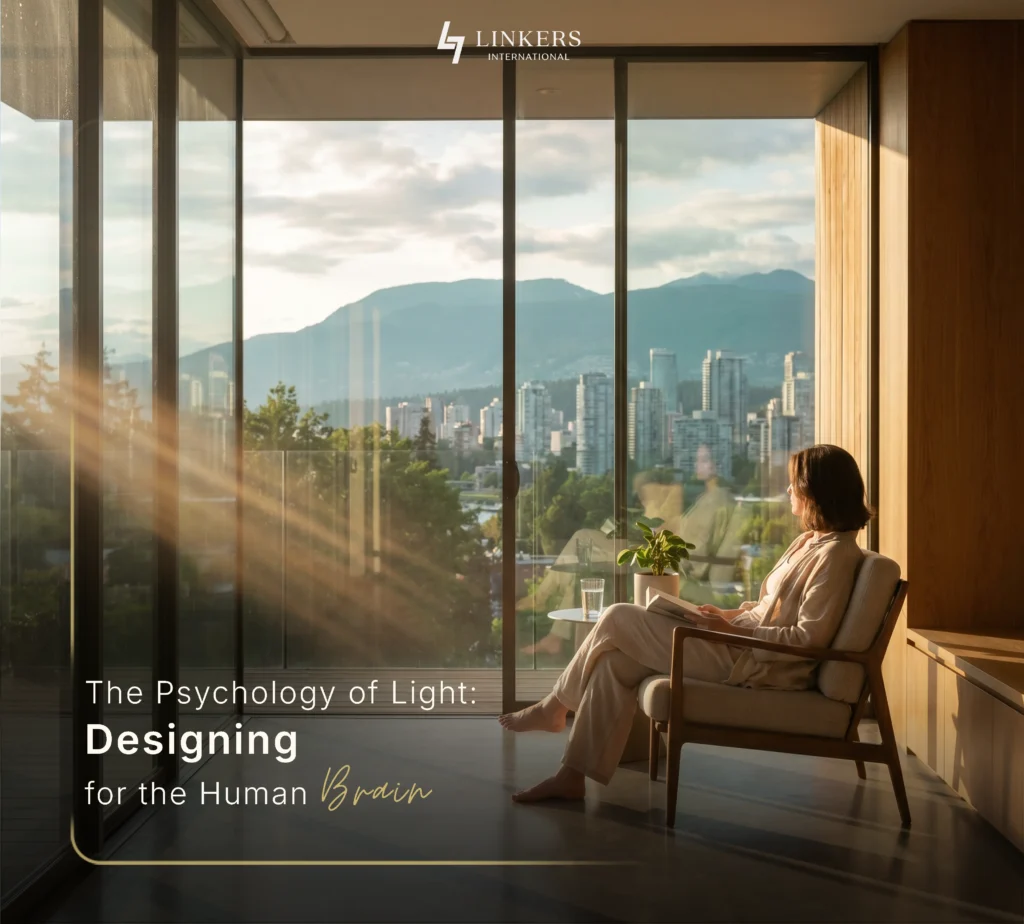
Light directly interacts with human biology, influencing mood, behavior, and cognitive performance. Designing with daylight is not simply about illumination, it is about supporting the body’s natural rhythms and mental well-being. This is why well-lit spaces consistently feel more uplifting, productive, and comfortable.
Exposure to natural light triggers positive biological and psychological responses that shape how people experience a space. Light effects human brain in the following ways.
- Boosts serotonin levels, improving mood
- Regulates circadian rhythms and sleep cycles
- Enhances focus, productivity, and cognitive performance
- Reduces stress, anxiety, and fatigue
Spaces filled with daylight are also perceived as more spacious, welcoming, and alive, these are the qualities often associated with high-end environments.
The Emotional Power of Views
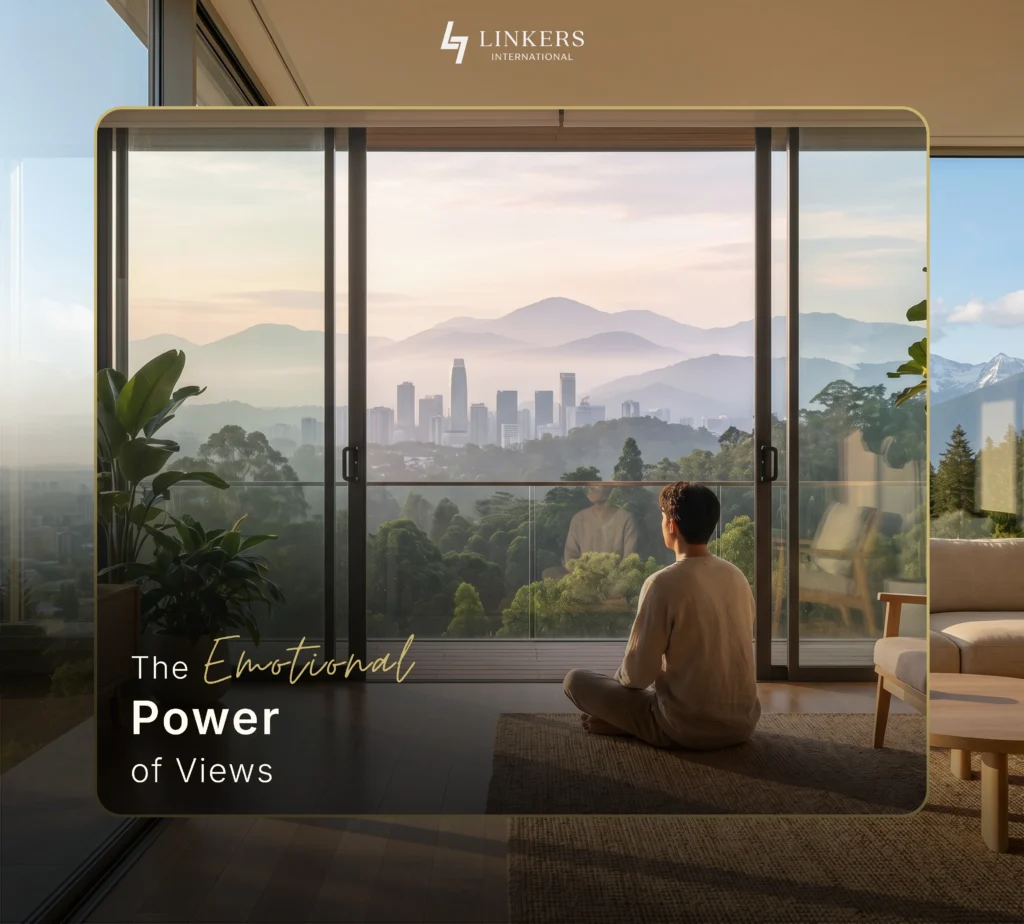
While light influences biology, views influence emotion. A well-designed view can transform a space from enclosed to expansive, offering a sense of connection beyond the physical boundaries of a building. This connection is particularly important in dense urban settings where access to nature is limited. Views create a psychological escape, helping occupants feel less confined and more engaged with their surroundings.
- Strengthens connection to nature (biophilic design)
- Reduces stress and mental fatigue
- Enhances sense of openness and freedom
- Improves long-term occupant satisfaction
Even simple visual access to the sky or greenery can significantly elevate how a space is perceived and experienced.
Why Developers Are Prioritizing Light and Orientation as New Luxury?
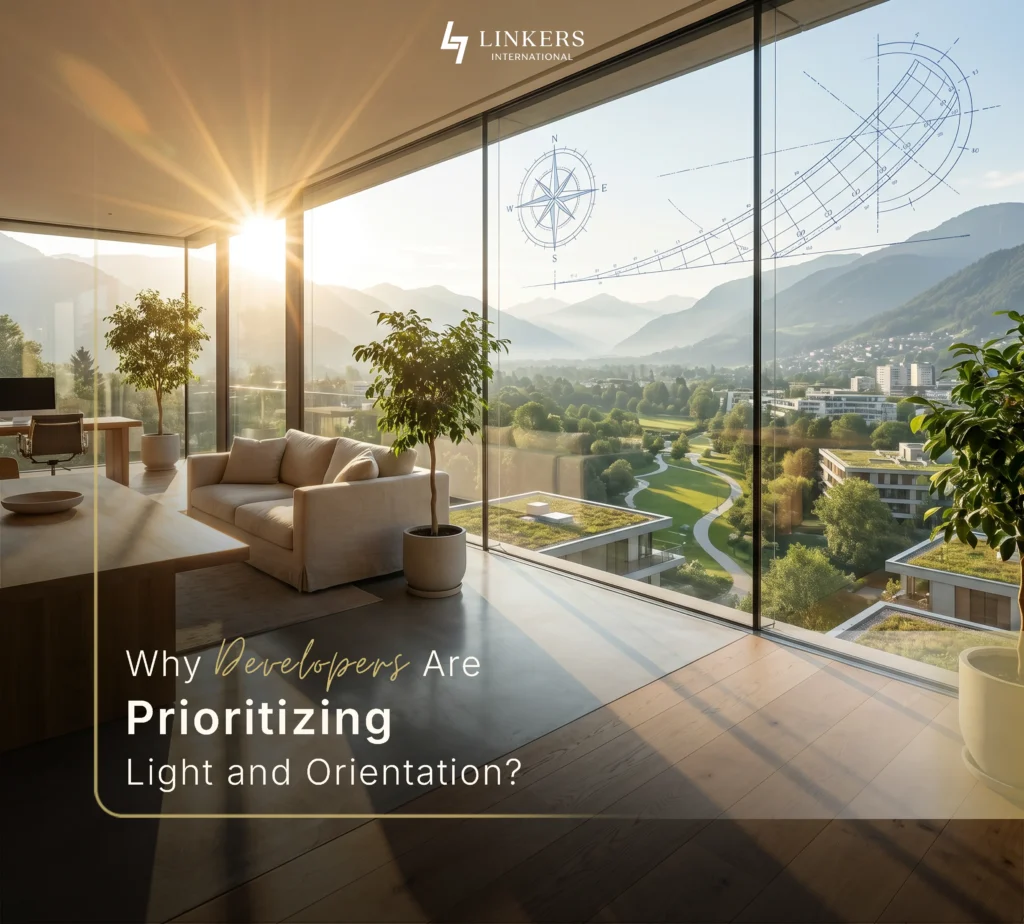
Today’s well-informed developers, such as Linkers International, are increasingly recognizing that light is not just a design feature; it is the new luxury and a financial asset. Their commercial and residential projects in Islamabad are designed with optimal orientation and daylight strategies to outperform others in both market value and user satisfaction.
Orientation plays a critical role in determining how light enters a building and how heat is managed throughout the day. This makes facade design a key factor in both performance and profitability.
What was once considered a technical design decision is now a major driver of real estate value. Light orientation improves a building’s energy efficiency, and these energy-efficient upgrades directly enhance property value by reducing operating costs and improving long-term performance. It also enables faster sales, reduces operational and energy costs, and improves occupant retention and satisfaction.
How Is Technology Accelerating the Shift
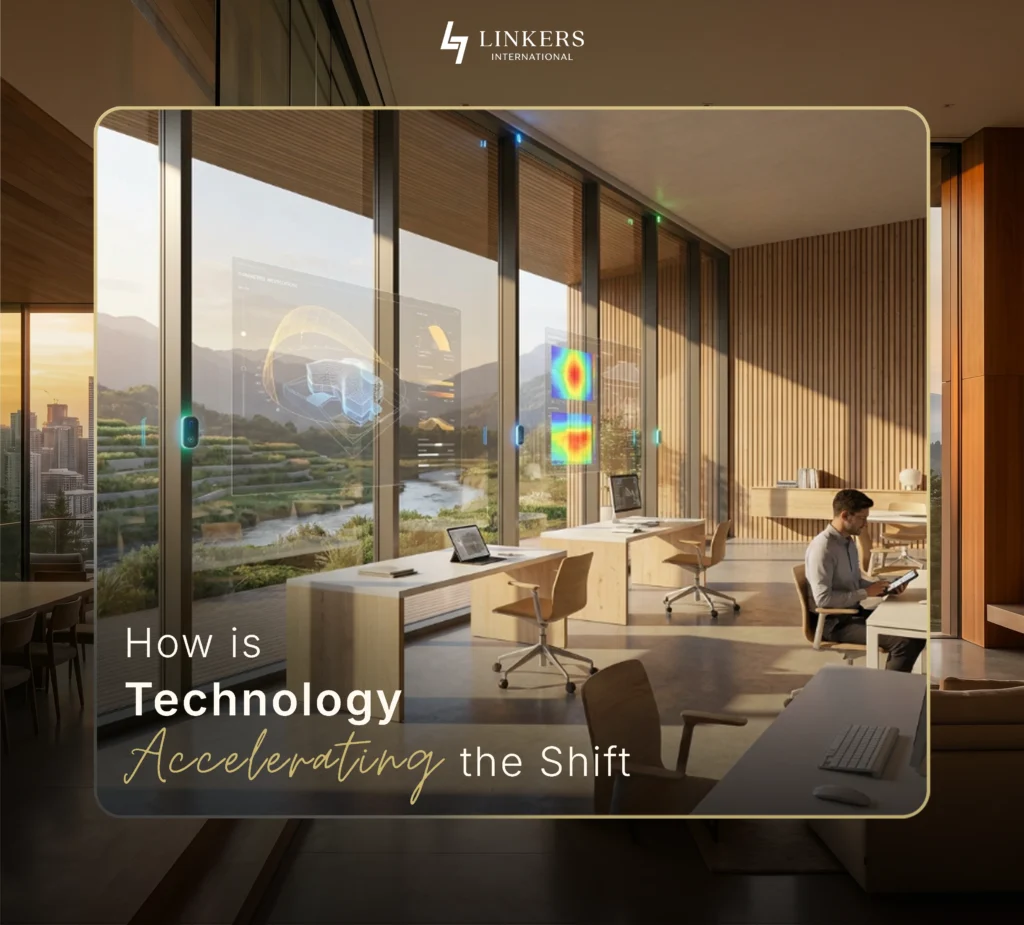
Advancements in facade technology are making it easier to harness the benefits of light without compromising comfort. Architects and engineers now have tools that enable precise control over daylight, glare, and heat gain, leading to smarter and more responsive building envelopes. These innovations ensure buildings remain bright and open while maintaining energy efficiency and thermal comfort.
- Precise control of daylight, glare, and heat gain using parametric modeling tools (Grasshopper, Rhino)
- Performance simulation for light and energy behavior using DIALux / Radiance / Ladybug Tools
- Balance between natural light and indoor comfort through building performance analysis software (IES VE)
- High-performance glazing systems designed via advanced material simulation tools
- Dynamic facades driven by BIM-integrated systems and smart facade controls
- Automated shading and glare reduction using sensor-based control systems and Building Management Systems (BMS)
- Daylight harvesting and energy optimization enabled by IoT sensors and smart lighting controls
- Adaptive building envelopes coordinated through digital twin platforms
- Integrated facade responsiveness supported by AI-driven environmental modelling tools
Technology is turning light into a controllable and valuable design resource rather than an unpredictable element.
Light as the Ultimate Status Symbol
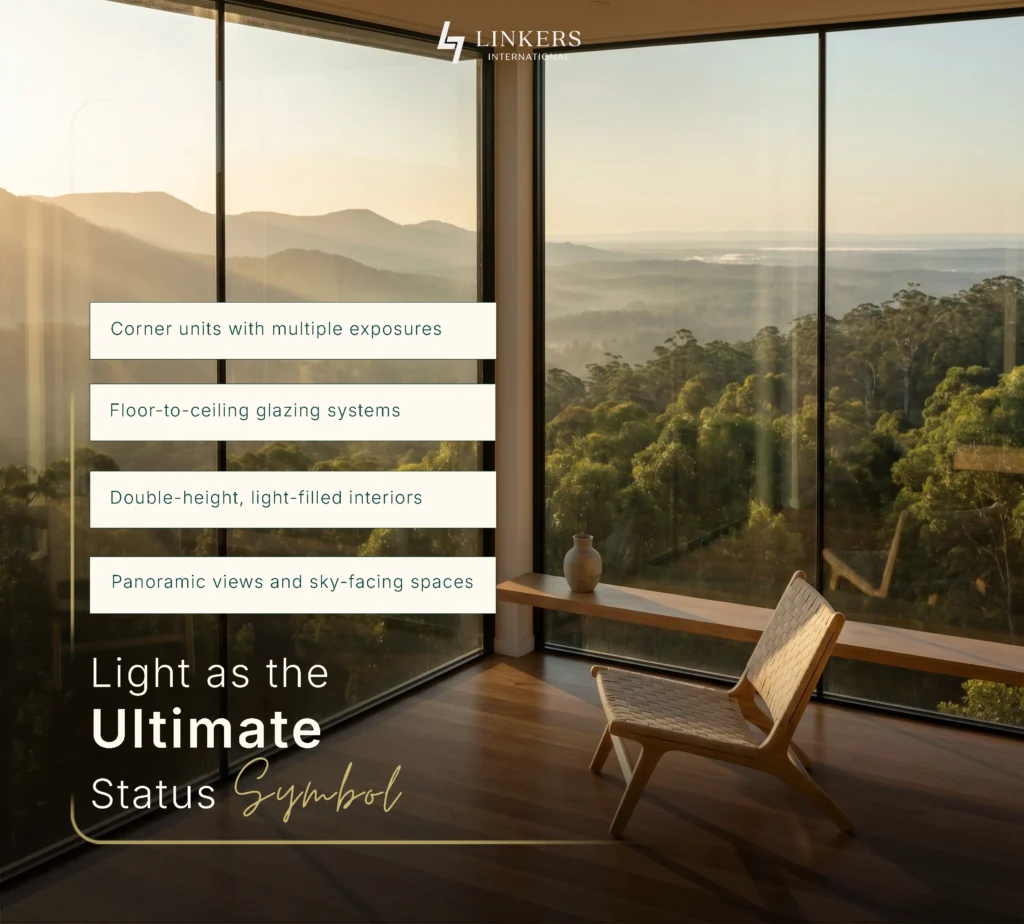
In dense urban environments, access to natural light and unobstructed views is increasingly rare. This scarcity has elevated light into a premium asset, often determining the desirability and exclusivity of a space. Today, the new luxury is defined less by materials and more by access, access to light, openness, and visual connection.
- Corner units with multiple exposures
- Floor-to-ceiling glazing systems
- Double-height, light-filled interiors
- Panoramic views and sky-facing spaces
What was once freely available is now carefully designed, controlled, and monetized.
Human-Centric Design is the Future of Luxury
Modern architecture is increasingly focused on the human experience. Instead of designing purely for form or function, architects are now prioritizing how spaces support health, well-being, and productivity. Light and view sit at the center of this approach.
Therefore, light and view are no longer passive features, they are powerful design tools that shape both building performance and human experience. As architecture continues to evolve, the meaning of luxury is shifting from what we can touch to what we can feel.