
When most people imagine the buildings of the future, they picture smarter technology, taller towers, and more advanced engineering. Few imagine wood. Yet across North America, Scandinavia, and Australia, architects and developers are increasingly turning to mass timber construction for offices, apartment buildings, schools, and even high-rise structures.
Developers are increasingly embracing mass timber, an advanced form of engineered wood, as they seek faster, greener, and more efficient ways. Once limited to low-rise structures, timber is now being used in projects that challenge conventional assumptions about height, strength, and durability.
As mass timber gains momentum worldwide as one of the modern construction trends, an intriguing question emerges: could wood become a serious competitor to concrete and steel in modern construction?
What Exactly Is Mass Timber and How Is It Different from Ordinary Wood?
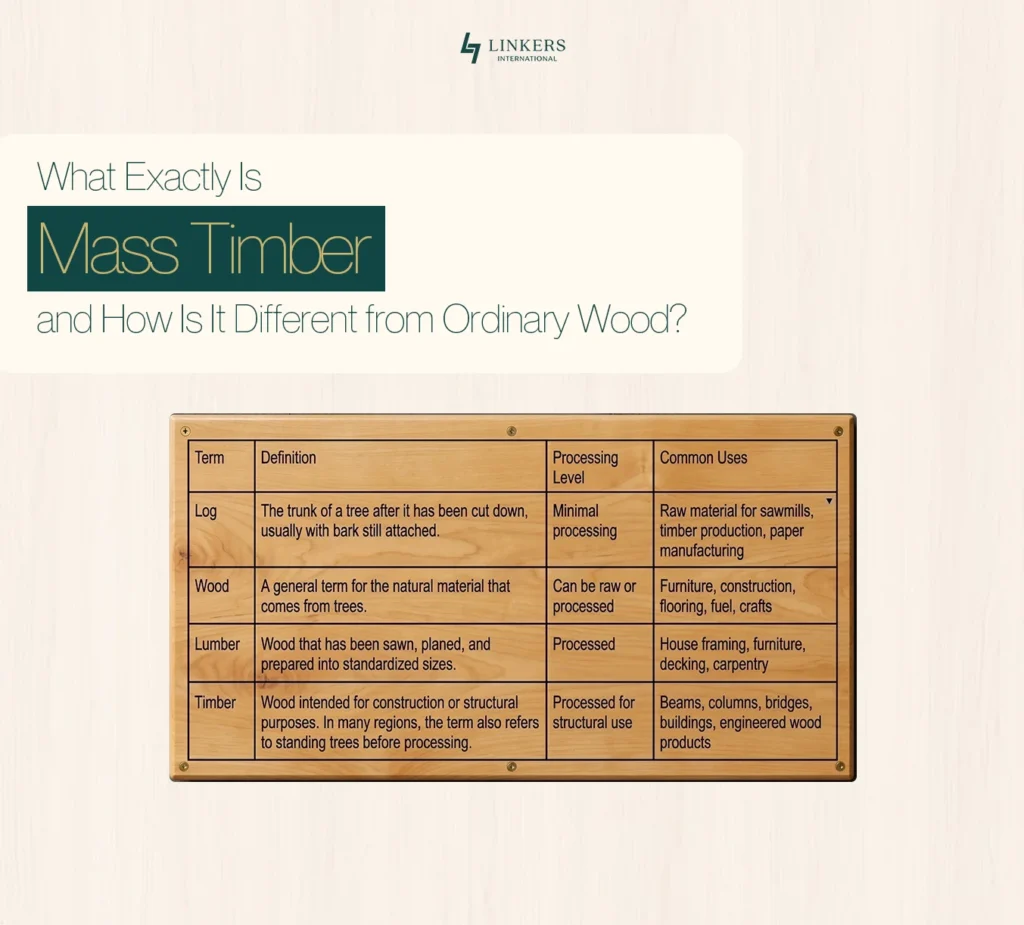
Mass timber refers to a category of engineered wood products designed to deliver the structural performance required for large-scale buildings. Unlike conventional lumber, these materials are manufactured by bonding layers of wood together under controlled conditions, creating components that are significantly stronger, more stable, and more versatile. The following are the types of Mass Timber.
While ordinary wood is individual pieces of lumber used in construction, furniture, or interior finishes, mass timber is a category of engineered wood products specifically designed for structural applications. It is manufactured by bonding multiple layers or sections of wood together to create large, high-strength panels and beams.
Unlike traditional wood framing, mass timber construction can support multi-story buildings and large spans, making it a viable alternative to concrete and steel in modern construction. Additionally, its prefabricated nature allows for faster construction while retaining wood’s sustainability benefits and ability to store carbon.
Products such as Cross-Laminated Timber (CLT), Glue-Laminated Timber (Glulam), and Nail-Laminated Timber (NLT) offer greater strength, dimensional stability, and fire resistance than conventional lumber.
Cross-Laminated Timber (CLT)
Often described as the “plywood of skyscrapers,” Cross-Laminated Timber consists of layers of lumber stacked perpendicular to one another and bonded together. Key advantages include:
- Exceptional strength-to-weight ratio
- Dimensional stability
- Prefabrication potential
- Reduced construction timelines
CLT panels can serve as walls, floors, and roofs, making them suitable for multi-storey buildings.
Glue-Laminated Timber (Glulam)
Glulam is an engineered wood product made by bonding multiple layers of timber together to create strong structural beams and columns. It offers high load-bearing capacity, design flexibility, and can span long distances without compromising strength. Benefits include:
- Long-span capabilities
- Architectural flexibility
- High load-bearing capacity
- Aesthetic appeal
Glulam is frequently used in commercial, institutional, and recreational buildings.
Other Engineered Wood Products
A range of engineered wood products is used in modern construction to improve structural performance and efficiency. These materials are designed to offer greater strength, durability, and versatility than traditional timber.
Additional mass timber systems include:
- Laminated Veneer Lumber (LVL)
- Nail-Laminated Timber (NLT)
- Dowel-Laminated Timber (DLT)
Together, these technologies have expanded the possibilities of timber construction far beyond traditional applications.
The Global Rise of Timber Cities
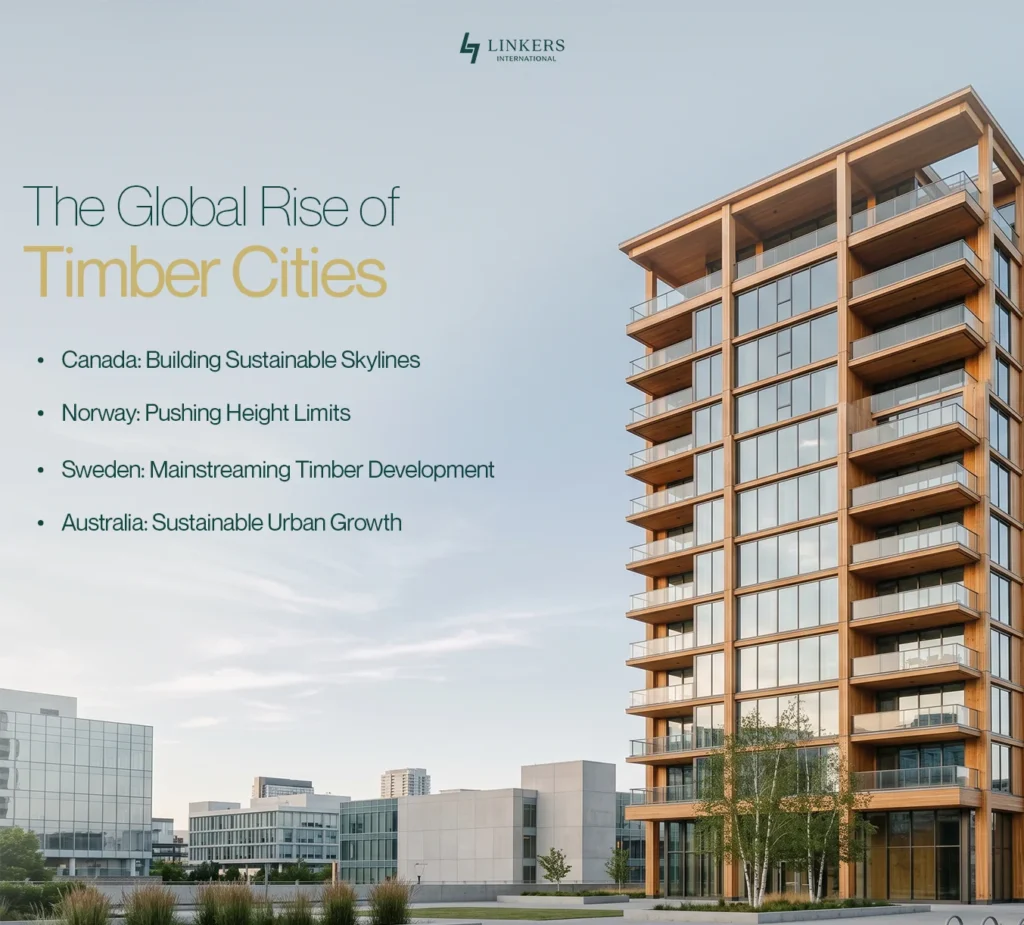
Mass timber construction has evolved from a niche construction material into a key component of sustainable urban development. Around the world, cities are incorporating engineered wood into residential, commercial, and institutional projects to reduce construction-related emissions.
From timber high-rises to large-scale mixed-use developments, these projects are demonstrating that wood can play a significant role in building modern, low-carbon cities.
Canada: Building Sustainable Skylines
Canada has emerged as a global leader in timber innovation. Projects such as the Brock Commons Tallwood House in Vancouver demonstrated that mass timber can be used successfully in high-rise residential construction while significantly reducing construction time and environmental impact. The project became a landmark example of how engineered timber can support dense urban development.
Norway: Pushing Height Limits
Norway’s Mjøstårnet, one of the world’s tallest timber buildings, challenged long-held assumptions about the structural limitations of wood. Standing over 80 meters tall, the building includes residential, office, and hospitality spaces, showcasing timber’s potential for mixed-use urban environments.
Its success has shown that engineered wood can meet the structural demands of modern high-rise development. The project continues to inspire architects and developers exploring sustainable alternatives to conventional construction materials.
Sweden: Mainstreaming Timber Development
Sweden has incorporated mass timber construction into its broader sustainability and climate goals. Supported by well-managed forestry resources, the country has developed a reliable supply chain for engineered wood products. Timber is now widely used across a variety of projects, including housing developments, schools, public facilities, and commercial buildings.
This widespread adoption reflects confidence in timber’s environmental and structural performance. Sweden’s experience demonstrates how sustainable forestry and innovative construction can work together to support long-term urban growth.
Australia: Sustainable Urban Growth
Australia is increasingly turning to mass timber as part of its strategy to reduce the environmental impact of the built environment. Developers and policymakers recognize the potential of engineered wood to lower embodied carbon while maintaining high construction standards.
As a result, timber is being incorporated into office buildings, educational institutions, and mixed-use developments across the country. The use of prefabricated timber components has also helped improve construction efficiency and reduce waste. Australia’s growing portfolio of timber projects highlights the role of innovative materials in shaping more sustainable cities.
Can Wood Really Compete with Concrete and Steel?
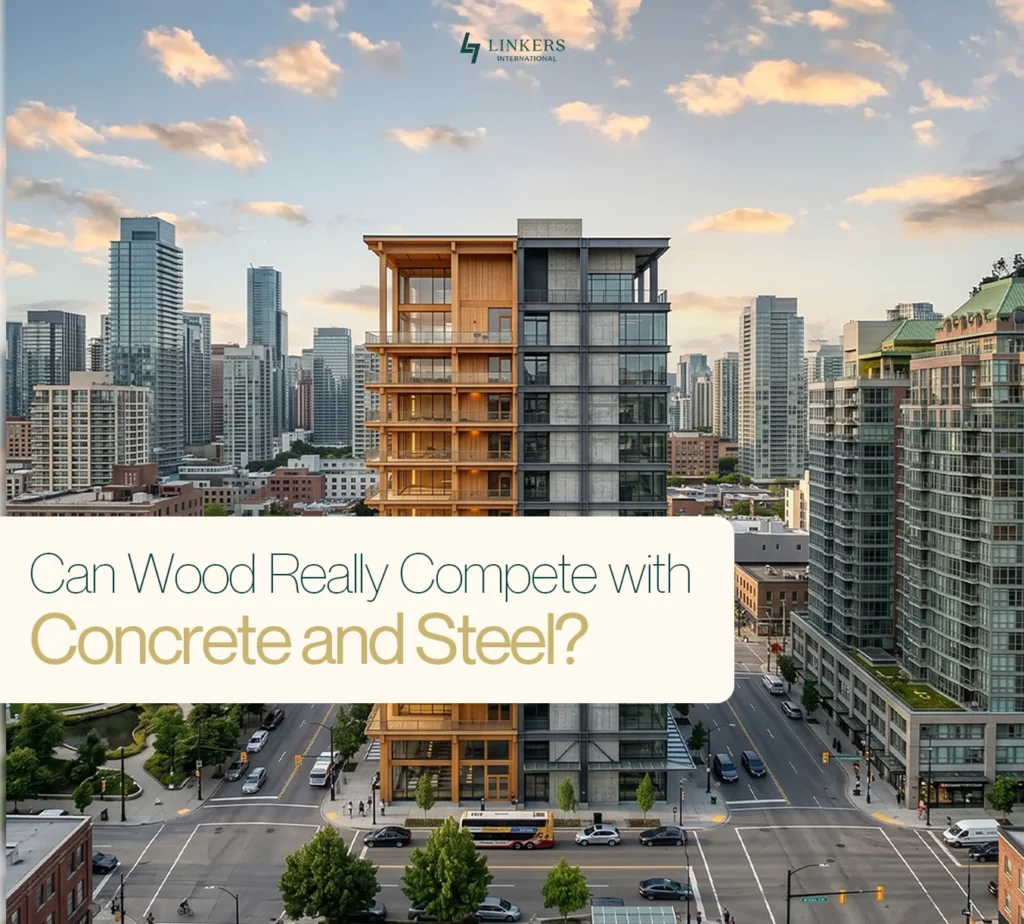
Can a material traditionally associated with cabins and furniture really compete with the concrete and steel that define modern skylines? Thanks to advances in engineering and manufacturing, mass timber is proving capable of far more than many once imagined.
From structural strength to sustainability, it is challenging long-held perceptions about what wood can achieve in contemporary construction.
Strength: Engineered timber products exhibit remarkable strength relative to their weight. In many applications, mass timber can successfully compete with concrete and steel while reducing structural loads.
Durability: Modern timber buildings are designed with moisture protection, ventilation systems, and advanced treatments that significantly improve longevity. When properly maintained, mass timber structures can last for decades.
Fire Resistance: One of the most common misconceptions about mass timber construction concerns fire safety. Large timber members behave differently from lightweight wood products. When exposed to fire, mass timber develops a protective char layer that slows combustion and helps preserve structural integrity. As a result, many modern timber buildings meet rigorous fire safety standards.
Cost: Costs vary by region and supply chain maturity. In markets where mass timber manufacturing is well established, developers often offset higher material costs through faster construction, reduced labor expenses, smaller foundations, lower lifecycle emissions.
Sustainability: This remains timber’s strongest advantage. Compared with conventional materials, mass timber offers renewable sourcing potential, carbon storage benefits, reduced embodied emissions, and compatibility with circular economy principles.
Could Mass Timber Construction Work in Pakistan?
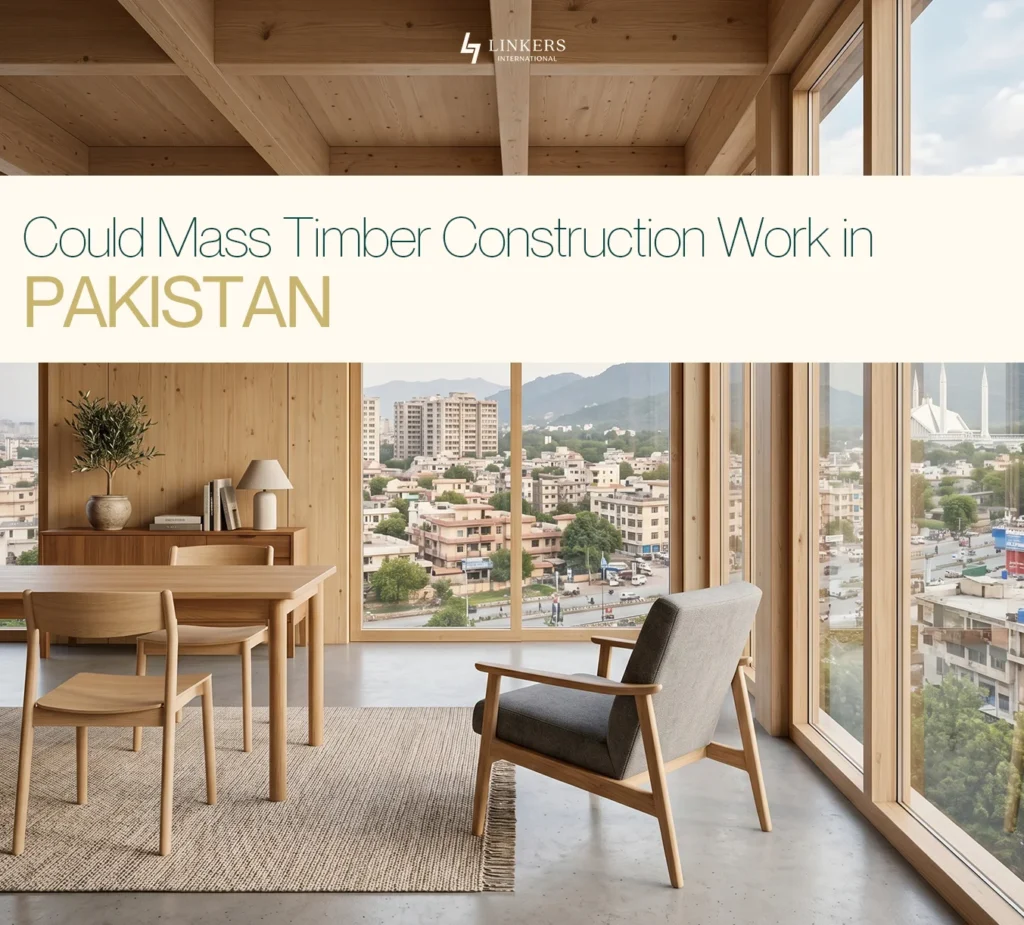
While timber skyscrapers may still seem distant, Pakistan’s evolving urban landscape presents an interesting opportunity to explore engineered wood and mass timber construction. The country’s cities face mounting pressures from rapid urbanization, rising housing demand, climate vulnerabilities, and increasing construction costs. These challenges create a strong case for investigating alternative building methods. Pakistan’s construction challenges include;
- Volatile prices for cement and steel continue to affect project feasibility and housing affordability.
- A significant housing shortage requires faster and more efficient construction methods.
- As climate resilience becomes a national priority, reducing embodied carbon in buildings will likely gain importance.
- Rapid growth in cities such as Islamabad, Lahore, Karachi, and Peshawar is increasing demand for innovative building solutions.
Potential Opportunities for Mass Timber in Pakistan
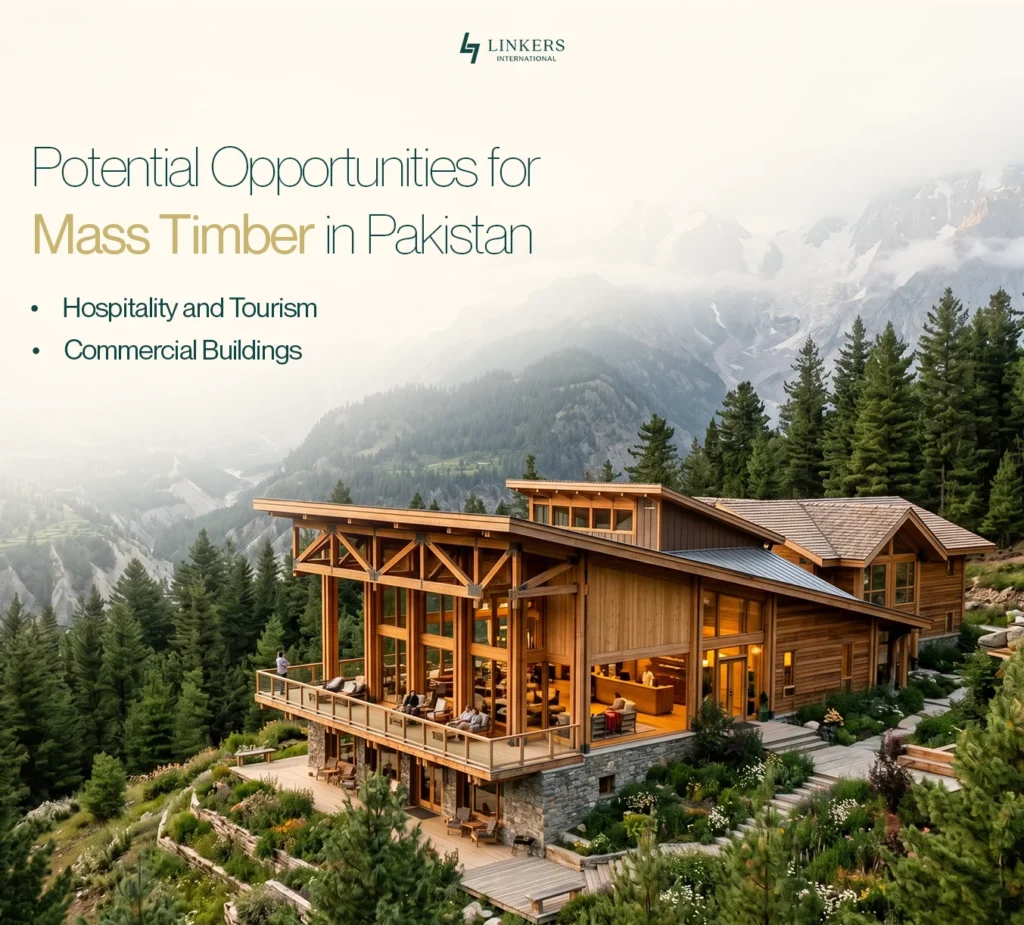
While mass timber is unlikely to replace concrete and steel in Pakistan’s construction sector anytime soon, it could serve as a valuable complement to conventional building materials in specific applications. As the country seeks more sustainable, efficient, and resilient construction solutions, engineered timber presents opportunities across a range of sectors.
Hospitality and Tourism: Northern Pakistan’s tourism industry offers strong potential for timber-based resorts, lodges, and eco-tourism developments.
Educational Facilities: Schools and universities could benefit from prefabricated timber systems that enable faster delivery and improved environmental performance.
Low-Rise Housing: Mass timber could support sustainable housing developments, particularly where speed and affordability are priorities.
Commercial Buildings: Office spaces, retail centers, and mixed-use developments could incorporate timber elements to reduce carbon footprints while enhancing aesthetics.
Disaster-Resilient Construction: Lightweight engineered timber systems may offer advantages in certain seismic regions, making them worthy of further exploration.
Beyond Materials: A New Way of Thinking About Construction
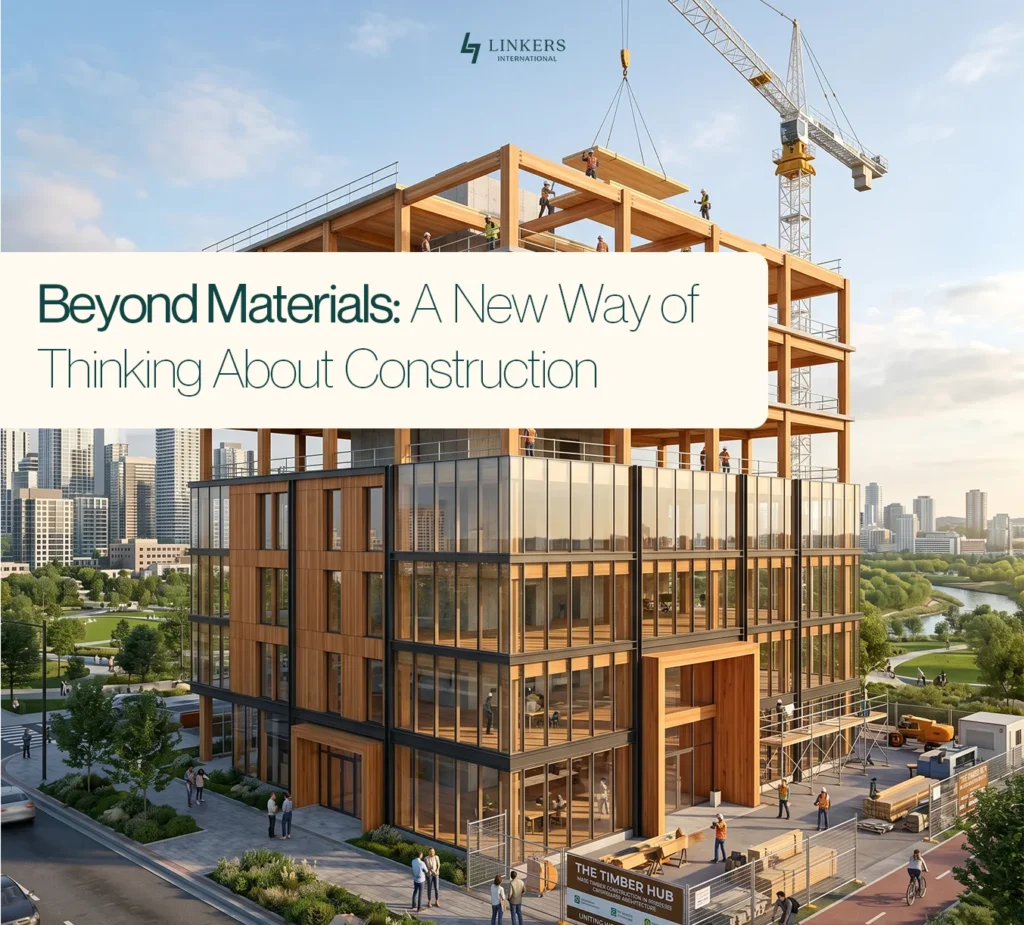
Mass timber construction represents one of the most significant shifts in modern building technology. By combining the strength of engineered wood with the efficiency of prefabrication and the benefits of lower embodied carbon, it offers a compelling vision for the future of sustainable development.
For Pakistan, mass timber may not be an immediate replacement for conventional materials. However, as the country confronts challenges related to housing, urbanization, climate resilience, and construction costs, engineered timber deserves serious consideration as part of a more diversified and sustainable construction ecosystem.
The buildings of tomorrow may not be made entirely of wood, but they will almost certainly use it in ways that redefine how cities are built.