In today’s fast-changing world, digital twins in real estate are doing more than just improving how we sell and buy property. Originally used in aerospace, and manufacturing, digital twins are now reshaping real estate development, property management, and even city planning. Global companies like Ford and Tesla use digital twins to design, test, and optimize vehicles virtually before building them, saving time and reducing costly errors.
AI is completely transforming how we build, manage, and live in our spaces. From monitoring energy use to predicting repairs before they’re needed, technology is helping buildings become smarter, safer, and more efficient, both globally and here in Pakistan.
What are Digital Twins in Real Estate?
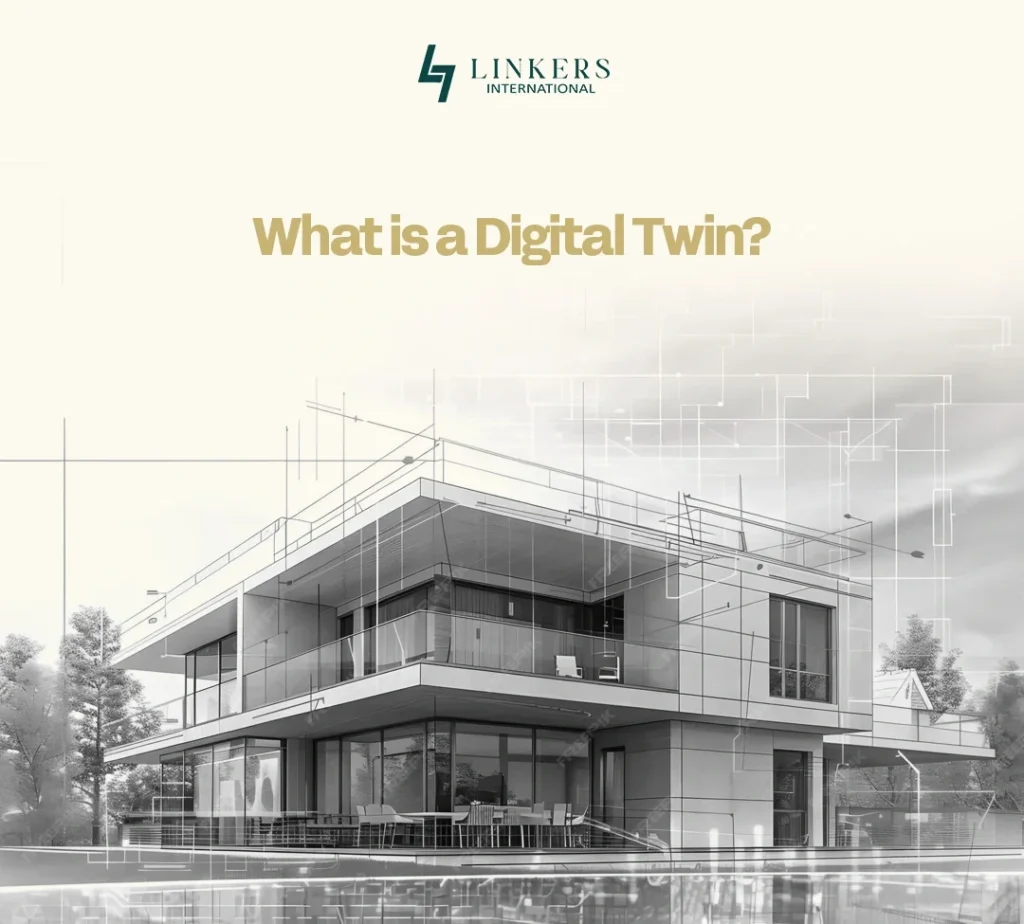
A digital twin is a virtual copy of a real building or home, a 3D interactive model. It looks just like the physical property, but it lives in a computer or app. Digital Twin contains every detail, the design, structure, wiring, plumbing, and even how the building behaves in real life.
Think of it like giving your building a digital brain; it can show you what’s happening inside, when something needs maintenance, and how to use energy efficiently.
How Do Digital Twins Work?
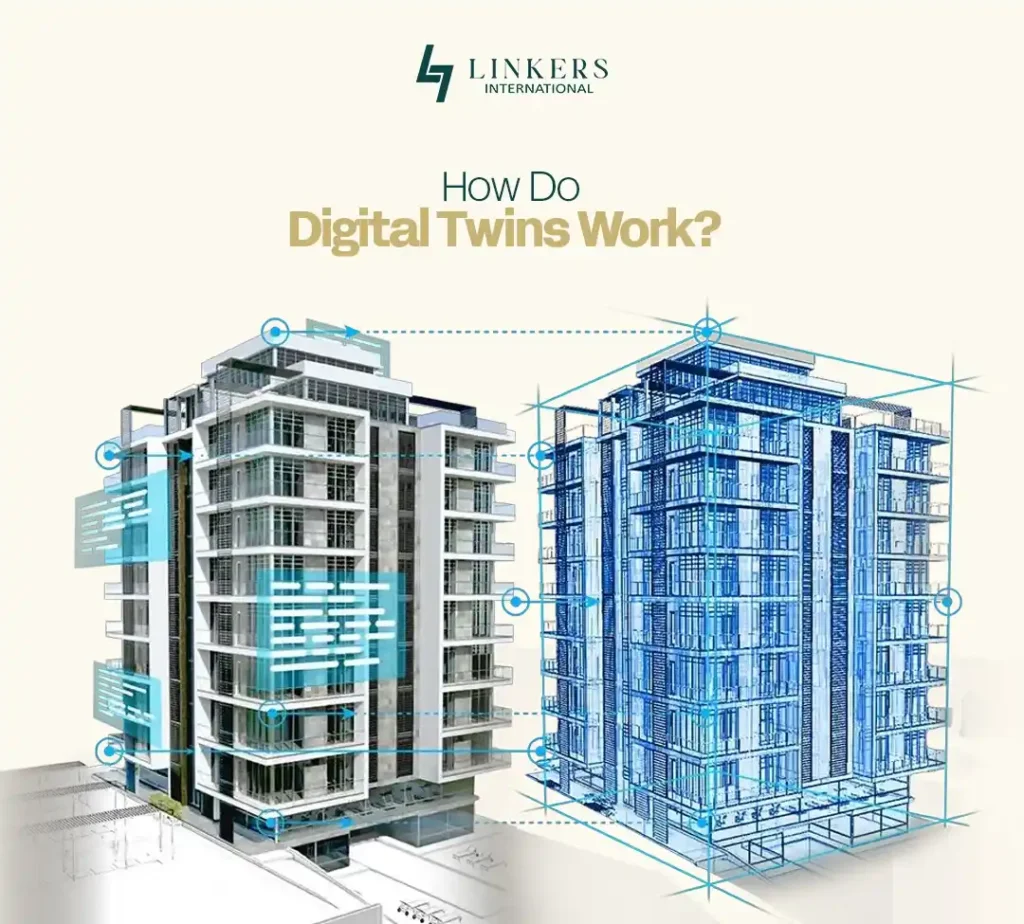
Digital Twins in Real Estate constantly update themselves with real-world information. It’s like giving your building a health check-up report: if something is not working properly, like a leaky pipe, a malfunctioning air conditioner, or an inefficient energy system, you can detect it early and fix it before it becomes a costly problem. This is possible because sensors and smart devices installed in the building collect data on things like:
- Temperature and humidity
- Electricity and energy usage
- Water flow and plumbing systems
- Air quality and ventilation
All this information is sent to the digital model in real time, creating a live, interactive version of the building. Builders, property managers, or homeowners can see exactly how the building is performing at any moment.
How Digital Twins Help in Pre-Construction
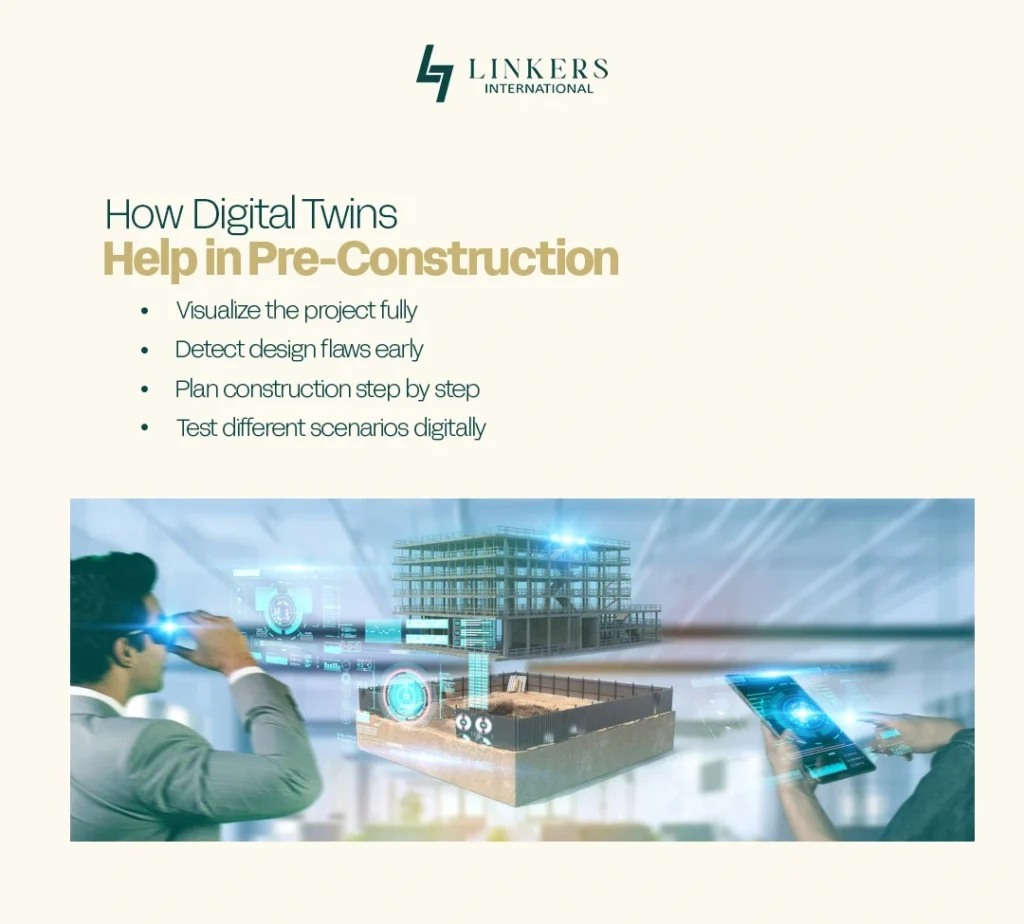
Digital twins in real estate aren’t only for finished buildings; they can be used even before construction begins. By creating a virtual 3D model of the planned project, architects, engineers, and builders can:
Visualize the project fully before breaking ground, including layouts, materials, and systems.
Detect design flaws early, such as structural weaknesses or inefficient layouts, reducing costly changes later.
Plan construction step by step, making timelines more accurate and resources easier to manage.
Test different scenarios digitally, like energy efficiency, sunlight exposure, ventilation, or even crowd flow in commercial spaces.
Digital Twins Benefits for Builders, Owners & Cities
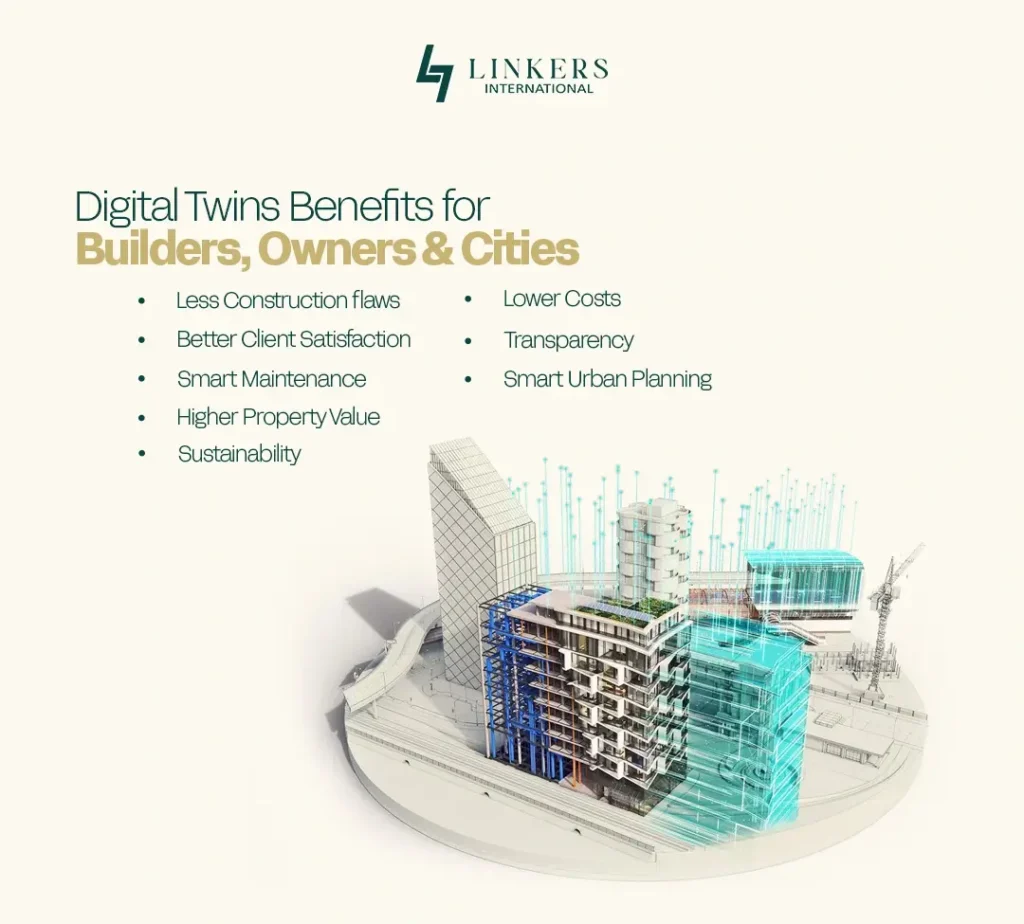
As more builders and cities start using digital twins in real estate, the results have been impressive. Whether you’re a developer, homeowner, or city planner, digital twins offer clear advantages that save time, money, and effort, while creating a better experience for everyone involved.
Fewer Mistakes During Construction: Everyone works from the same digital plan, reducing confusion.
Lower Costs: Early problem detection means less waste and rework
Better Client Satisfaction: Builders can offer digital records and maintenance apps to homeowners.
Smart Maintenance: The system reminds you when to service your AC or fix a leak.
Transparency: You know exactly what’s inside your walls or roof, no hidden surprises.
Higher Property Value: Well-maintained and documented homes often sell faster and for more.
Smart Urban Planning: Digital twins help city planners simulate how traffic, water, or energy systems behave.
Sustainability: Helps reduce energy use and waste, supporting eco-friendly goals.
What Is the Scope of Digital Twins Globally?
Globally, digital twins in real estate are becoming a standard in modern construction. These innovations are helping save millions of dollars and making buildings more efficient, sustainable, and smart.
- In Singapore, the government built a full digital twin of the entire city to manage infrastructure and urban planning.
- In Dubai, smart buildings use digital twins to monitor energy, air quality, and maintenance.
- In the United States, companies like Digs and Cityzenith use AI-powered twins for both construction and ongoing building management.
How Can Digital Twins Transform Pakistan’s Real Estate?
Digital twin technology is still new in Pakistan, but the opportunities are significant. The country is experiencing rapid urbanization, a growing construction market, and increasing demand for modern, smart infrastructure, all of which make it an ideal environment for digital twin adoption.
Smart City Projects
Many new urban development projects in Pakistan are beginning to experiment with digital tools to monitor infrastructure such as roads, utilities, and building layouts. Digital twins can take this further by creating fully interactive virtual city models that help with planning, maintenance, and energy optimization, making cities more efficient and sustainable.
Construction and Real Estate Development
In major Pakistani cities, developers are gradually adopting digital construction tools like Building Information Modeling (BIM), which is a foundational step toward implementing full digital twins. A comprehensive digital twin system can help builders:
- Track construction progress in real time
- Reduce errors and material waste
- Offer smarter, maintenance-friendly homes to buyers
Property Management and Maintenance
Currently, many homeowners in Pakistan struggle with keeping track of maintenance, warranties, and repairs. Digital twins can solve this by providing a digital record of the building’s systems and materials, alerting owners when something needs servicing, and even helping property managers run multi-unit buildings more efficiently.
Educational and Technological Growth
Universities and tech startups in Pakistan are increasingly exploring AI, IoT, and construction technologies. As local expertise grows, it will become easier for developers to implement digital twins, making it a homegrown solution for future-ready buildings.
What Does the Future Look Like?
We all know that the future of real estate is data-driven and digital. In a few years, owning or managing a property without a digital twin might feel as outdated as using a paper map instead of Google Maps.
Pakistan’s real estate industry has a great opportunity to leapfrog into the future by embracing this technology today, saving costs, improving quality, and building trust with customers.