Enter the circular economy in construction, an innovative approach that’s transforming how we think about buildings, materials, and waste. Traditional construction practices follow a linear mode that has contributed to resource depletion, high energy use, and massive construction waste worldwide.
But what if there was a better way, a way that’s not only smarter but also more sustainable?
What is the Circular Economy in Construction?
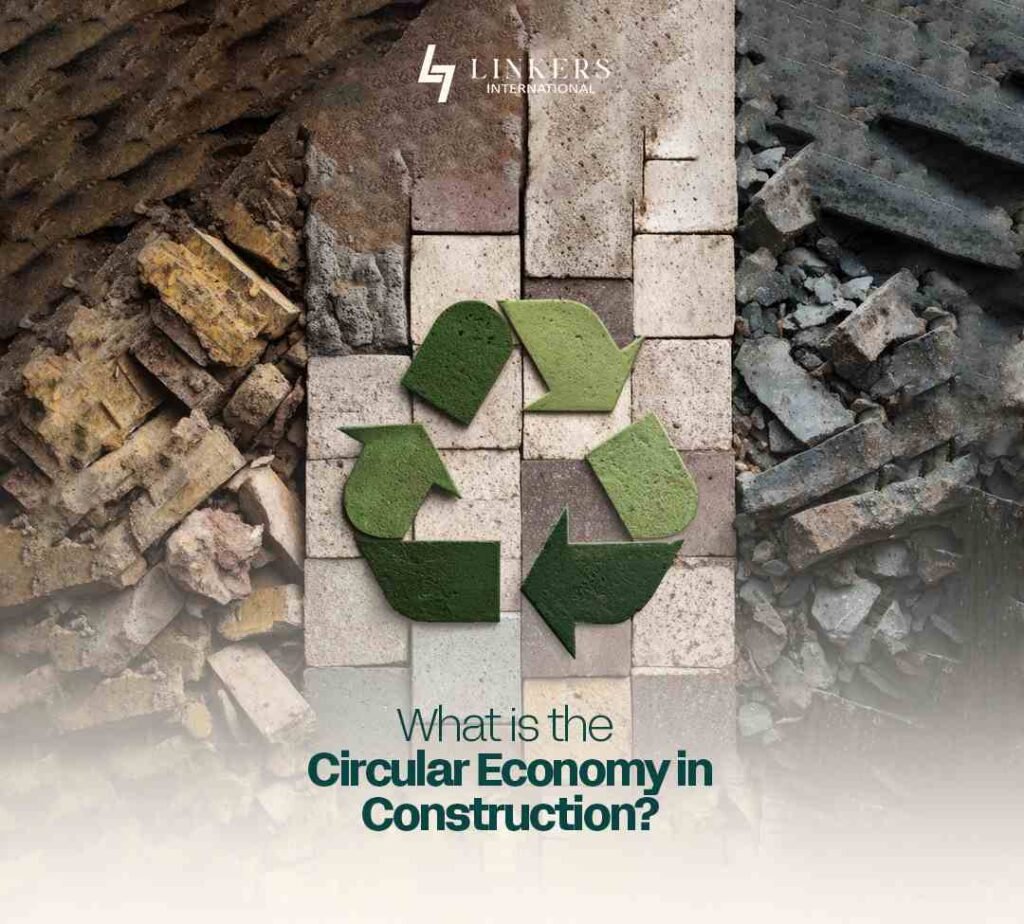
Simply put, a circular economy in construction is about keeping materials in use for as long as possible through;
- Reuse
- Recycling
- Repurposing
- Reducing waste
It encourages us to think beyond demolition, to view buildings as banks of valuable resources that can be recovered, repurposed, and reintroduced into the system rather than discarded.
What is the Traditional Linear Model?
The linear model in construction is about extracting raw materials, using them to build structures, and once those structures reach the end of their life, we demolish and discard the materials. This “take–make–dispose” method has led to;
- Enormous amounts of waste
- Unsustainable resource consumption
- Increasing environmental degradation
In cities around the world, and especially in developing countries, landfills are filling up with construction debris while natural resources are being depleted at alarming rates. The question is no longer if we need a circular economy in construction; it’s when and how fast we can adopt one that is more sustainable, such as the circular economy.
Key Principles the Construction Industry Can Adopt
Circular economy in construction also prioritizes the use of recycled, renewable, and low-impact materials and considers a building’s full life cycle, from design and construction to use, adaptation, and eventual disassembly. To implement circular construction effectively, the industry must focus on a few core principles:
1. Design for Disassembly
Buildings should be designed so that components can be easily taken apart and reused. This allows materials to have multiple life cycles instead of being wasted after demolition.
2. Use of Recycled and Renewable Materials
Instead of sourcing new raw materials, the industry can incorporate recycled steel, reclaimed wood, or eco-friendly alternatives like bamboo and compressed earth blocks.
3. Material Passports
Tracking systems can be used to log all materials used in a building, making it easier to recover and reuse them in the future.
4. Modular Construction
Prefabricated and modular building systems allow faster construction, reduce waste, and are easier to upgrade, relocate, or disassemble.
5. Lifecycle Thinking
From the start, buildings should be planned with their full life cycle in mind, including maintenance, adaptation, and eventual deconstruction or repurposing.
Global Examples Leading the Way
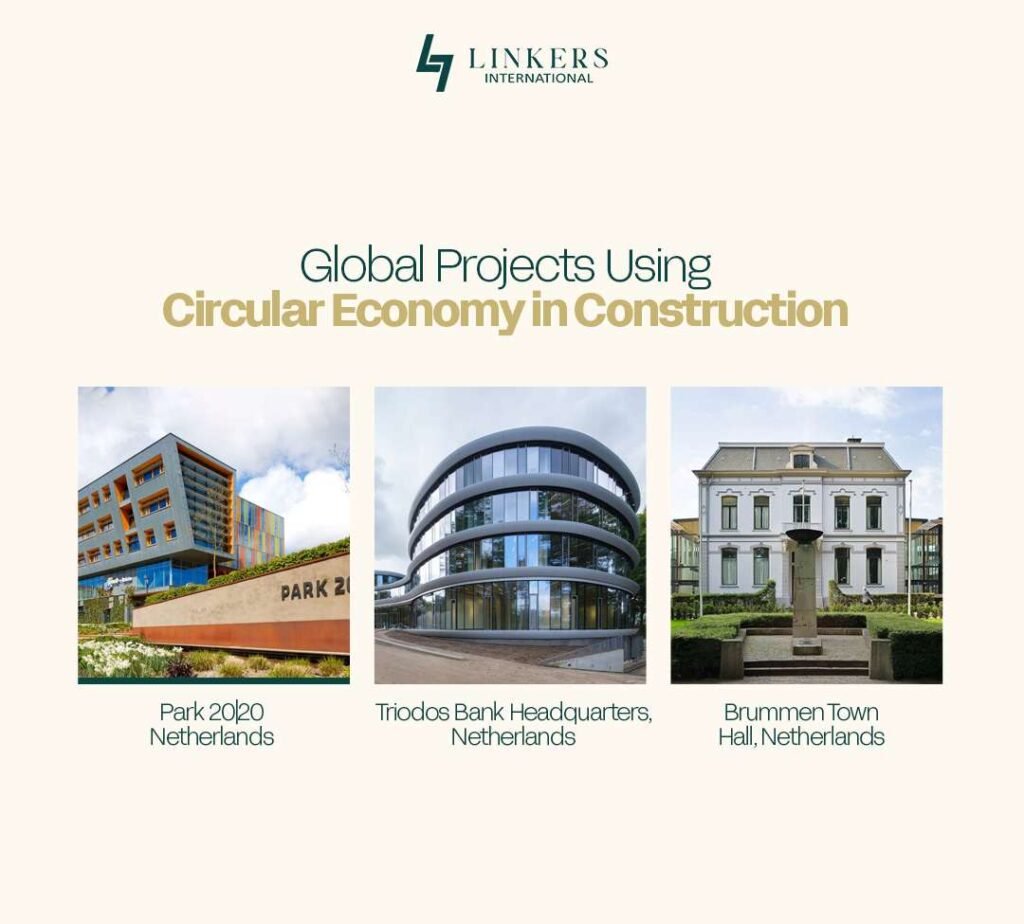
Several countries have already embraced circular economy principles in the construction sector, recognizing the long-term value of reducing waste and conserving resources. These projects focus on minimizing the environmental footprint through smart material choices, modular construction, and design for disassembly.
Here are some of the global examples of the use of circular economy principles in construction.
Triodos Bank Headquarters, Netherlands: This building was constructed entirely from wood using modular components that can be dismantled and reused. Each material is digitally tracked using a material passport, ensuring transparency and traceability for future use.
Park 20 | 20, Netherlands: It is the world’s first full-service Cradle to Cradle (C2C) business park. Every component used in construction is either biodegradable or 100% recyclable. The buildings are designed for disassembly, and many materials can be returned to manufacturers at the end of their use phase.
Brummen Town Hall, Netherlands: It is a modular public building that can be relocated or repurposed without significant demolition, further proving that circular design is not only possible but also cost-effective and scalable.
The Informal Practice of Circular Construction in Pakistan
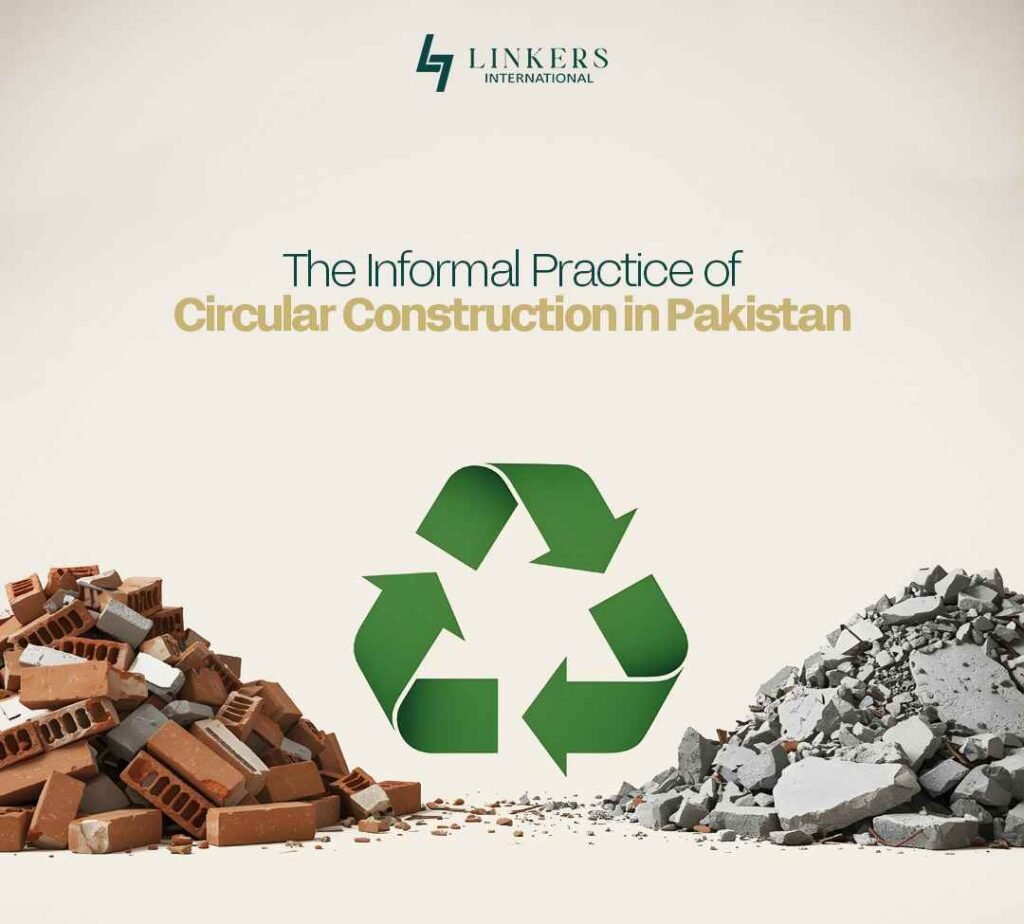
In Pakistan, circular construction is often practiced informally, especially in low- and middle-income communities, rural areas, and small-scale urban developments. Without officially calling it a “circular economy,” builders and homeowners have long embraced the reuse of materials out of necessity, tradition, and cost-saving.
- Old bricks are recovered from demolished buildings, cleaned and reused in new walls and foundations
- Wooden doors and windows repainted or repaired for reuse in new homes or shops
- Steel rods and iron grills are straightened and repurposed for structural reinforcement or boundary walls
- Broken or leftover tiles used for flooring in low-cost areas like terraces, kitchens, or bathrooms
- Marble pieces and slabs are reused for countertops, window sills, or flooring
- Sanitary fixtures such as old sinks, taps, and commodes are reinstalled in new bathrooms
- Timber beams and planks are reused in roofing or furniture making
- Corrugated metal sheets from sheds or old buildings are used for roofing or fencing
- Concrete blocks or rubble are crushed and reused as base material for pavements or foundations
- Plastic and PVC pipes are recovered and reinstalled where feasible
Local laborers and contractors are skilled at identifying which materials can be reused safely, and there are thriving markets in cities like Lahore, Karachi, and Rawalpindi that sell second-hand construction materials.
While these practices are driven more by economics than environmental awareness, they align closely with the core principles of the circular economy;
- Reducing waste
- Extending material life cycles
- Lowering resource consumption
The Opportunity for Circular Construction in Pakistan
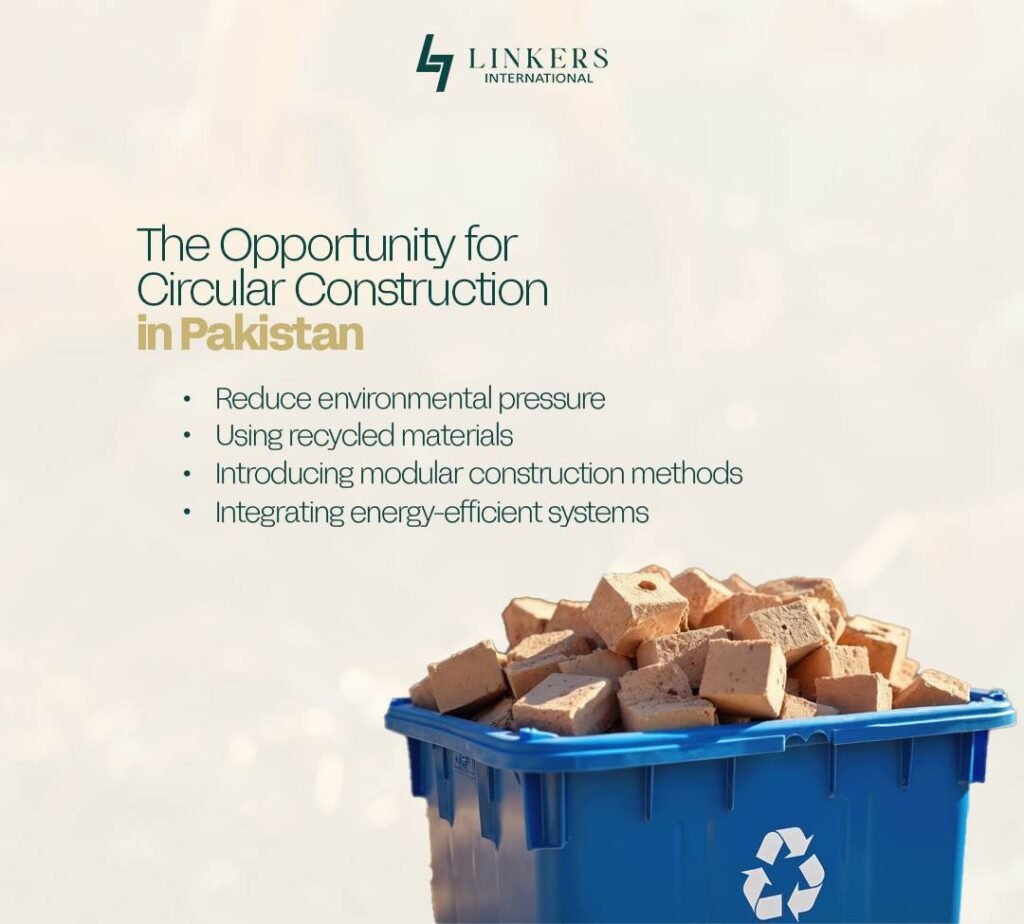
Pakistan is at a crucial point in its urban development journey. With a rapidly growing population, increasing urbanization, and rising demand for housing and infrastructure, the country’s construction sector is expanding rapidly. By shifting to circular practices;
- Pakistan can reduce environmental pressure, improve construction efficiency, and lower overall costs.
- Using recycled materials such as reclaimed bricks, concrete, and wood in low-cost housing projects can save money and resources.
- Introducing modular construction methods can shorten project timelines while reducing waste.
- Integrating energy-efficient systems, rainwater harvesting, and passive design principles can also reduce long-term building operation costs.
A Circular Perspective for the Future
While circular construction is still a new concept in Pakistan, the momentum is growing. However, for widespread adoption, stronger policy support, public awareness, and industry training are needed. Government incentives, such as tax benefits for using recycled materials or mandatory waste management plans for large projects, could accelerate this transition.