Have you ever walked into a room and instantly felt calm, or, on the other side, suddenly uneasy without knowing why? That’s not a coincidence. It’s neuroarchitecture at work, the fascinating link between design and the human brain. The application of neuroarchitecture principles has become a popular concept in modern-day construction trends due to the growing awareness among builders and property buyers.
Let’s discover this phenomenon, key features, and how the spaces built with neuroarchitecture principles can shape your mind and mood.
What Is Neuroarchitecture?

Neuroarchitecture blends neuroscience and architecture to understand how spaces affect our thoughts, emotions, and behaviors. Everything from the color of a wall to the amount of daylight, ceiling height, and even background noise can influence how we feel and function.
Key Features of Neuroarchitecture
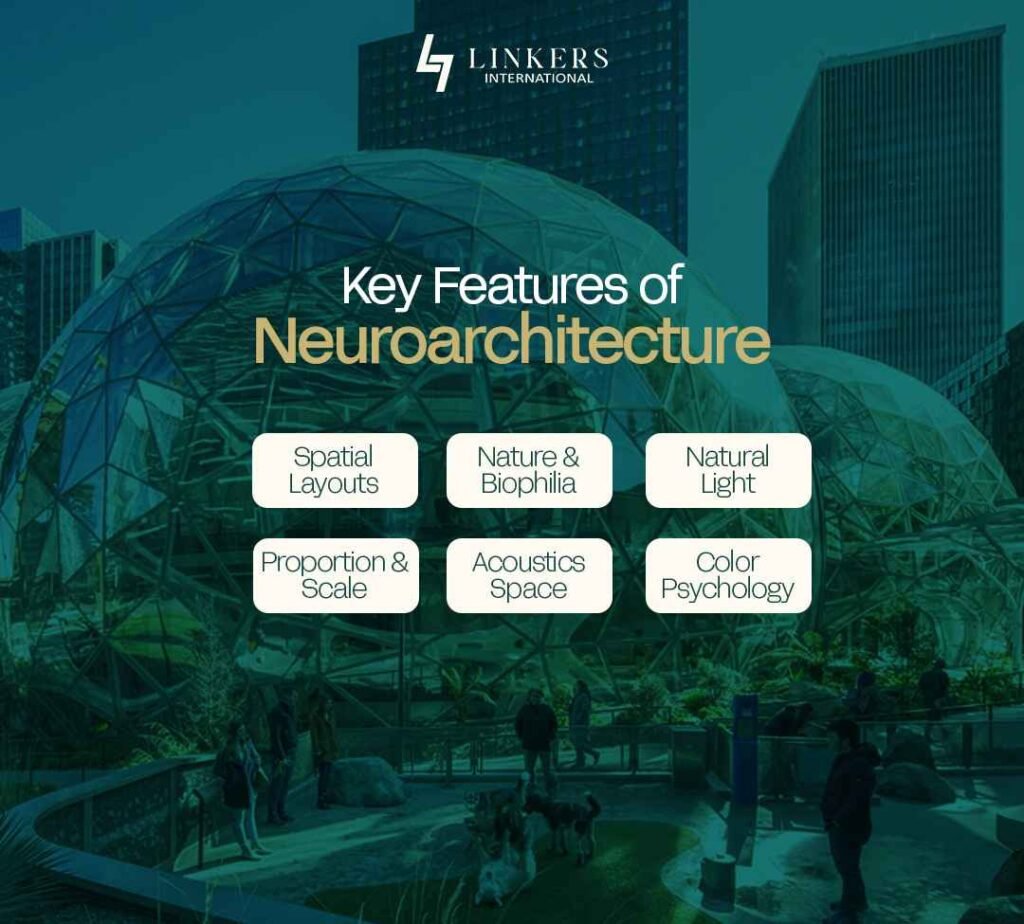
Neuroarchitecture is all about designing spaces that work in harmony with the human brain. Every element of a space, from light and sound to color, texture, and layout, communicates directly with our senses, shaping how we think and feel. The goal isn’t just to create beautiful buildings, but to craft environments that support mental clarity, comfort, and well-being.
Here are the key features of neuroarchitecture.
Spatial Layouts: How the Brain Responds to Space
Our brains crave order and flow. Open, well-organized spaces help us feel relaxed and in control, while cluttered or cramped ones increase stress and confusion. That’s why good layouts create clear pathways, zoned areas, and a balance between open and private spaces. When movement feels natural, the mind feels calm.
Natural Light: A Built-In Mood Booster
Light is more than just illumination; it’s a biological signal. Natural light helps regulate our sleep, focus, and mood. Studies show that workplaces with daylight improve productivity and reduce fatigue, while dark, windowless spaces can drain energy. So, whether at home or work, let the sun in; it’s free therapy.
Color Psychology in Architecture
In neuroarchitecture, color is more than decoration; it’s a powerful form of communication that subtly influences our emotions and experiences within a space. Colors quietly shape how we feel, think, and behave. Warm tones like red, orange, and yellow energize and inspire, making spaces feel lively and stimulating.
In contrast, cool tones such as blue and green calm the mind, promoting focus, relaxation, and a sense of stability. Neutral shades, white, beige, and gray create balance, openness, and visual breathing space.
Acoustics: Designing Spaces for the Ears
Noise is one of the biggest stress triggers in modern life, often affecting focus, mood, and overall well-being without us realizing it. Thoughtful acoustic design helps manage sound by using materials such as acoustic panels, rugs, curtains, or soft furnishings that absorb noise and reduce echoes.
When sound levels are balanced, mental fatigue decreases and concentration improves. In neuroarchitecture, acoustics isn’t just a technical detail; it’s about shaping a soundscape of calm, where the mind can rest, think clearly, and feel at ease.
Nature & Biophilia: Bringing Life Indoors
Humans have an innate connection to nature; it’s part of our biology. When we bring elements of the natural world indoors, such as plants, wood textures, water features, or even organic shapes and patterns, our brains respond positively. These natural cues can lower stress, improve mood, and even enhance creativity and focus.
This concept, known as biophilic design, reminds us that nature isn’t just beautiful, it’s essential for our well-being. By designing spaces that reflect the natural world, we create environments that feel alive, nurturing, and deeply human.
Proportion & Scale: Balance You Can Feel
Our perception of comfort is strongly tied to the proportions of the spaces we inhabit. When a room feels too cramped, it can trigger anxiety; when it’s overly vast, it can feel cold or impersonal. Balanced proportions and human-scale design help the brain feel safe and at ease.
Symmetry, rhythm, and well-measured dimensions naturally create harmony, a sense that everything is in its right place. In neuroarchitecture, getting proportion and scale right isn’t just about aesthetics; it’s about shaping emotional comfort through spatial balance.
The Growing Awareness Among Residents
People are beginning to understand that their homes and workplaces impact their mental state. Homebuyers, tenants, and employees increasingly value spaces that offer comfort, light, greenery, and good acoustics.
Awareness campaigns and social media trends highlighting well-being in interiors are driving this shift, making residents more conscious of how design affects their daily lives. Modern workplaces, schools, hospitals, and homes are no longer just functional; they aim to support human well-being.
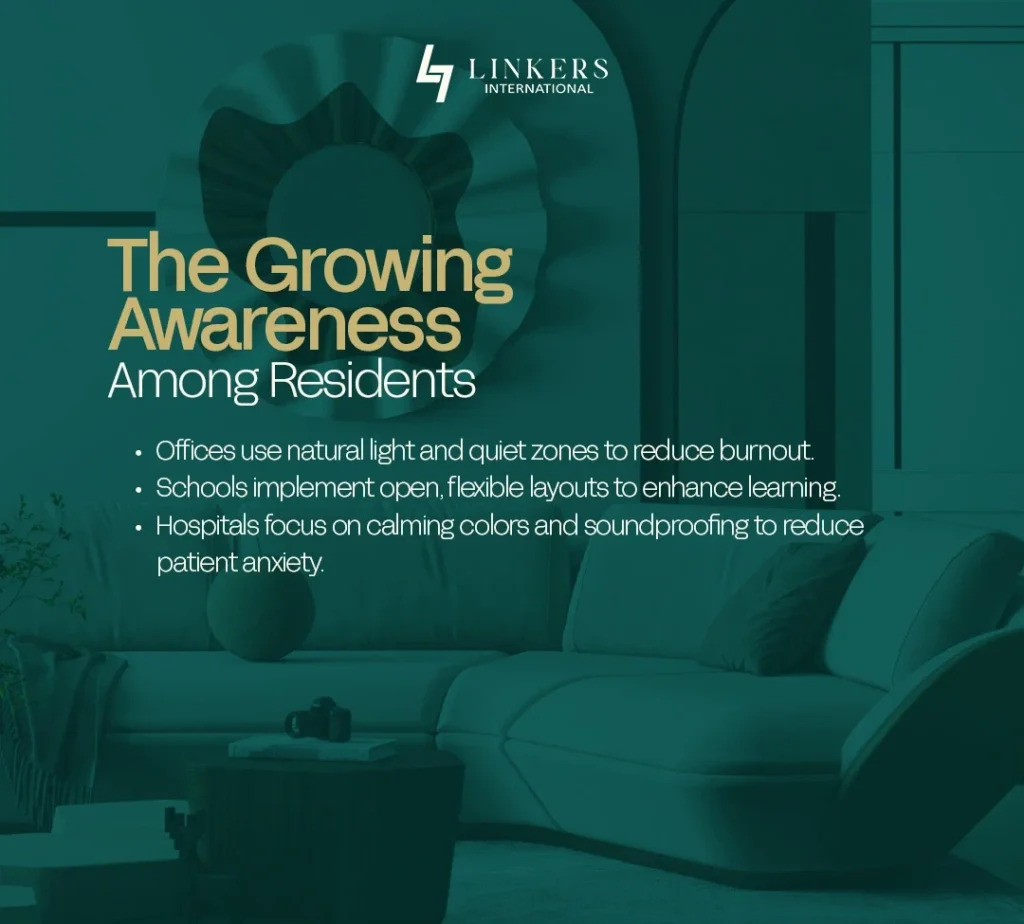
- Offices use natural light and quiet zones to reduce burnout
- Schools implement open, flexible layouts to enhance learning.
- Hospitals focus on calming colors and soundproofing to reduce patient anxiety
As a result, neuroarchitecture is becoming a standard, not a luxury, in contemporary design.
Real-World Examples of Neuroarchitecture
Neuroarchitecture shapes the way we experience spaces, offering a variety of benefits. Thoughtful layouts, natural light, calming colors, and sound management reduce stress and improve concentration. Essentially, when a space is designed with the brain in mind, it doesn’t just look good; it feels good, supporting both emotional and cognitive health.
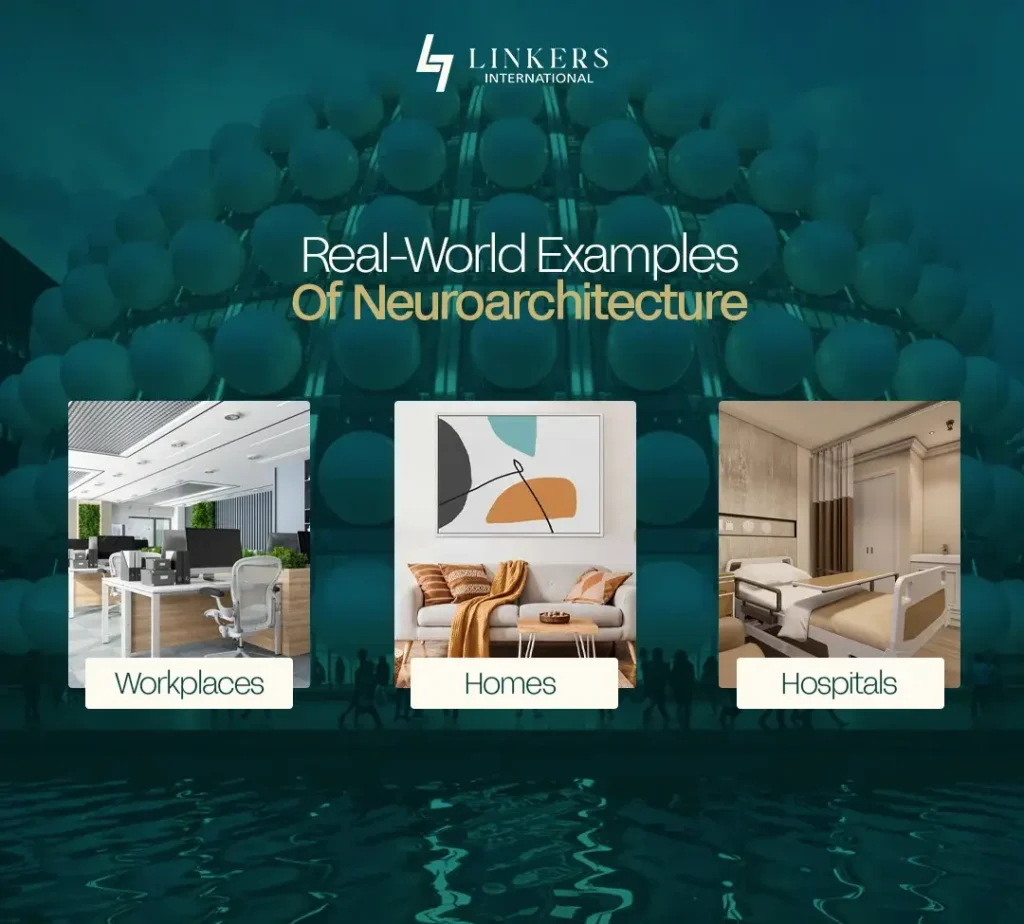
Here are some real-world examples of neuroarchitecture.
- Workplaces: Companies like Google and Microsoft integrate biophilic design, open layouts, and acoustic management to boost creativity and collaboration.
- Homes: Apartments with large windows, natural light, and green terraces improve mental health and relaxation.
- Hospitals: Pediatric wards with bright, playful colors, nature views, and organized layouts reduce stress for both patients and staff.
These examples demonstrate how applying neuroarchitectural principles improves both well-being and productivity.
Challenges in Designing for the Mind

Implementing neuroarchitecture isn’t without hurdles. It requires specialized knowledge, careful planning, and sometimes higher initial costs. Coordinating elements like acoustics, lighting, and structural design can be complex.
Additionally, awareness is still growing among architects, developers, and residents, which can slow adoption. However, the long-term benefits often outweigh these challenges.
The Future of Mindful Spaces
The future of neuroarchitecture looks promising. Smart buildings may adapt lighting, temperature, and acoustics based on occupant behavior. Data-driven design could further optimize spaces for comfort, focus, and emotional well-being. As awareness grows, we can expect homes, offices, and public spaces to increasingly prioritize human-centered design over mere aesthetics.