
In today’s world, where industries struggle with waste management and the construction sector seeks greener materials, CLC blocks also known as CLC bricks, stand out as a revolutionary solution. These eco-friendly blocks are not just light and durable, they’re made using industrial waste, turning environmental burdens into valuable building materials.
What Is A CLC Block?
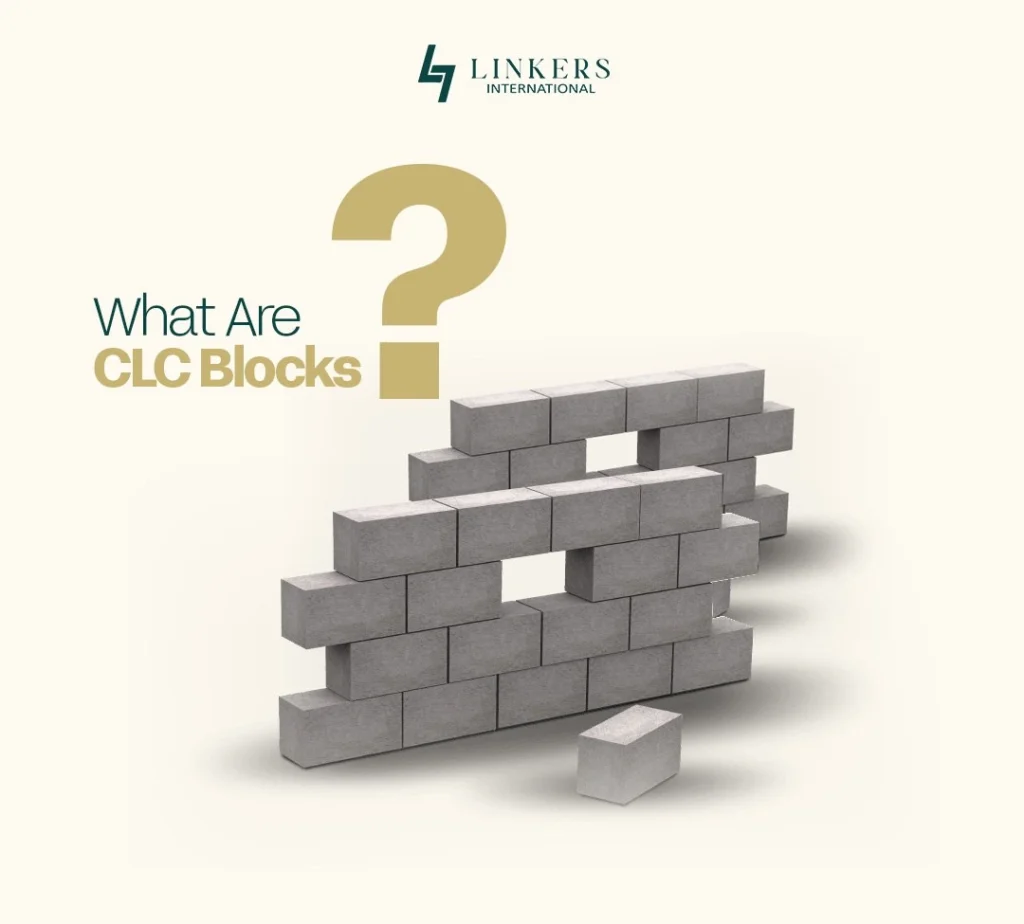
CLC means Cellular Lightweight Concrete, and CLC bricks are a type of lightweight concrete made by mixing cement, water, and a foaming agent to create air bubbles within the mixture. These bubbles give the blocks their signature low density and high insulation properties.
Unlike conventional clay bricks or dense concrete blocks, they are lightweight construction blocks, more sustainable, and easier to handle, making them ideal for modern construction.
Which Waste Products Are Used in CLC Blocks Production?
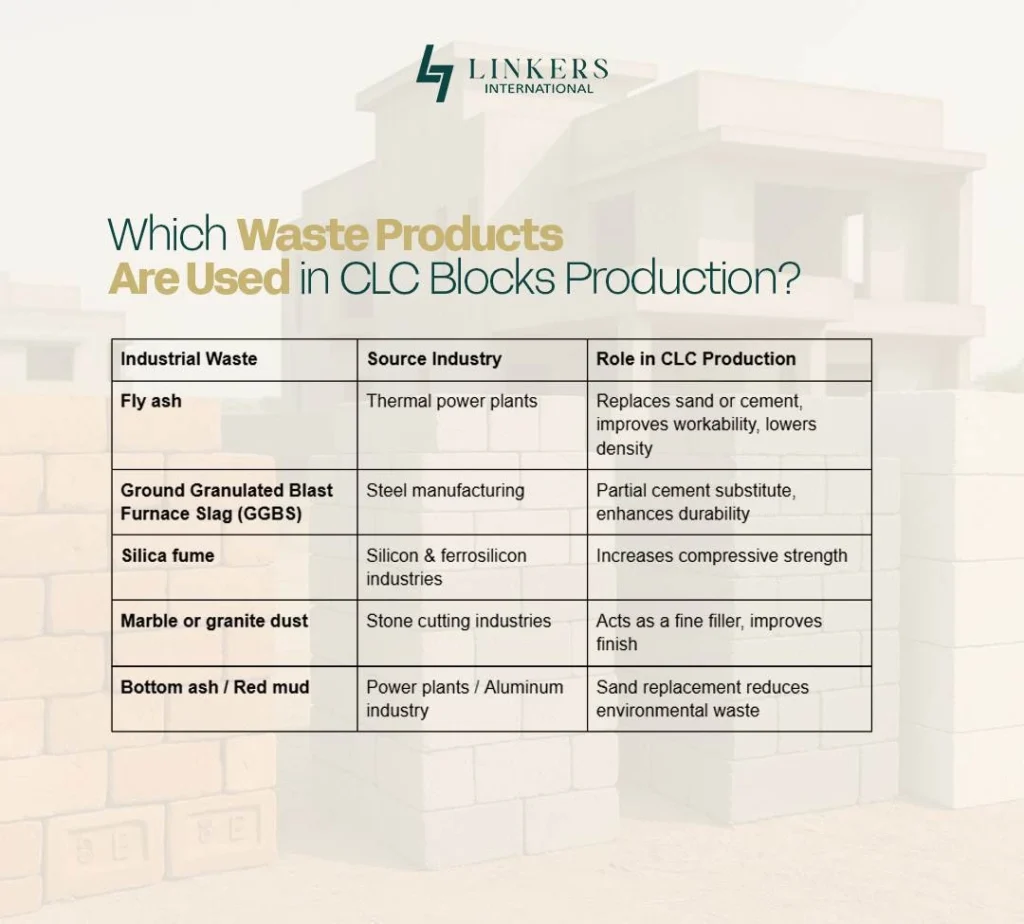
The most remarkable feature of these sustainable building materials is its ability to incorporate industrial by-products that would otherwise end up in landfills. When combined with industrial waste, CLC blocks can achieve up to 40% lower embodied energy compared to conventional concrete.
These waste materials are rich in silica and alumina, making them pozzolanic; they react with lime to form compounds that improve concrete strength and durability. CLC blocks manufacturing includes:
CLC Blocks Manufacturing Process
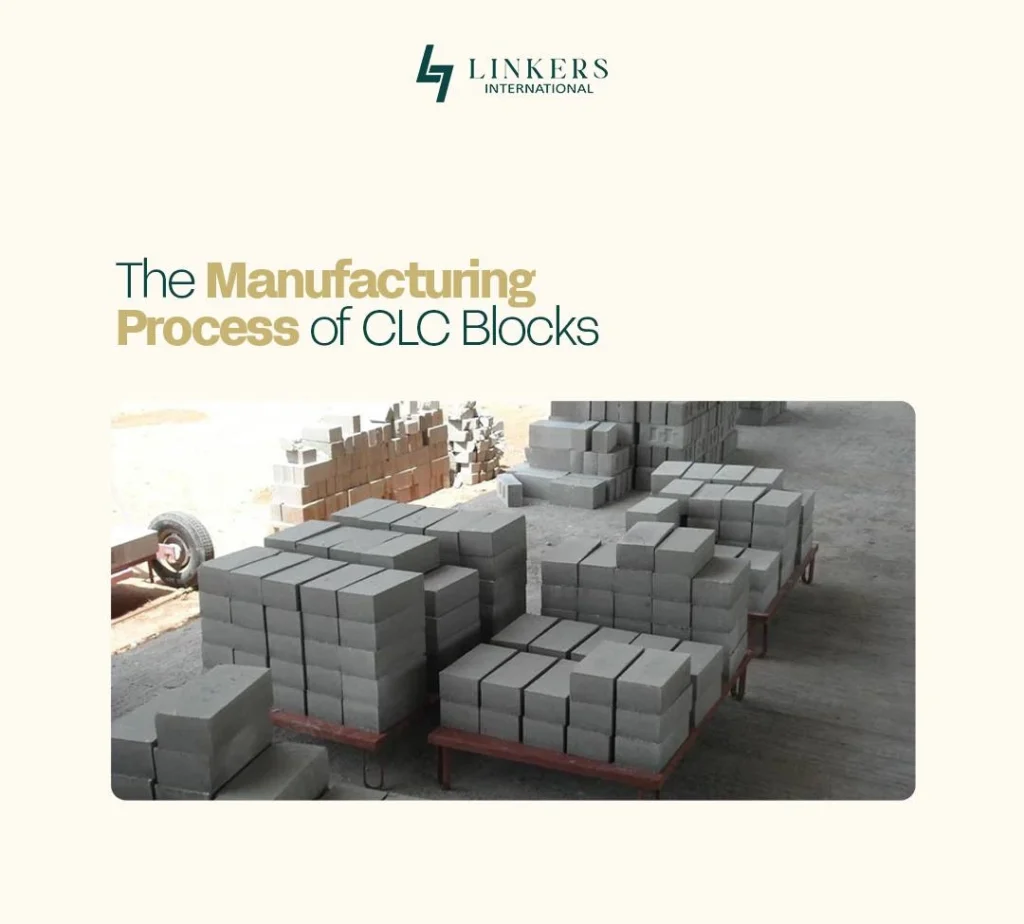
The process of creating Cellular Lightweight Concrete (CLC) blocks is designed to be simple, energy-efficient, and environmentally friendly. Understanding the CLC meaning in construction refers to the use of Cellular Lightweight Concrete as a lightweight building material produced by mixing cement, sand, water, and a foaming agent to create a cellular structure.
Unlike traditional clay bricks, CLC blocks are manufactured without burning or high-pressure autoclaving, which can significantly reduce energy consumption and carbon emissions during production.
The process of making CLC blocks is simple yet technologically advanced:
- Preparation of Slurry: Cement, fly ash (or other industrial waste), and water are mixed to form a smooth slurry.
- Foam Generation: A foaming agent (protein-based or synthetic) is mixed with water in a foam generator to produce stable foam.
- Mixing: The foam is carefully blended into the slurry to achieve the desired density.
- Casting: The foamed mixture is poured into molds of the required sizes.
- Curing: The blocks are demolded and cured (usually with water or steam) for 7–14 days to gain strength.
The result is a lightweight, uniform, and durable construction block that meets structural and environmental standards.
How CLC Blocks are Useful for Water-Prone Areas
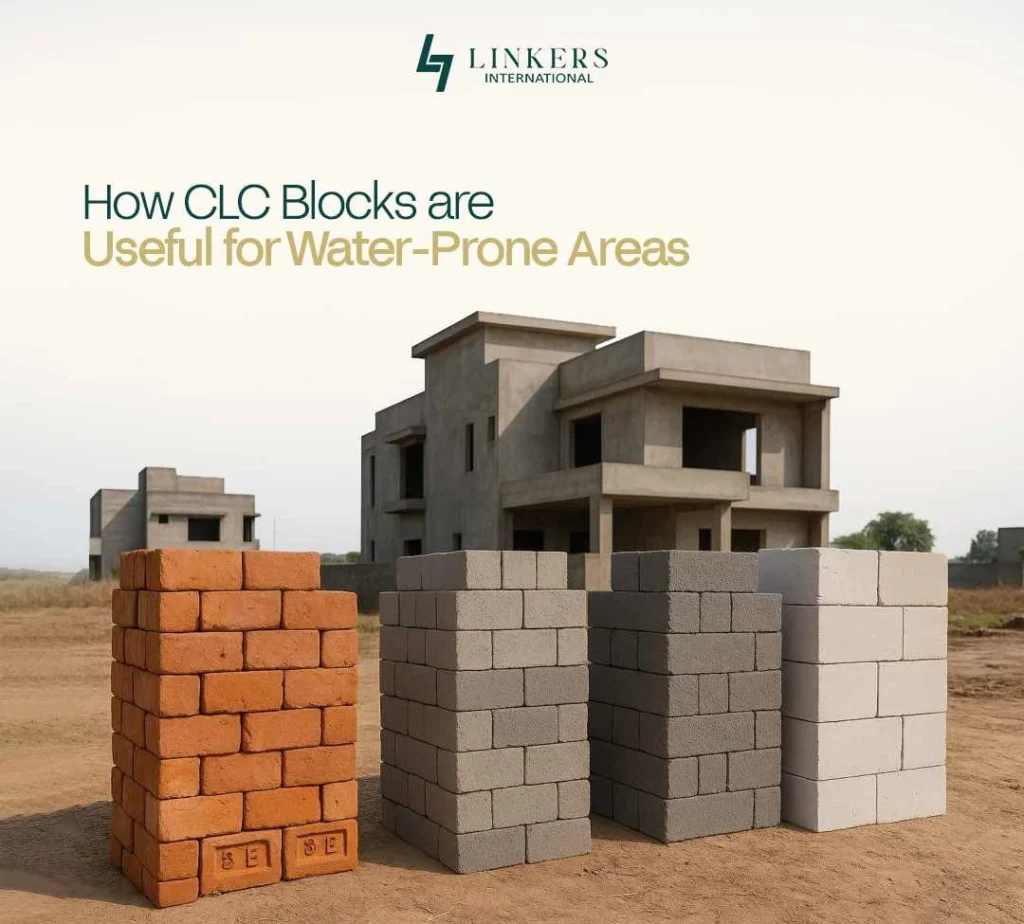
One of the key advantages of CLC bricks is their low water absorption capacity, much lower than that of clay bricks or AAC (Autoclaved Aerated Concrete) blocks.
Because of their closed-cell structure, the tiny air bubbles inside CLC bricks do not interconnect, which prevents water from seeping through. This property makes the blocks highly resistant to moisture, reducing the risk of cracks, dampness, and efflorescence in walls.
This feature makes these low-carbon footprint materials especially suitable for water-prone areas, such as coastal regions, areas with heavy rainfall, basement or foundation structures, and bathrooms and water tanks (as outer layers).
Environmental and Structural Benefits of CLC Blocks
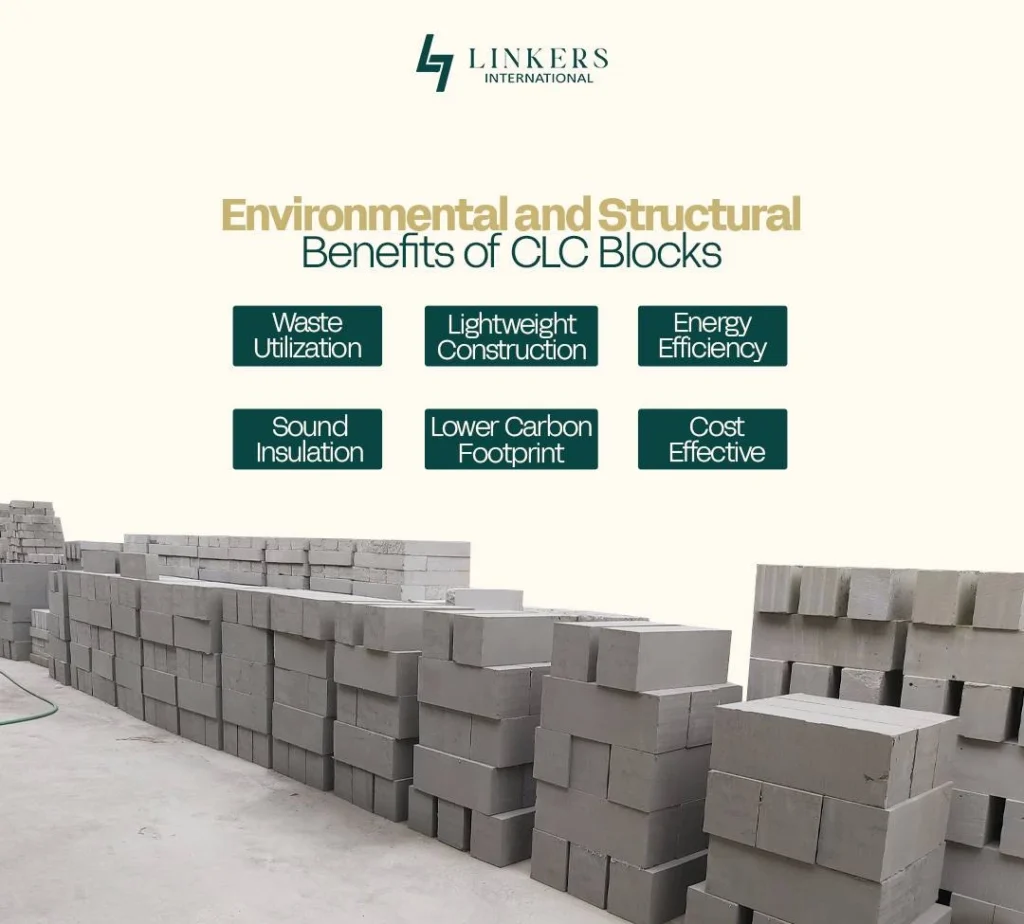
CLC bricks offer a unique combination of sustainability and strength, making them an ideal choice for modern, eco-conscious construction. They help minimize environmental impact while enhancing building performance. Below are some key environmental and structural advantages of using CLC bricks in construction:
Waste Utilization: Diverts large quantities of fly ash, slag, and dust from landfills.
Lightweight Construction: Reduces dead load on structures, lowering foundation costs.
Energy Efficiency: Excellent thermal insulation keeps interiors cool in summer and warm in winter.
Sound Insulation: Air bubbles act as natural sound barriers.
Cost-Effective: Lower transportation and handling costs due to reduced weight.
Lower Carbon Footprint: Reduced cement consumption means fewer CO₂ emissions.
Real-World Applications of CLC Blocks
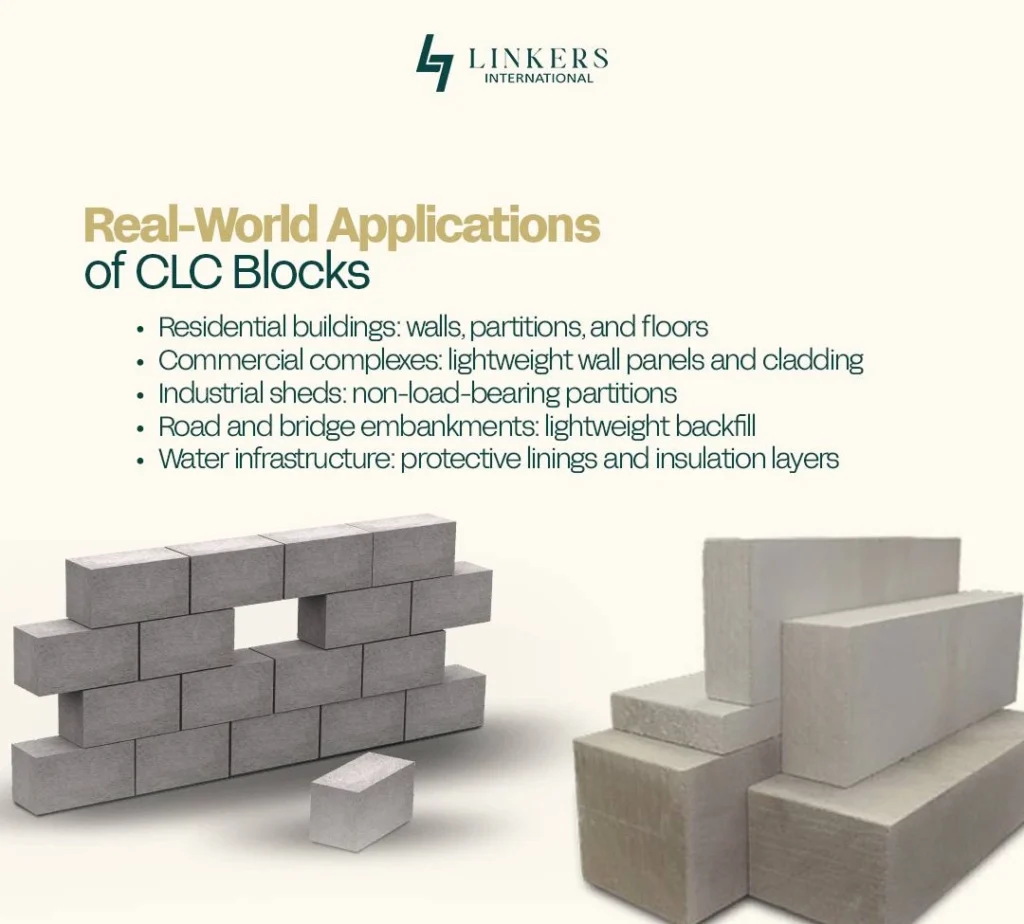
Many large infrastructure projects in India, China, and the Middle East have adopted CLC technology, often utilizing fly ash from local power plants, turning waste into wealth at the regional level. They are widely used in large-scale infrastructure and real estate projects due to their durability, energy efficiency, and eco-friendly production process.
A News Standard for Building Materials
The use of construction waste recycling in CLC bricks manufacturing exemplifies how sustainability and innovation can coexist. It addresses two pressing global concerns simultaneously: industrial waste disposal and sustainable construction.
By choosing CLC bricks, builders and developers contribute to greener real estate, that is more durable, and cost-efficient, one that literally turns waste into strength.
Frequently Asked Questions About CLC Blocks
What is the CLC meaning in construction?
CLC stands for Cellular Lightweight Concrete. In construction, CLC is a lightweight concrete material made using cement, sand, water, and a foaming agent. It is commonly used for blocks, walls, partitions, and insulation applications.
What is a CLC brick?
A CLC brick is a lightweight building block made from Cellular Lightweight Concrete. Its air-filled cellular structure makes it lighter than conventional concrete blocks and clay bricks.
What is CLC construction?
CLC construction involves using Cellular Lightweight Concrete for building applications such as walls, partitions, infill, and other non-load-bearing elements. Its lightweight nature can help reduce the overall weight of a structure.
How are CLC blocks manufactured?
CLC brick manufacturing involves mixing cement, sand, water, and a foaming agent to create a lightweight cellular concrete mixture. The mixture is poured into molds, allowed to set, and then cut or formed into blocks of the required size.
What is a CLC concrete block?
A CLC concrete block is a lightweight block made from Cellular Lightweight Concrete. It contains numerous small air voids created by a foaming agent, giving the block its lightweight and insulating properties.