
For decades, waterfront properties have represented the highest tier of luxury living. From beachfront villas in Dubai to lake-facing high-rise projects in Pakistan, properties near water consistently command stronger demand, higher resale value, and premium pricing.
One of the Dubai real estate marketplace resources, A Land, reported that Palm Jumeirah and emerging creek or lagoon-facing developments such as Dubai Creek Harbour, prices escalated from launch averages around AED 2,000 per square foot to approximately AED 7,000 in 2025, delivering over 250 percent historical appreciation. But why are buyers willing to pay significantly more forwaterfront properties?
This article explores the psychology, economics, and investment performance behind waterfront real estate, with a focus on the UAE market and the growing adoption of riverview apartments, artificial lakes and beach-style communities in Pakistan.
The Global “Blue Mind” Effect
Real estate value is not driven by square footage alone. Emotional experience plays a major role in buyer behavior. Psychologists and urban planners often reference the “Blue Mind Theory”, the idea that proximity to water creates feelings of calmness, relaxation, prestige, and well-being. Waterfront environments reduce visual stress, improve lifestyle quality, and create a stronger emotional connection to a property.
This emotional factor is one of the biggest reasons waterfront properties outperform traditional inland communities worldwide. In luxury real estate, people are not simply purchasing homes. They are purchasing:
- exclusivity
- views
- status
- tranquilit
- and lifestyle identity
Waterfront environments, commercial properties around water bodies, or residential buildings near lakes naturally offer sensory richness that urban environments often lack. The presence of water introduces movement, reflection, sound, and openness, elements that create a sense of tranquility and emotional escape. As a result, buyers often associate waterfront homes not just with property ownership but with lifestyle elevation, prestige, and personal well-being.
Dubai: The Perfect Case Study of Waterfront Premiums
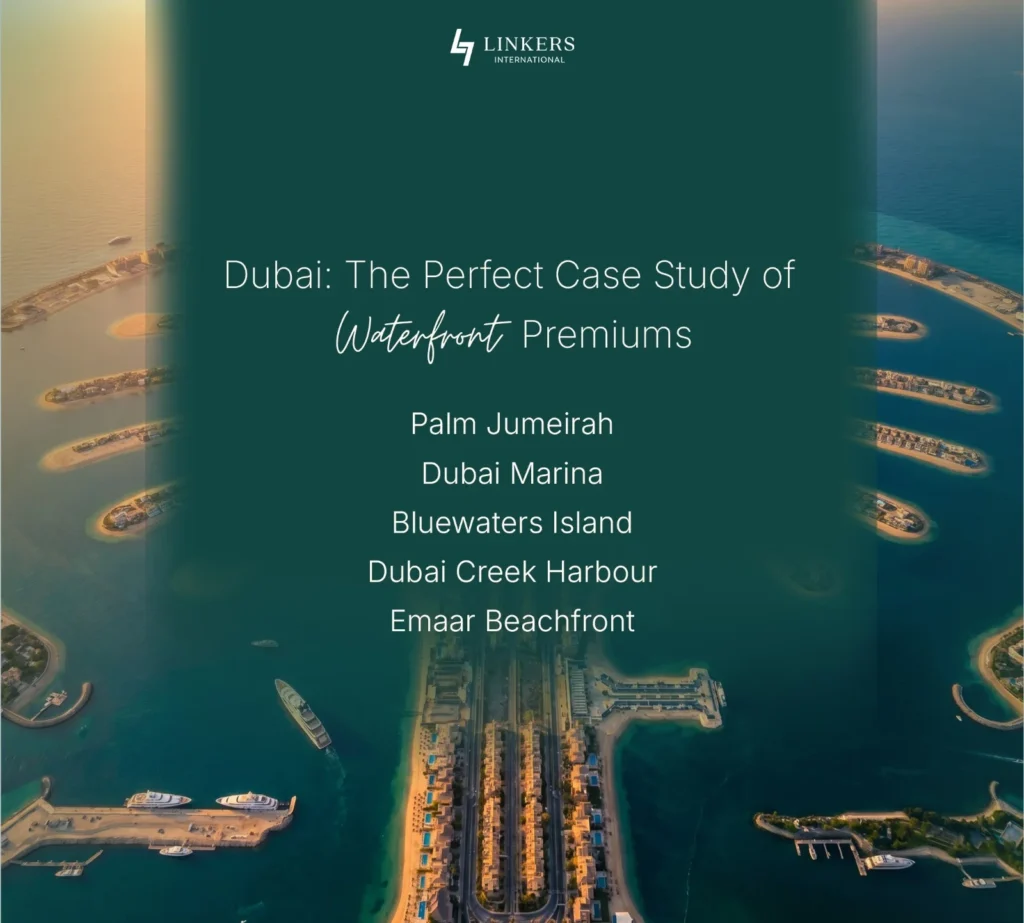
Few cities demonstrate the value of waterfront properties better than Dubai. Over the last two decades, Dubai transformed its coastline into one of the world’s most valuable real estate markets through projects like:
- Palm Jumeirah
- Dubai Marina
- Bluewaters Island
- Dubai Creek Harbour
- Emaar Beachfront
These developments have redefined the concept of urban waterfront living by combining architectural innovation with curated lifestyle environments. Today, waterfront properties in Dubai often sell for 25% to 60% more than comparable inland properties. According to market analysis based on Dubai Land Department data:
- Palm Jumeirah properties experienced annual appreciation growth between 12% and 18%.
- Waterfront communities maintain occupancy rates above 90%.
- Dubai Marina apartments report gross rental yields from 6% to 8%.
This demonstrates a consistent pattern: water-facing real estate is treated as a limited luxury asset class.
The Rise of Artificial Lagoons in the UAE
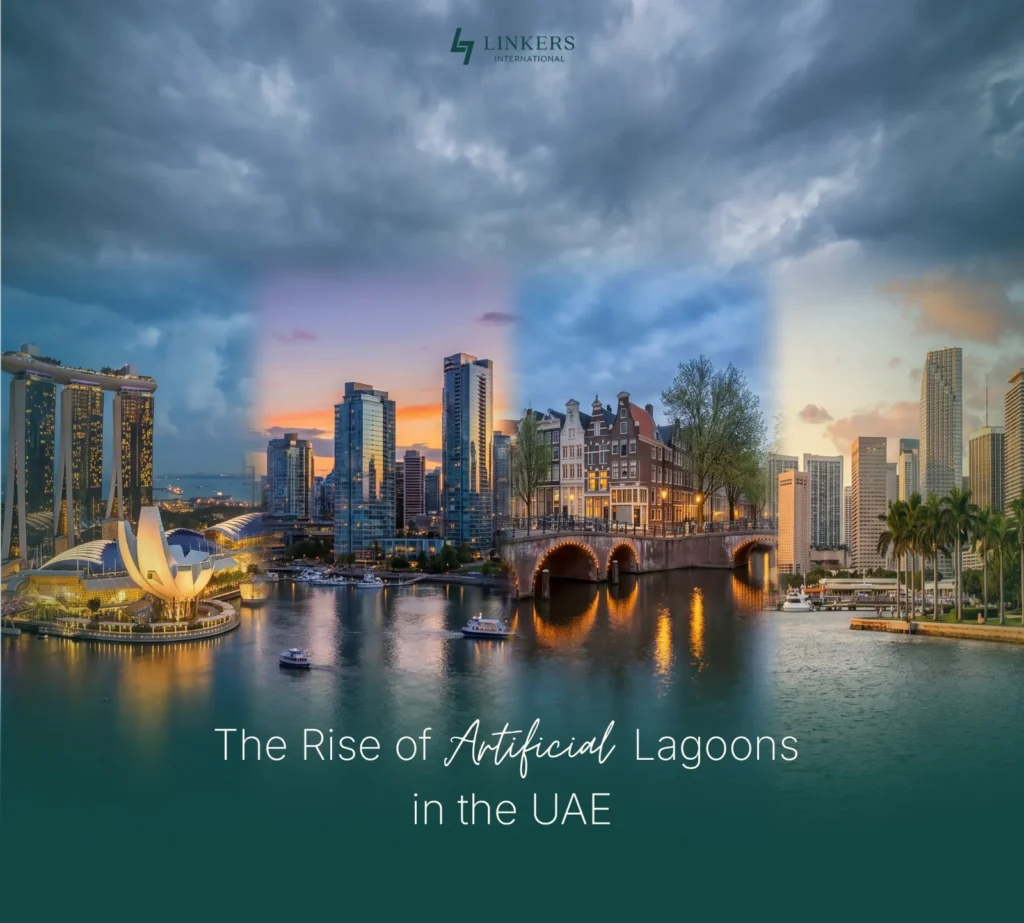
As natural coastline availability became limited in major cities like Dubai, developers began innovating by creating artificial waterfront environments. This led to the emergence of engineered communities centered around crystal lagoons, man-made beaches, and waterfront properties designed to replicate coastal living within inland locations. Some of the projects successfully replicated the waterfront lifestyle away from the coastline. These include;
- District One
- DAMAC Lagoons
- Tilal Al Ghaf
Market performance in these developments has validated the concept. Properties facing lagoon or water features in master-planned communities have been observed to trade at premiums of approximately 12% to 18% compared to non-water-facing units. More importantly, these projects have achieved strong absorption rates, indicating that buyers are increasingly prioritizing experiential living environments over traditional location-based value alone. These developments combine:
- artificial beaches
- swimmable lagoons
- waterfront promenades
- resort-style amenities
- and premium landscape planning
DAMAC Lagoons became one of Dubai’s fastest-growing investment communities because it offered a waterfront lifestyle at a comparatively accessible entry price. This shift proves an important market insight: buyers are not only paying for “location near the sea”, but they are also paying for the emotional experience of water-centric living.
Global Case Studies on Waterfront Living & Property Value
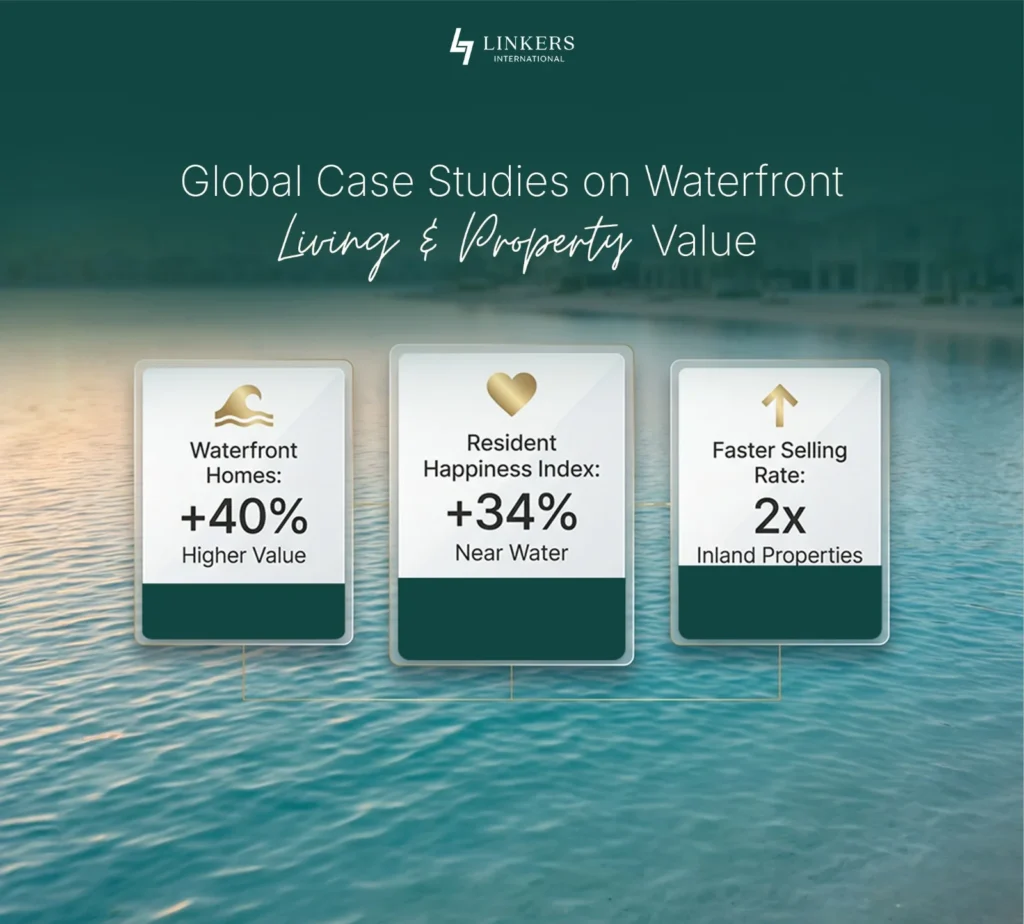
Across the world, multiple studies have explored the connection between water, nature, human happiness, and property value. From psychological research to real estate market analysis, the findings consistently show that proximity to water enhances well-being, strengthens emotional connection, and increases the perceived and financial value of a property.
The Mappiness Study 2011: Nature and Human Happiness
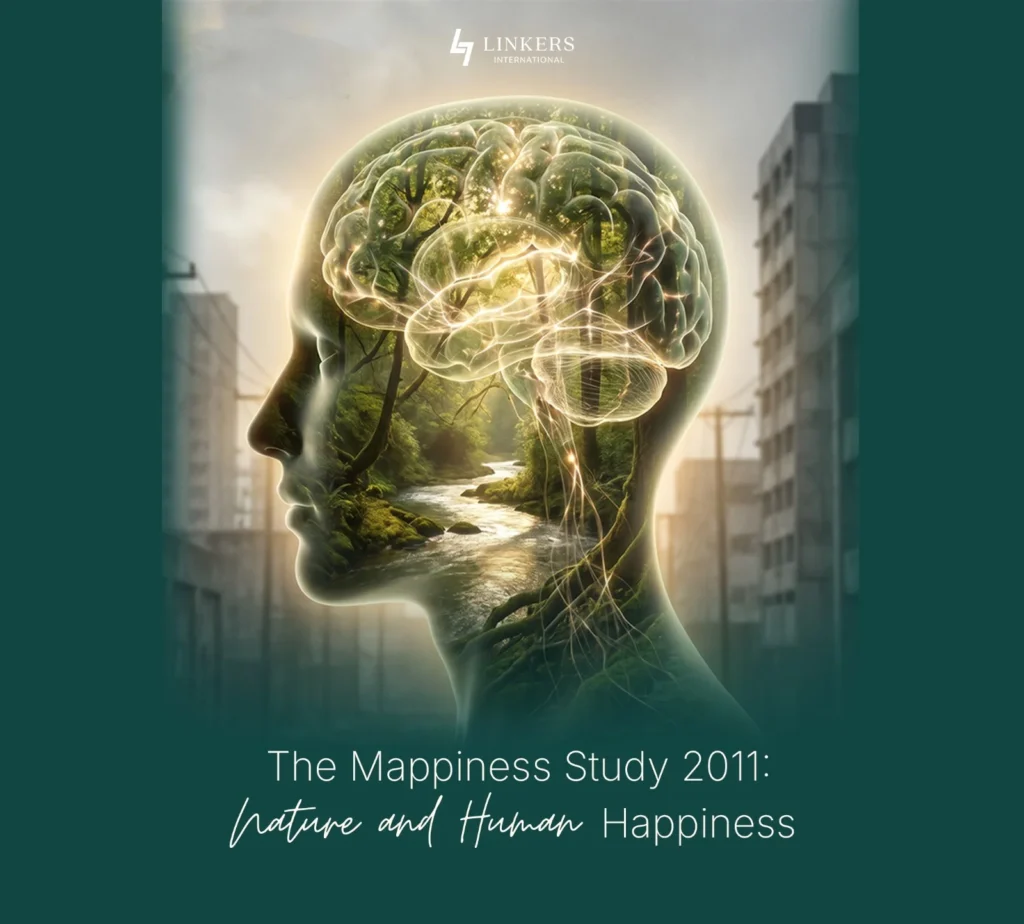
A large-scale study conducted in 2011 by economists and environmental researchers George MacKerron and Susana Mourato explored how environment affects human well-being using a smartphone app called Mappiness.
The app tracked nearly 22,000 participants across the United Kingdom who agreed to take part in the research after downloading the free tool. At random intervals during the day, users were asked to report their current level of happiness, along with details about their surroundings, social company, and activities at that moment. In addition, GPS data was used to record their precise locations.
~22,000 participants, over 1.1 million responses, showing higher happiness in natural environments than urban ones.
Altogether, the study gathered over 1.1 million responses, making it one of the most extensive real-time happiness datasets ever collected. The results showed a consistent trend: individuals reported greater happiness when they were in natural outdoor environments compared to urban areas.
The Ottawa Studies 2012: Nature Connectedness and Happiness
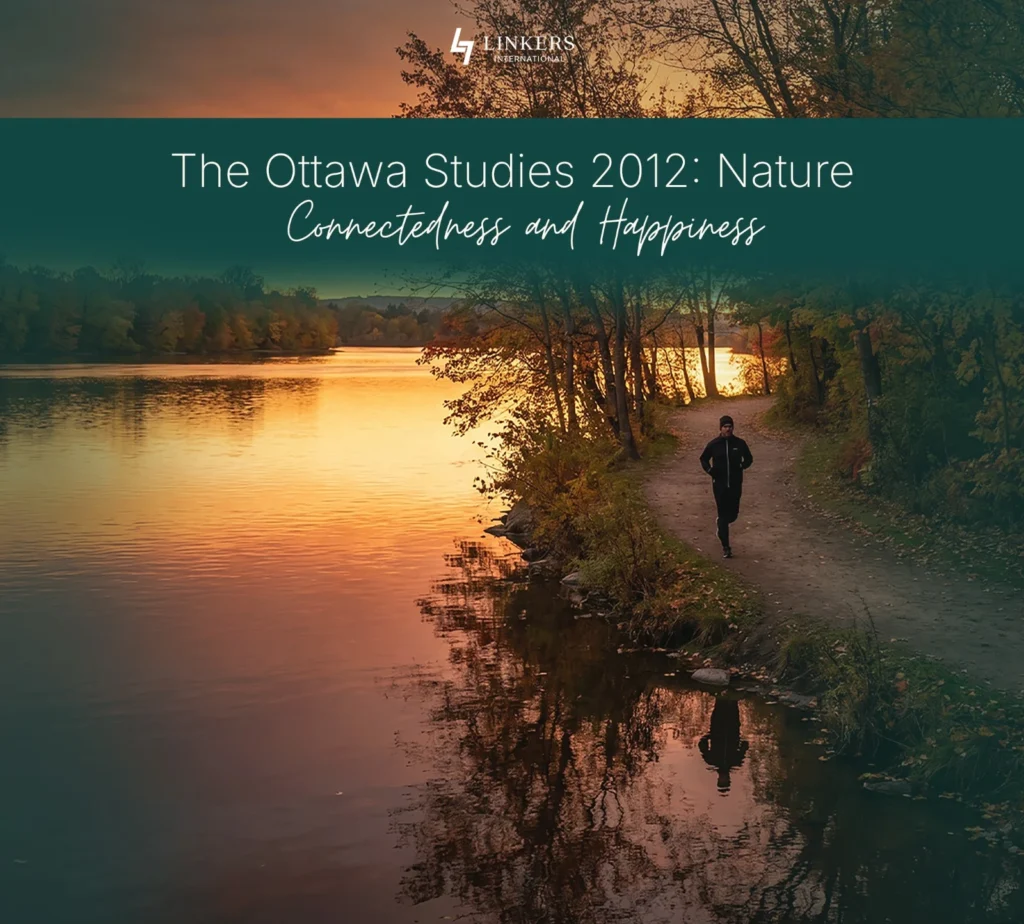
In 2012, two studies conducted in Ottawa, Ontario, examined the relationship between nature connectedness and human happiness. Involving nearly 1,000 participants, the research found that a person’s connection to nature was a uniquely strong predictor of happiness, even when compared with other social bonds such as relationships with friends or national identity.
~1,000 participants; nature connectedness was a unique predictor of happiness even after controlling for other social relationships.
One of the study’s coauthors, Trent University psychology professor Elizabeth Nisbet, highlighted the practical impact of these findings during a 2013 discussion titled “Your Brain On Nature,” hosted by Ecology Ottawa. She noted that even short experiences in natural settings, such as a 15-minute walk along the Ottawa River, can significantly increase feelings of vitality and positive emotions.
The Delightful Places Survey 2005: Why Natural Environments Enhance Happiness
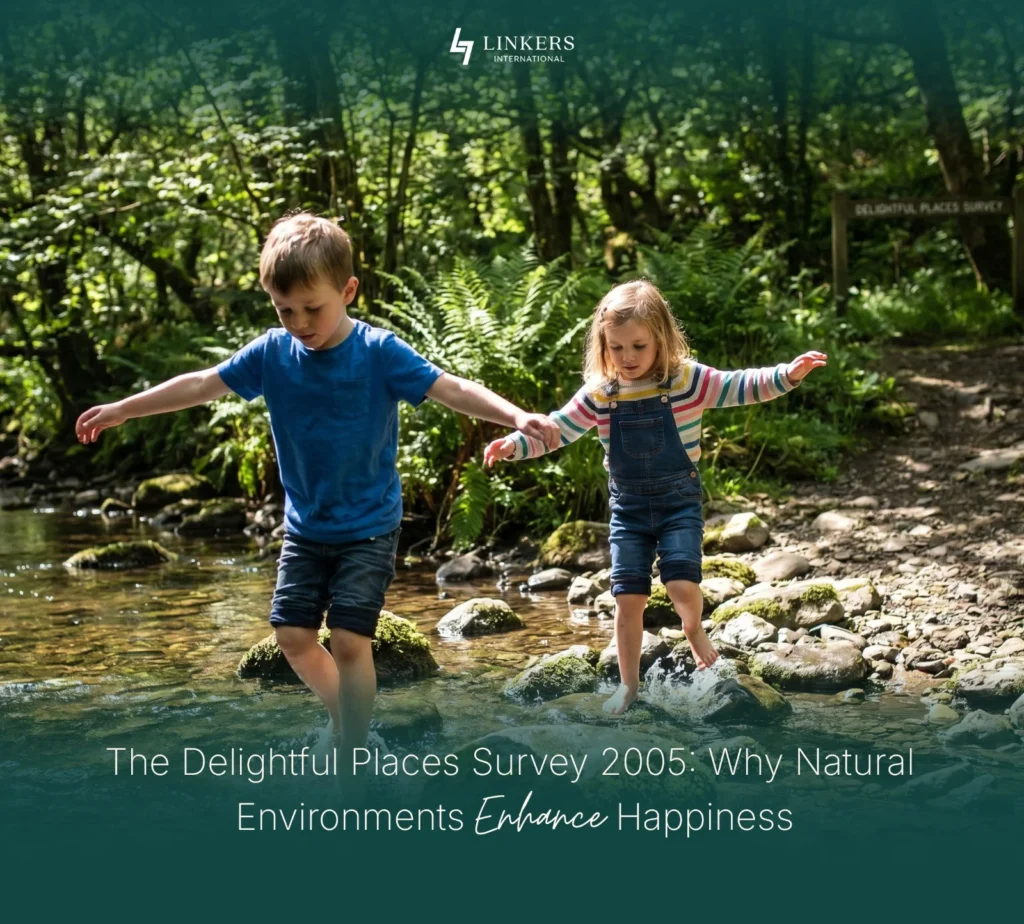
In 2005, Catherine O’Brien, associate professor of education at Cape Breton University in Sydney, Nova Scotia, and a specialist in sustainable happiness, collaborated with the Canadian National Center for Bicycling and Walking to conduct the “Delightful Places Survey.” The study aimed to identify which environmental features people associate with happiness and well-being.
Qualitative survey findings; no single numeric result, but strong consensus that parks, water, and greenery ranked highest for happiness experiences.
While participants mentioned cities such as Vancouver, Seattle, Melbourne, and Bogotá, they consistently highlighted that the most enjoyable aspects of these places were their natural environments, parks, ponds, trees, urban rivers, and waterfront spaces.
According to respondents, nature created happiness through a deeply immersive sensory experience, including:
- The calming sounds of water, wind, birds, and even natural silence
- Fresh, earthy scents such as soil, water, plants, clean air, and sea breeze
- Visually soothing and dynamic scenery, including shades of green, blue, and warm tones, as well as the movement of leaves and water
- Physical sensations like cool water on the skin or the softness of soil and fallen leaves underfoot
- A heightened sense of awareness and focus when navigating natural elements like rocks, branches, puddles, or shells
The 2006 Study on Coastal Living in Ireland
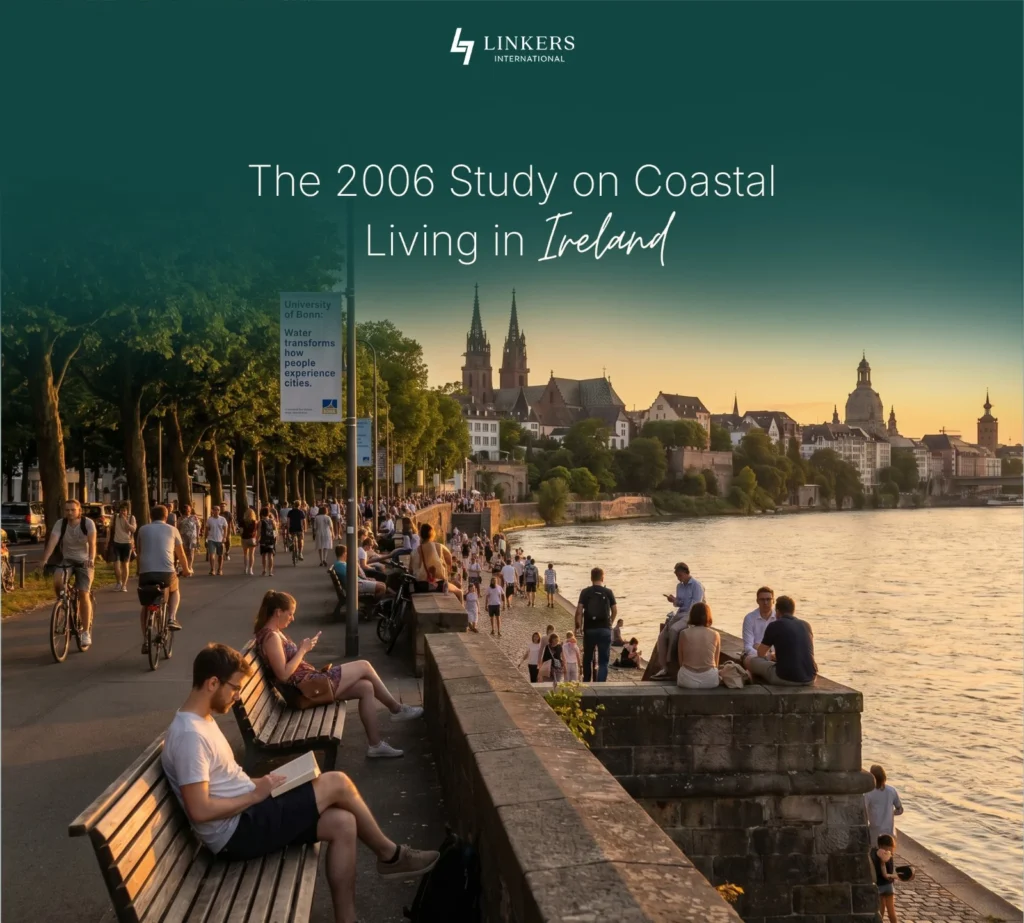
A 2006 study in Ireland found that individuals living within five kilometers of the coast reported higher life satisfaction, all other factors being equal. The effect became even stronger for those living within two kilometers of the shoreline.
Similarly, research conducted by a University of Essex team in the United Kingdom revealed that while all green spaces positively influenced mood and self-esteem, environments that included open water produced a significantly greater improvement in mental well-being.
Living within 5 km of the coast increased life satisfaction, with an even stronger effect within 2 km of the shoreline.
In another study by the Institute for Hygiene and Public Health at the University of Bonn, researchers observed people walking along river promenades in cities like Cologne and Düsseldorf. They concluded that water is a key factor influencing both preference and positive perception in urban environments.
Together, these findings highlight how strongly water shapes not only how people feel in cities, but also where they choose to live.
How Water Views Shape Global Real Estate Value
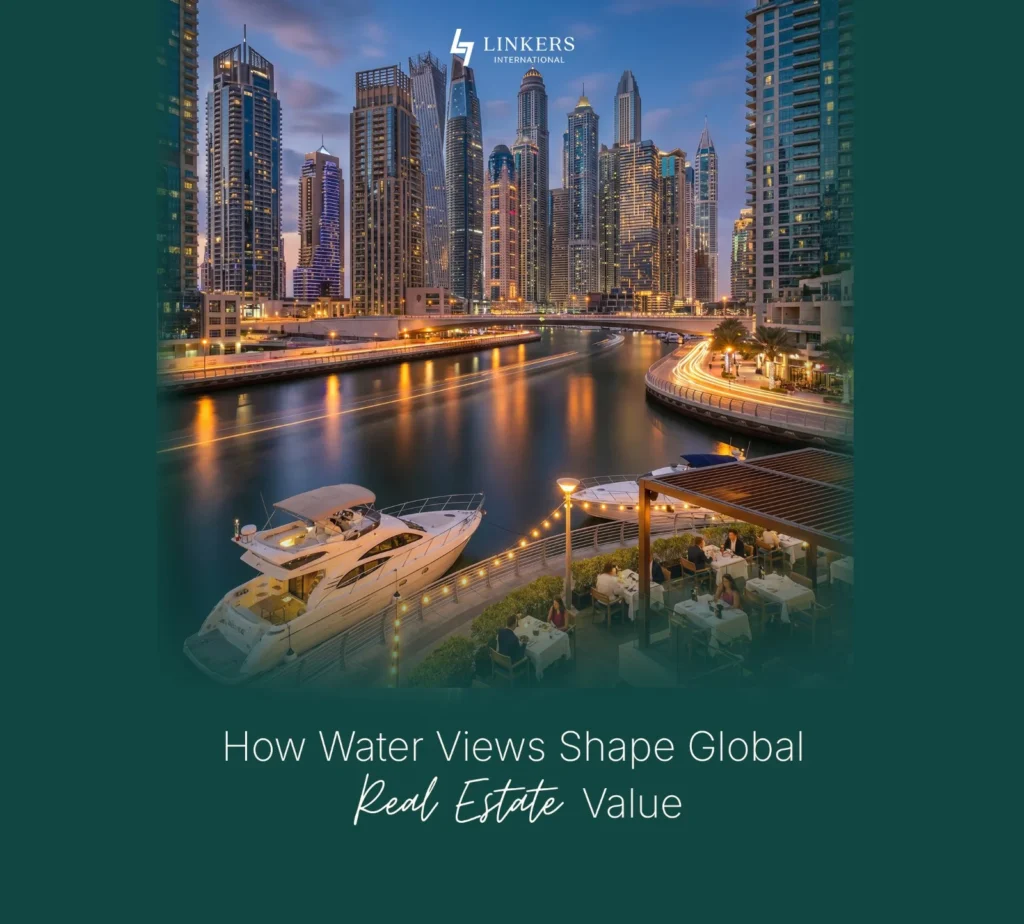
Across global real estate markets, waterfront properties consistently stand out as one of the strongest drivers of property value. From coastlines and lakes to rivers and artificial islands, studies over the past few decades show that water access and water views can significantly increase property prices, often outweighing even major differences in interior features like size, design, or amenities.
Research from different countries highlights this pattern clearly:
- In Emerald Isle, North Carolina (1993), real estate appraisers found that distance to water, waterfront frontage, and ocean views were among the top five factors influencing coastal property values.
- In the Great Lakes region (2001), properties with lake views showed value premiums of up to 89.9%.
- In the United States (2002–2003), water-related premiums ranged from 4% to 12% in Massachusetts, 46% in Avalon, New Jersey, and as high as 147% for ocean views in Point Roberts, Washington.
- In Singapore, high-rise units with unobstructed sea views command around a 15% price premium.
- In Dubai (2013), luxury homes on Palm Jumeirah ranged from approximately $580,000 for apartments to $5.4 million for villas, reflecting strong demand for waterfront living on artificial islands.
- In the United Kingdom (2013), sea views increased property prices by 26% to 66%, while river views could add as much as 82%.
- In the Netherlands (2000), water views were shown to increase property values by 8% to 28%.
- In Portland, Oregon, and Seattle, Washington, waterfront “floating homes” often sell at higher prices per square foot than comparable inland homes.
- Even luxury mobile home communities like Paradise Cove in Malibu and waterfront parks in Santa Cruz feature homes priced from hundreds of thousands to several million dollars due to ocean proximity.
Together, these examples show a consistent global trend: water is not just a visual or lifestyle feature; it is a powerful economic driver that continues to elevate real estate value across markets and property types.
Why Investors Continue Choosing Waterfront Properties
The continued global demand for waterfront properties is supported by a combination of emotional, financial, and structural factors. The waterfront assets tend to demonstrate stronger capital appreciation over time due to their limited supply and sustained desirability among high-net-worth buyers.
Additionally, modern real estate buyers are increasingly prioritizing wellness-oriented projects in Islamabad, Karachi, Lahore and other cities. This shift has amplified the importance of natural elements such as water, greenery, and open space in residential planning. The continued demand for waterfront real estate is driven by both emotional and financial logic.
1. Stronger Appreciation Potential: Waterfront assets historically outperform inland developments in premium markets.
2. Higher Rental Demand: Tourists, professionals, and luxury tenants consistently prefer waterfront residences.
3. Lifestyle-Led Purchasing: Modern buyers increasingly prioritize wellness, scenery, and community experience.
4. Limited Inventory: Water-facing units remain scarce, protecting long-term value.
5. Global Luxury Positioning: Waterfront living continues to represent prestige in every major real estate market.
Waterfront Real Estate: A Global Investment Category
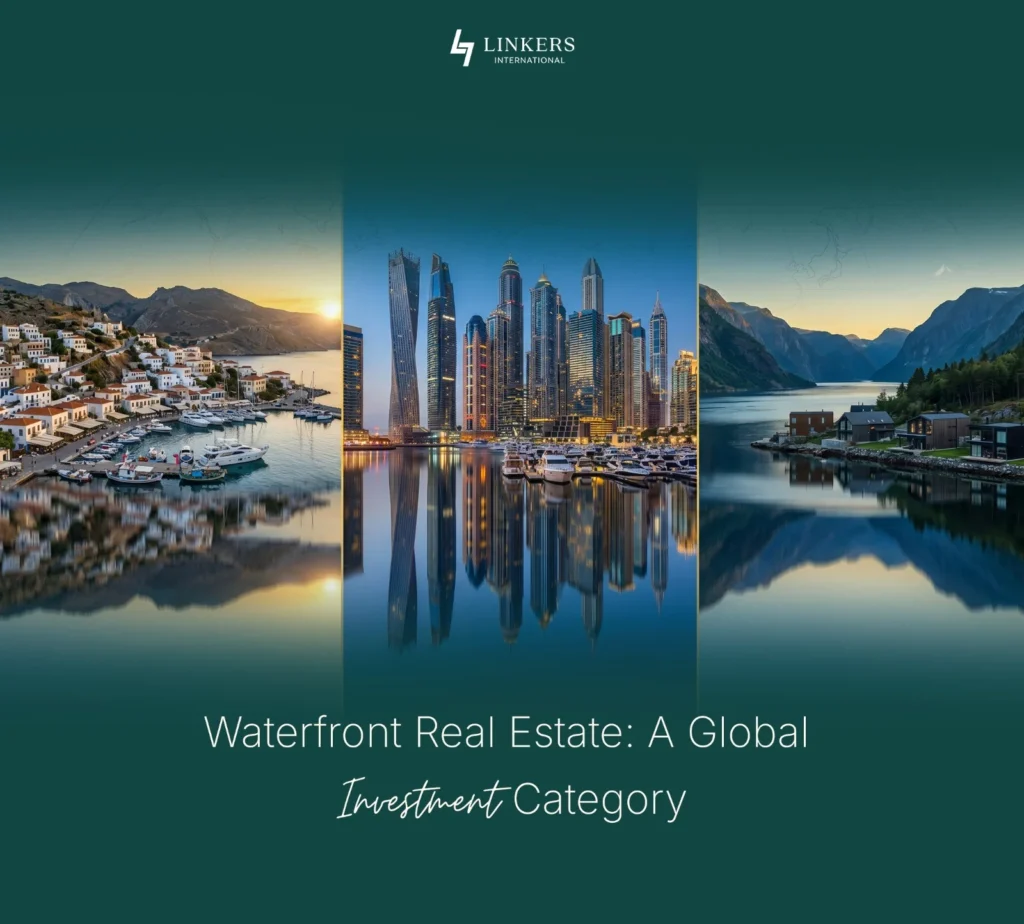
Waterfront real estate is no longer simply about living near the sea. Now, Pakistan is beginning to adopt the same development philosophy through artificial lakes, waterfront masterplans, and resort-inspired communities. It has evolved into a global investment category driven by:
- emotional psychology
- lifestyle aspiration
- urban design
- and long-term asset scarcity
Dubai demonstrated how waterfront properties could redefine property value through iconic communities like Palm Jumeirah and District One. As buyer preferences continue shifting toward experiential living, one trend is becoming increasingly clear: people are not just paying more for water views; they are investing in a lifestyle that water represents.