
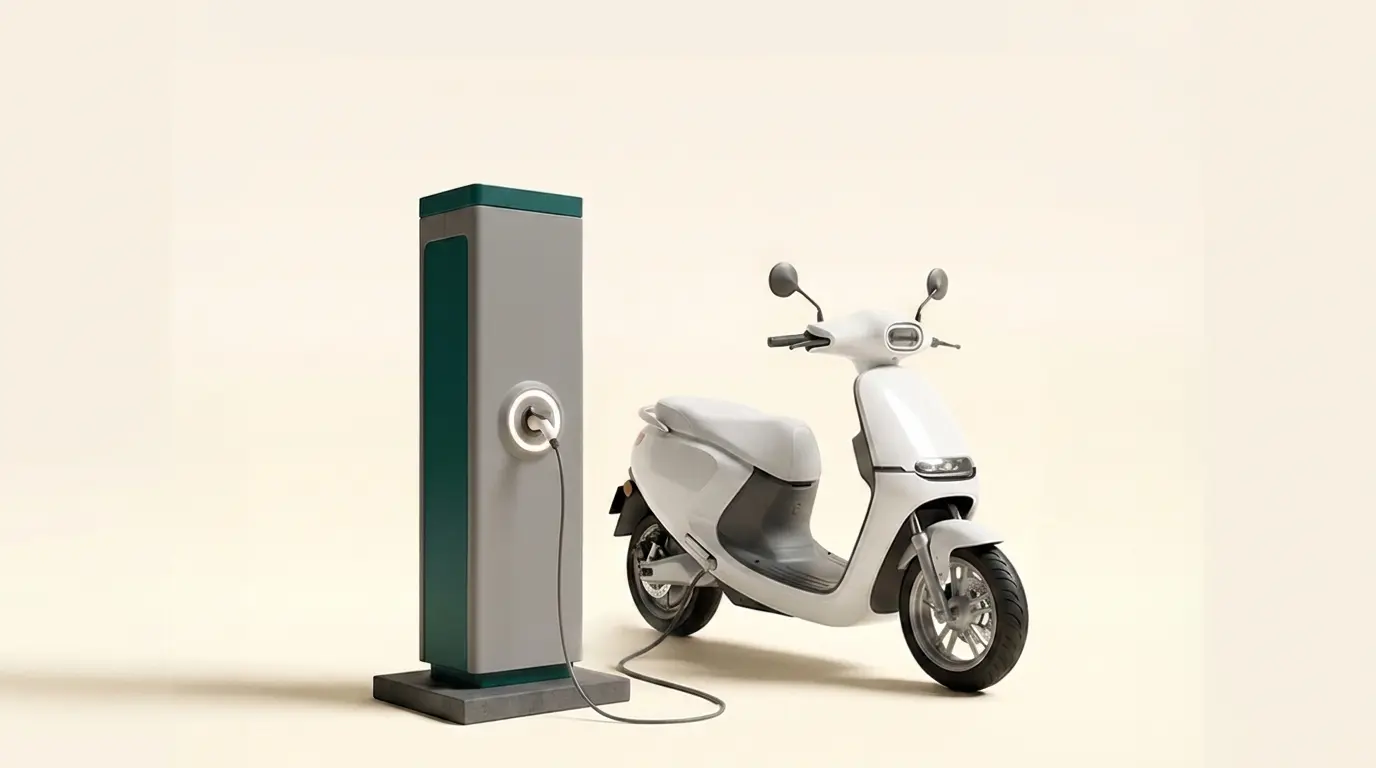
Electric vehicles are no longer a niche product in Pakistan. Brands such as BYD, Deepal, MG, Hyundai, and other global manufacturers are steadily expanding their presence in the local market. At the same time, a growing number of Pakistanis are importing and owning EVs, including Tesla models. As a result, the shift towards electric mobility is accelerating across the country. However, one question continues to come up for first-time EV buyers: How do you install an EV charger at home in Pakistan?
The good news is that homeowners can install EV charging at home in Pakistan in a straightforward manner; however, it can usually be completed. This guide explains everything Pakistani EV owners need to know, from electrical requirements and costs to safety considerations and solar integration.
Steps to Install an EV Charger at Home
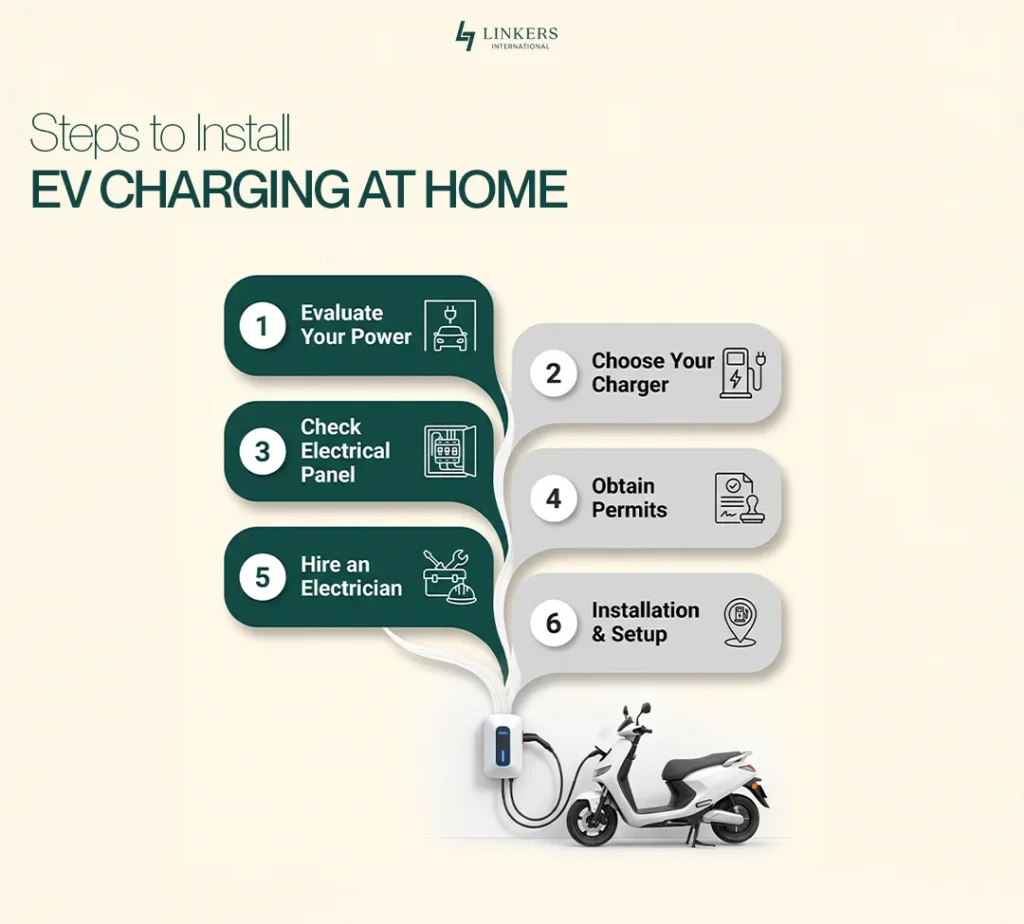
Unlike conventional vehicles that depend on petrol stations, EV ownership revolves around charging where you park. In fact, most EV owners globally charge their vehicles at home overnight and start each day with a full battery. Public charging infrastructure in Pakistan is improving, but how to install EV charging at home remains the most convenient and economical option for daily use.
Step 1: Check Your Parking Situation
Before purchasing an EV charger, evaluate where your vehicle will be parked. For apartment residents in Pakistan, approval from the management committee may be required to run a dedicated cable from your meter to the parking area. Many apartment communities in Islamabad, Lahore, and Karachi are gradually introducing EV-friendly infrastructure to accommodate growing demand. Home EV charging works best if you have:
- A dedicated parking space
- A garage or covered parking area
- Easy access to your electricity meter or distribution board
- Permission from building management if you live in an apartment
Step 2: Understand the Different Types of EV Chargers
Level 1 Charging: This uses a standard household socket and is suitable for plug-in hybrids or low daily mileage users.
- Power Output: Up to 3.3 kW
- Charging Time: 12–24 hours for a full charge
- Best For: Plug-in hybrids and emergency charging
Level 2 Charging: This is the preferred option for most Pakistani EV owners.
- Power Output: 7 kW to 22 kW
- Charging Time: 4–8 hours for a full charge
- Best For: BYD Atto 3, Deepal, MG EVs, and future EV models
Pakistan’s EV charging regulations classify Level 1 and Level 2 chargers as suitable for residential use, while DC fast chargers are primarily intended for commercial applications.
Step 3: Assess Your Home Electrical Capacity
Most homes in Pakistan operate on a single-phase electricity connection, which is sufficient for 7 kW home chargers. Larger homes with three-phase connections can support faster 11 kW or 22 kW chargers. If your home’s electrical infrastructure is older or already heavily loaded with air conditioners and appliances, a panel upgrade may be necessary.
Your electrician will inspect:
- Available load on your electricity meter
- Existing breaker capacity
- Cable size and wiring condition
- Earthing and grounding arrangements
Step 4: Choose the Right Charger
Most modern EVs sold in Pakistan use Type-2 AC charging connectors, which have become the international standard for residential charging. Smart chargers offer additional features such as charging schedules, energy usage tracking, remote control via smartphone and Integration with solar systems. When selecting a charger, consider:
- Vehicle compatibility
- Charging speed requirements
- Weather protection rating
- Smart charging capabilities
- Mobile app monitoring
Step 5: Hire a Qualified Electrician
Several Pakistani companies now provide professional EV charger installation services in major cities including Islamabad, Rawalpindi, Lahore, and Karachi. Installing an EV charger is not the same as installing a regular electrical outlet. A qualified installer will:
- Install a dedicated circuit breaker
- Use appropriately rated cables
- Ensure proper grounding and earthing
- Install surge protection
- Test the charging system before use
Step 6: Decide on the Best Installation Location
Wall-mounted chargers are the most popular option for Pakistani homes because they save space and provide a cleaner installation. Your charger should ideally be installed:
- Close to your parking space
- Near your electrical panel to reduce cable costs
- Protected from direct rain and extreme weather
- Easily accessible for daily charging
Tentative Cost of Home EV Charging Installation
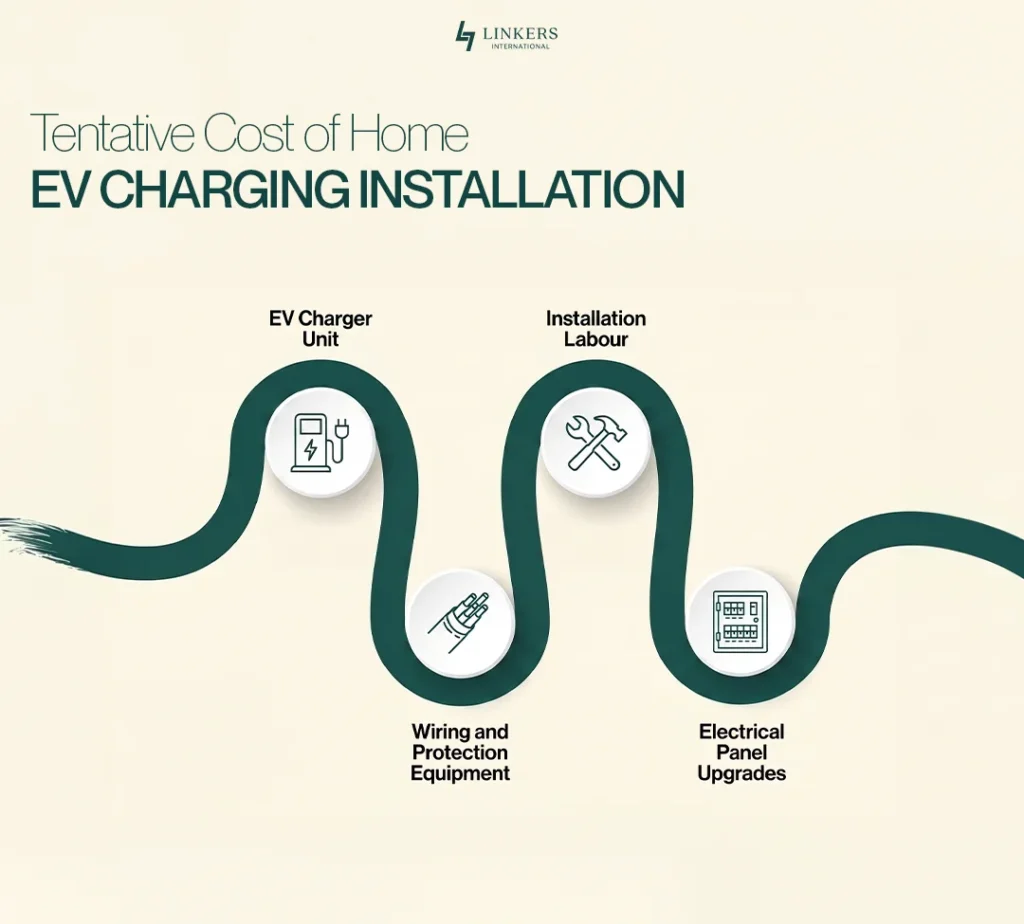
The cost of installing a home EV charging setup in Pakistan varies depending on several factors, including the type and power output of the charger, the distance between the electricity meter and the parking area, any electrical upgrades required, and the overall complexity of the installation.
Typical expenses to install EV charging at home include the EV charger unit itself, wiring and electrical protection equipment, installation labour, and, in some cases, upgrades to the electrical panel or meter connection.
Homes with sufficient existing electrical capacity and conveniently located parking spaces generally incur lower installation costs, while properties requiring extensive wiring or electrical infrastructure upgrades can expect higher overall expenses.
Typical expenses include:
- EV Charger Unit
- Wiring and protection equipment
- Installation labour
- Electrical panel upgrades if necessary
A simple installation in a house with existing capacity costs significantly less than installations requiring new wiring or meter upgrades.
Common Challenges for Pakistani EV Owners
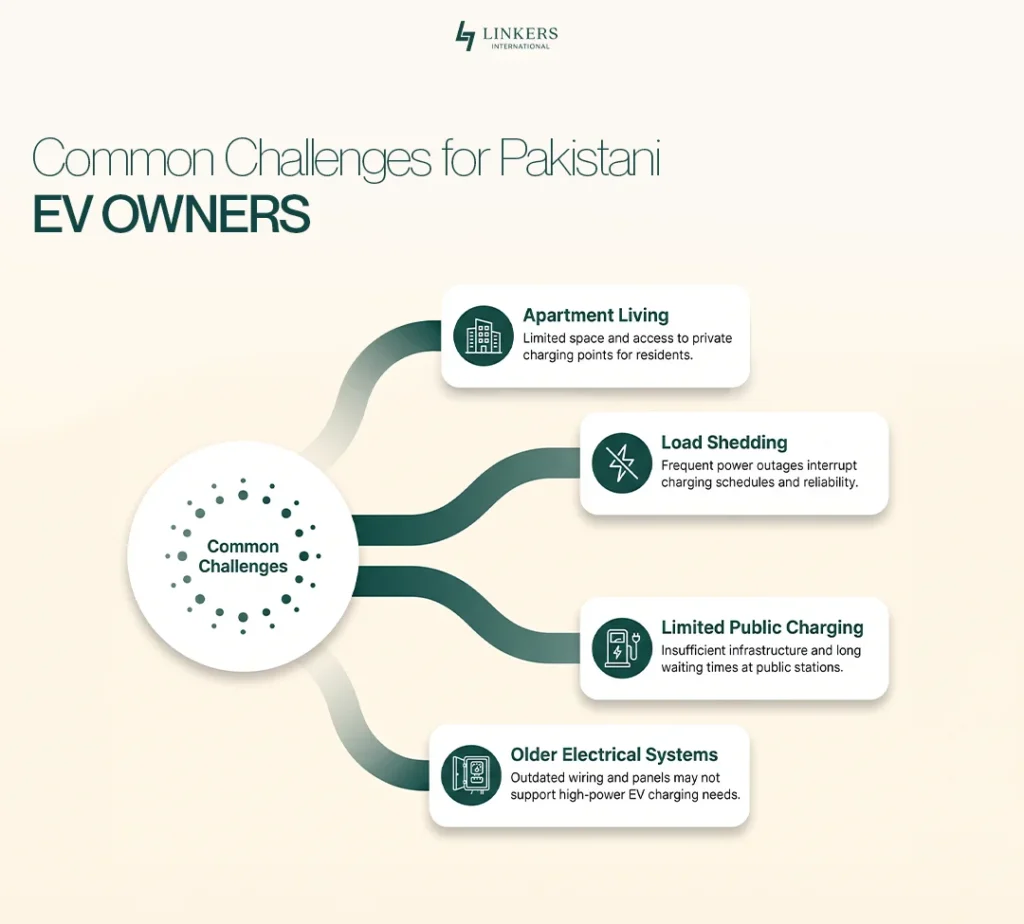
As electric vehicles become more common in Pakistan, prospective buyers and owners who want to install EV charging at home should be aware that the ownership experience can differ from that of conventional vehicles. Understanding the common challenges associated with EV ownership can help drivers make informed decisions and better prepare for the transition to electric mobility.
However, as EV adoption continues to grow and investment in charging networks increases, many of these challenges are expected to become less significant in the coming years.
Apartment Living: Running cables to basement parking can be challenging without support from building management.
Load Shedding: Many EV owners pair chargers with solar systems or backup power solutions.
Limited Public Charging: Home charging remains the most reliable solution until public infrastructure expands further.
Older Electrical Systems: Some homes may require electrical upgrades before installation.
The Future of Home EV Charging in Pakistan
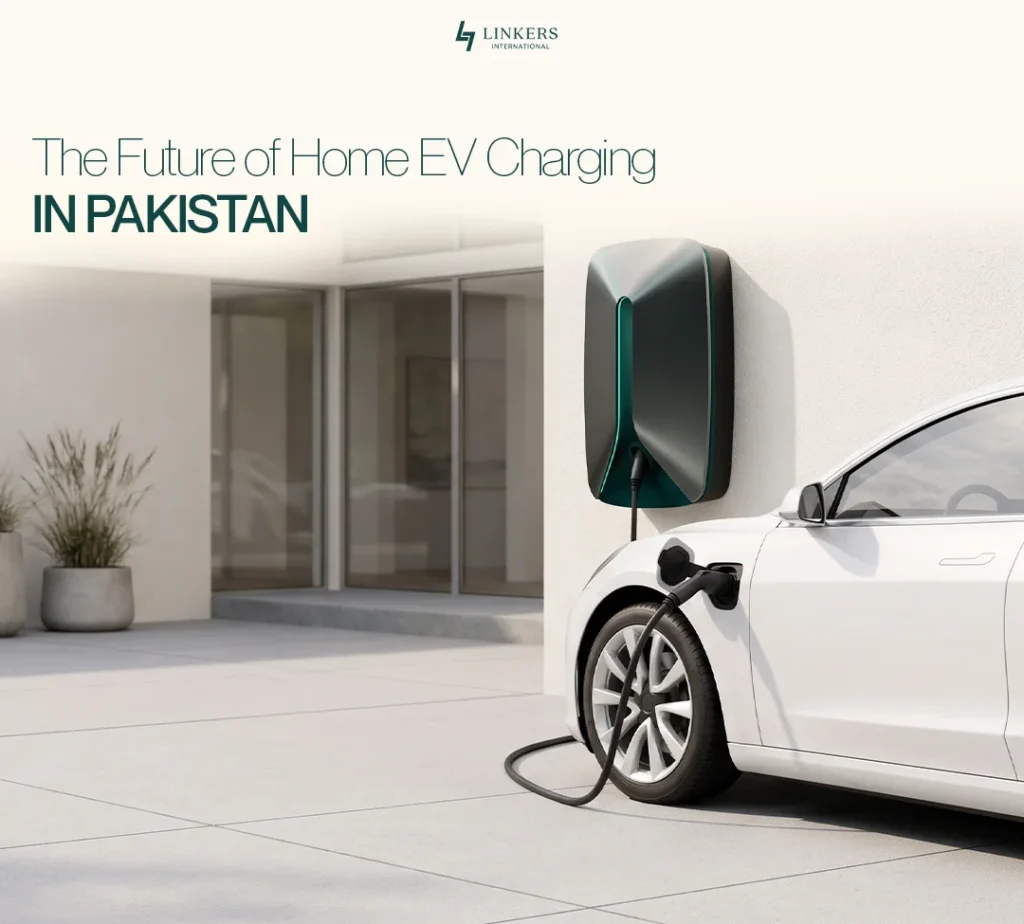
Pakistan’s EV market is expected to grow rapidly over the coming decade as more manufacturers enter the country and charging infrastructure expands. Industry forecasts suggest electric vehicles could account for a significant share of vehicle sales by 2030, making infrastructure increasingly important for homeowners and developers alike to install EV charging at home.
As Pakistan moves toward an electric future, home charging will become as essential to modern homes as internet connectivity or solar panels. For anyone considering an EV purchase, planning your home charging setup should be one of the first steps in your journey toward electric mobility.
Frequently Asked Questions (FAQs)
Can I install EV Charging at home with Solar Panels in Pakistan?
Yes. Pakistan’s abundant sunlight and growing adoption of rooftop solar systems make solar-powered EV charging an increasingly popular option. Charging an EV with solar can reduce electricity bills, lower dependence on the grid, and protect owners from future tariff increases.
Is Home EV Charging Safe?
Yes, provided the charger is installed correctly by qualified professionals. A proper installation includes circuit protection, earthing, surge protection, weather-resistant equipment, and automatic safety shut-off systems.
Do You Need Government Approval for a Home EV Charger?
No. Standard residential EV chargers generally do not require special government approvals in Pakistan. Current regulations primarily focus on public charging stations and commercial charging operators.
What is EV charger price in Pakistan?
EV charger prices in Pakistan start from around PKR 65,000 for basic home chargers and can exceed PKR 300,000 for commercial fast-charging solutions.
What Is the 80% Rule to install EV charging at home?
The 80% rule means charging your EV to 80% instead of 100% for daily use. This can help maintain battery health over the long term.
How to apply for ev charging station in pakistan
To open an EV charging station in Pakistan, applicants must obtain the required NOCs, apply through NEECA’s online portal, pay the registration fee, and meet the technical and safety standards set under Pakistan’s EV Charging Infrastructure Regulations 2024.