
While Pakistan’s real estate sector is still largely driven by domestic buyers and local capital, foreign investment, both direct and indirect, has gradually become an important catalyst for modernization. According to the State Bank of Pakistan (SBP), total FDI reached approximately $2.46 billion in FY2024–25, reflecting renewed investor interest in Pakistan’s broader economy despite ongoing macroeconomic challenges.
Foreign investment in property plays a critical role in shaping real estate markets across developing economies. In Pakistan, where urbanization is accelerating rapidly, housing shortages are becoming more visible, modern trends of living and infrastructure gaps continue to widen, and foreign direct investment (FDI) has the potential to significantly influence how cities grow and evolve. It affects not only property development and pricing but also construction activity and long-term urban planning strategies.
Understanding Foreign Direct Investment in Pakistan
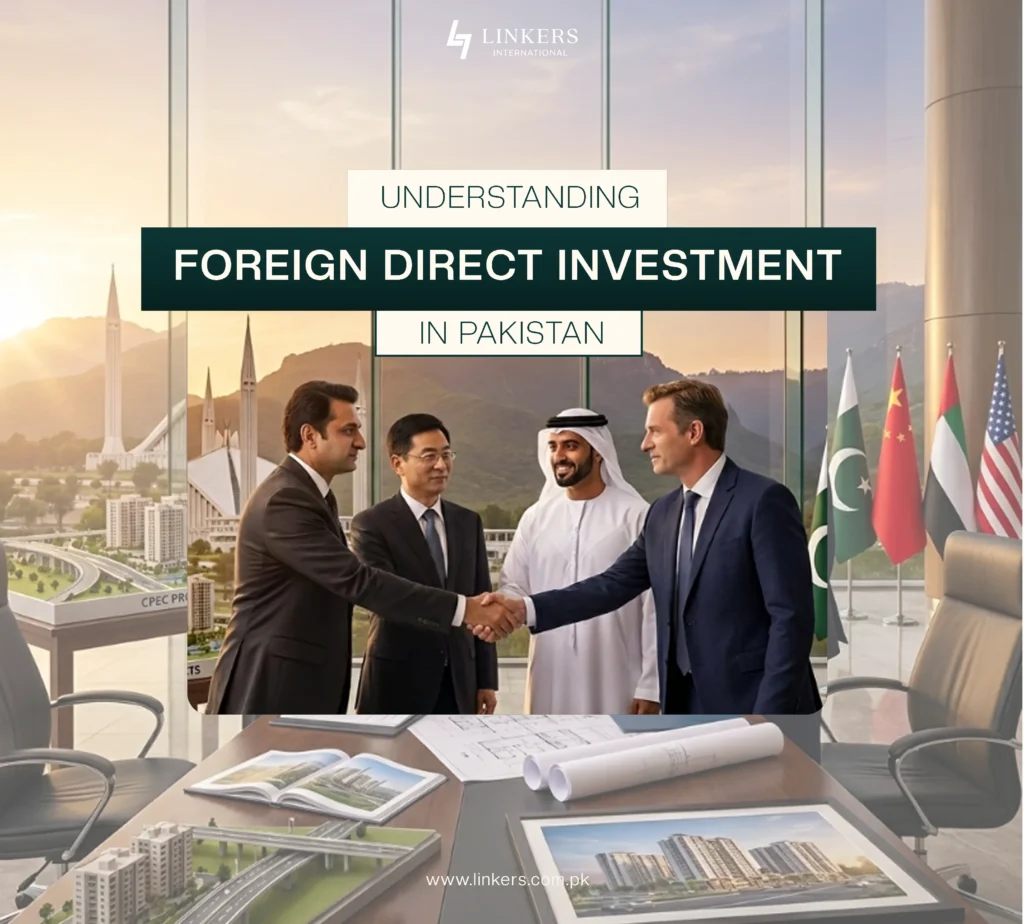
Foreign investment continues to play a significant role in the development of Pakistan’s economy, particularly in sectors linked to infrastructure, urban expansion, and commercial activity. As international investors participate in large-scale development projects, their involvement contributes to improved connectivity, modernization of cities, and increased economic opportunities across the country.
Significant foreign investment across infrastructure, energy, logistics, and industrial development is steadily reshaping Pakistan’s economic landscape. Major connectivity projects, port modernization, and expanding transport networks are improving access between key cities and trade routes, while also driving increased demand for real estate along these growth corridors.
At the same time, development in financial services, urban infrastructure, special economic zones, telecom, and tourism is creating new opportunities for commercial, residential, and industrial growth. Together, these initiatives are laying the foundation for long-term urban expansion, stronger business activity, and rising property development potential across major cities and emerging hubs.
How Foreign Investment in Property Supports Growth
Foreign investment in property is not limited to the direct purchase of land or residential property by overseas investors. Instead, it usually flows into a wider ecosystem that supports development. This includes funding for housing projects, infrastructure expansion such as roads and utilities, commercial real estate developments like office towers and shopping centers, and joint ventures between foreign investors and local developers. It also extends to hospitality and tourism-related construction projects that require significant capital investment.
- It supports overall real estate development, not just buying property.
- It mainly comes through infrastructure-focused investment, benefiting real estate indirectly.
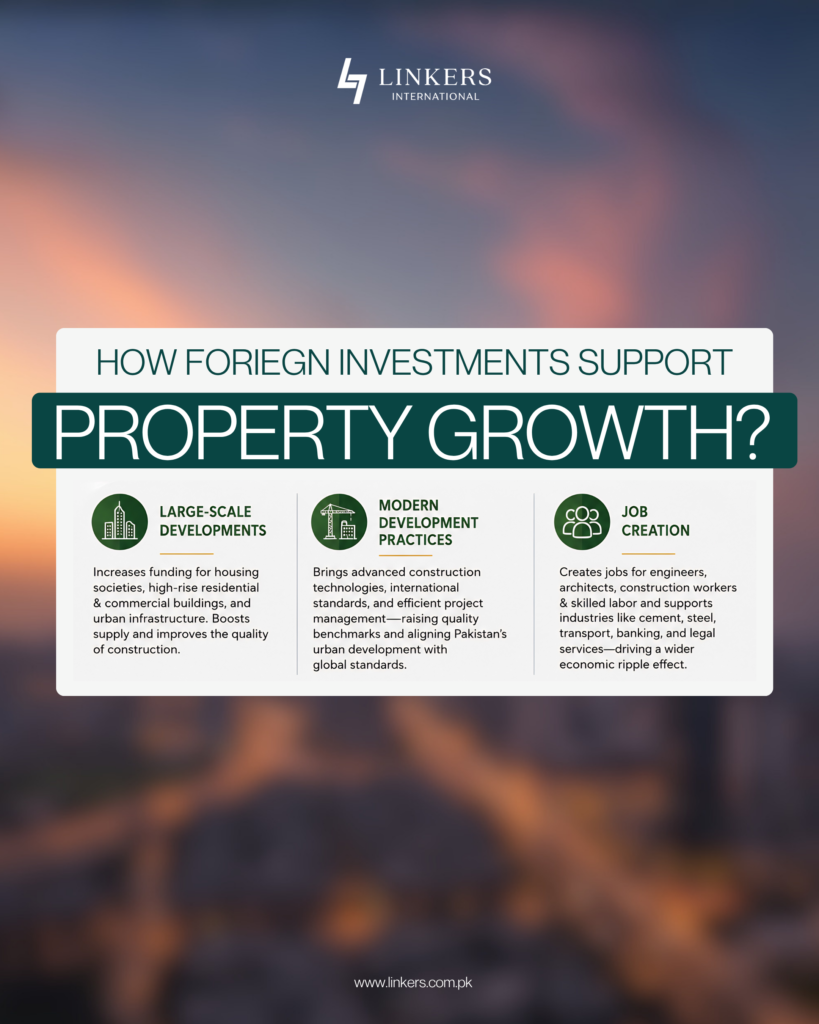
Foreign investment contributes to property growth in multiple interconnected ways. One of the most visible impacts is the expansion of construction activity. Its impact is not limited to a single area but spreads across multiple dimensions of real estate development, influencing everything from the pace of construction to the overall quality and value of projects.
Large-scale Developments
When foreign capital enters the market, it increases the availability of funding for large-scale developments such as new housing societies, high-rise residential and commercial buildings, and improved urban infrastructure. This not only increases supply but also enhances the overall quality of construction in major cities.
Modern Development Practices
Another important contribution comes through the introduction of modern development practices. Foreign investors often bring advanced construction technologies, international architectural standards, and more efficient project management systems. These improvements gradually raise the quality benchmark of local real estate projects and help align Pakistan’s urban development with global standards.
Job Creation
In addition to infrastructure and technology transfer, foreign investment also plays a key role in job creation. The real estate and construction sectors are highly labor-intensive, and increased investment leads to employment opportunities for engineers, architects, construction workers, and skilled labor. It also generates demand in supporting industries such as cement, steel, transport, banking, and legal services, creating a wider economic ripple effect.
Impact on Property Prices and Demand
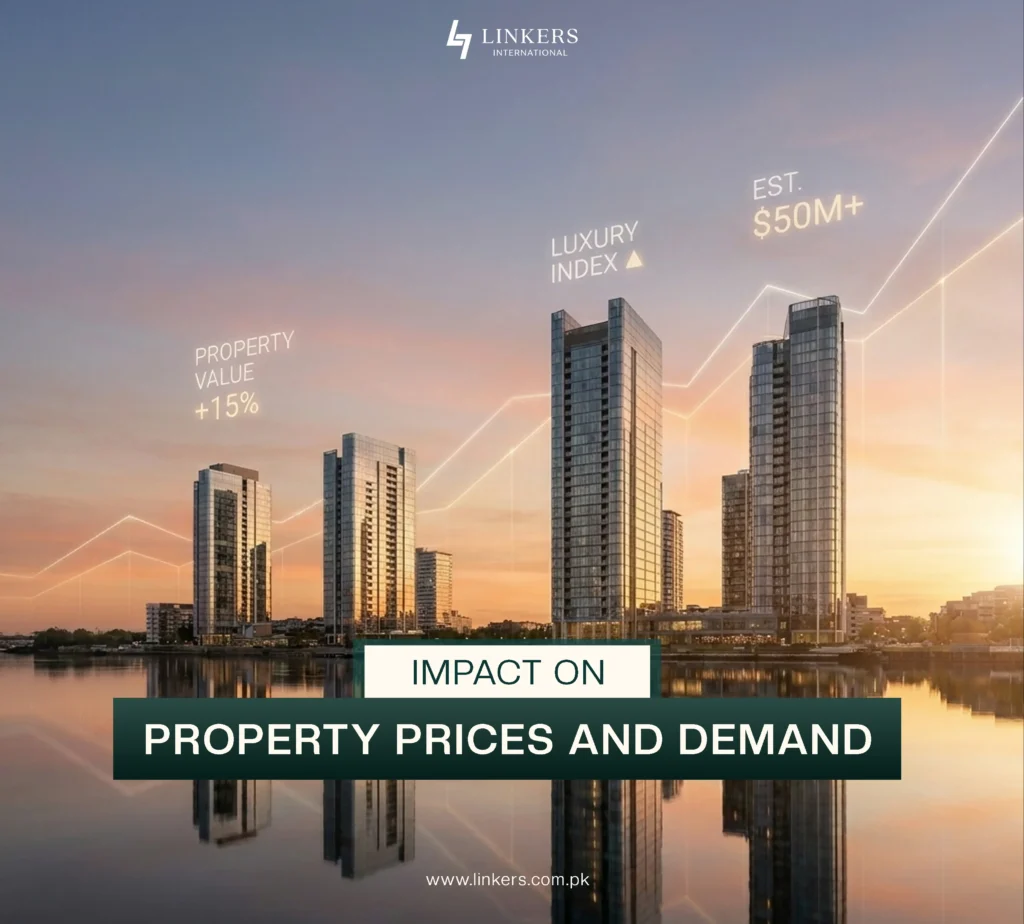
Foreign investment in property has a noticeable influence on property demand, especially in major urban centers such as Karachi, Lahore, and Islamabad. When foreign capital enters these markets, it often increases demand for land and property, which can lead to capital appreciation over time. At the same time, infrastructure improvements funded through such investments can enhance the overall value of surrounding areas, making them more attractive for both local and international buyers.
Rise of Speculative Buying Behaviour: However, this impact is not entirely one-sided. While foreign investment can support growth and development, it can also contribute to speculative buying behavior in certain cases. This can temporarily inflate property prices beyond their real economic value. Additionally, increased demand in premium urban zones may create affordability challenges for middle-income groups and lead to uneven urban development, where high-value areas grow faster than others.
The Role of Overseas Pakistanis (Indirect Foreign Investment)
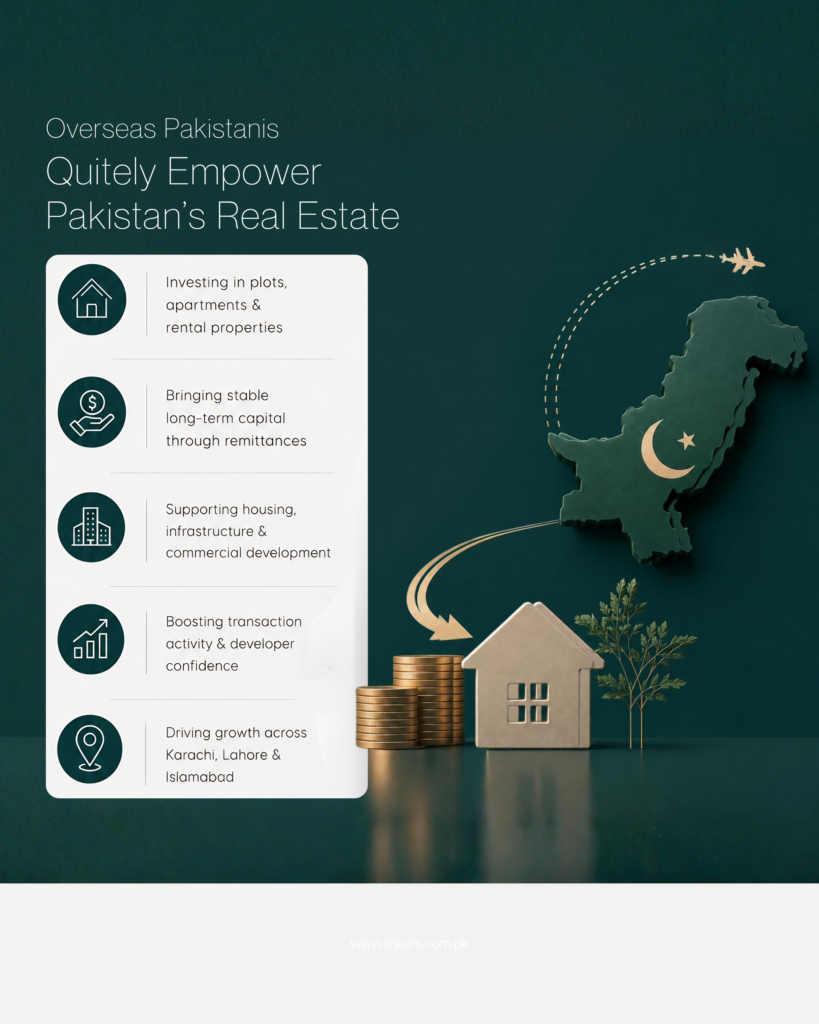
An important and often underestimated source of foreign-linked investment in Pakistan’s property sector comes from Pakistanis living abroad. Unlike institutional investors, this group typically invests in residential plots, housing societies, modern apartments for sale, and rental properties, driven by emotional attachment, a lifestyle within the homeland as well as financial opportunity.
Many projects in Karachi, Lahore and Islamabad offer secure investment opportunities for overseas Pakistanis to build an asset in their homeland. Moreover, the Punjab government is considering easing tax-related barriers and has started the revision of property valuation rates in the sector to encourage investment from the United Arab Emirates and other Gulf countries.
More Stable Investments: These investments are usually more stable compared to volatile institutional FDI, primarily because they are supported by remittances and long-term personal interest in maintaining ties with Pakistan. As a result, overseas Pakistani investment plays a crucial role in sustaining demand in the local real estate market, especially during periods when foreign institutional investment slows down.
Local Real Estate Activity due to Global Tensions: In recent times, global tensions have contributed to a noticeable shift in overseas investment behavior, leading to an estimated 30–40% increase in real estate activity across Pakistan’s property market, particularly Karachi. As uncertainty rises in international financial hubs, overseas Pakistani investors are increasingly reallocating capital toward domestic real estate, viewing it as a more familiar and accessible store of value. This surge in activity is supporting property growth by channeling funds into housing developments, infrastructure expansion, and commercial projects, while also improving overall market liquidity.
The increased inflow of capital has accelerated buying interest, boosted transaction volumes, and strengthened developer confidence. It has also encouraged greater participation in joint ventures between local developers and returning investors. However, experts caution that while this momentum is positive for short-term growth, it may also introduce price volatility if driven more by speculation than end-user demand. Overall, foreign-linked investment flows continue to act as a strong catalyst for Pakistan’s evolving real estate landscape.
Large-Scale Foreign-Linked Projects in Pakistan
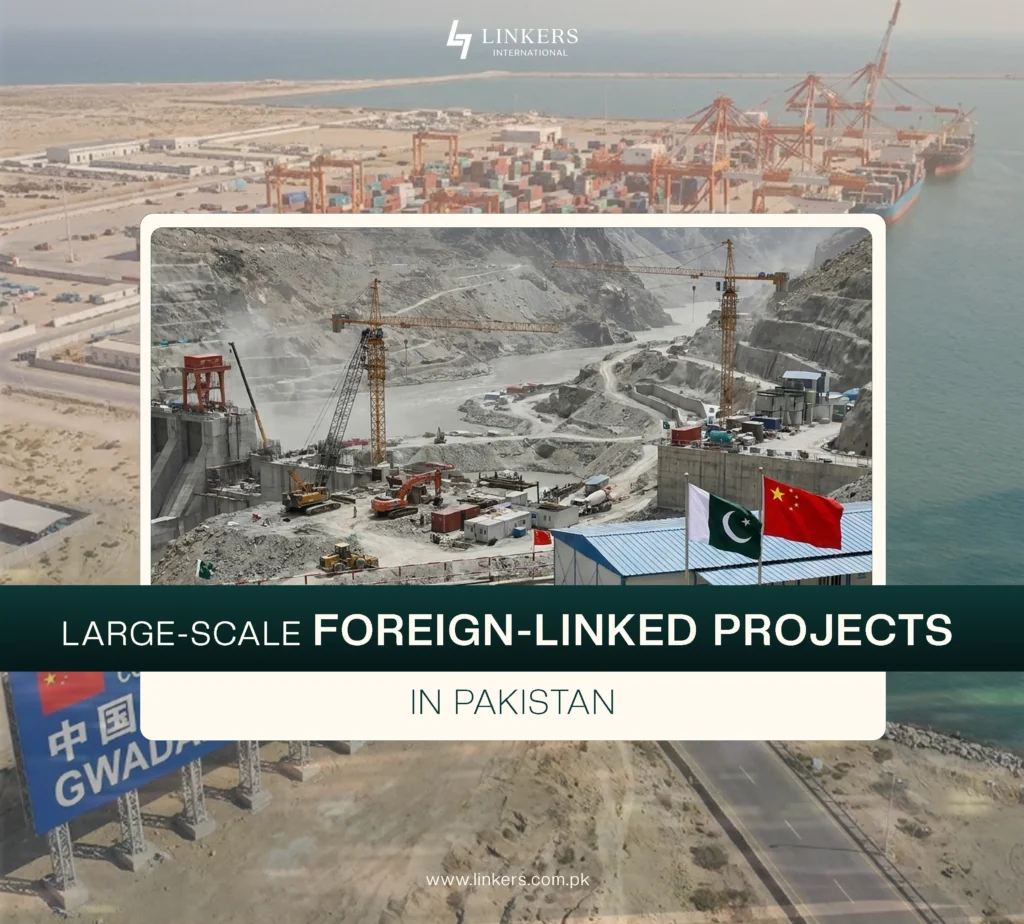
Foreign investment has also played a supporting role in several large-scale development initiatives across Pakistan. Projects associated with the China-Pakistan Economic Corridor (CPEC) have contributed to infrastructure development, energy generation, and urban connectivity improvements. These projects indirectly enhance real estate value by improving access and regional integration.
Similarly, Special Economic Zones (SEZs) and tourism-related developments have encouraged the growth of commercial and residential real estate in surrounding areas. Such initiatives demonstrate how foreign capital does not always directly purchase property but instead reshapes the environment in which the real estate sector grows.
Long-term Economic Impact: Economically, foreign direct investment tends to have a positive but gradual impact on growth. In developing economies like Pakistan, its benefits depend heavily on complementary factors such as domestic investment levels, workforce skills, and institutional quality. Without strong governance and economic stability, the full potential of foreign investment cannot be realized.
Over time, however, sustained FDI can contribute to improved infrastructure, better urban planning, and stronger economic productivity. These long-term effects are particularly important for the real estate sector, which is closely linked to broader economic development patterns.
Challenges Facing Foreign Investment in Pakistan’s Real Estate
Foreign investment in property holds strong potential, but it is often constrained by a range of structural and economic challenges. While the market offers growth opportunities, investors tend to remain cautious due to uncertainties that affect long-term planning and return stability. These challenges not only influence the volume of foreign inflows but also determine how consistently the sector can attract and retain international capital.
- Policy & regulatory uncertainty: Frequent changes in tax laws and property regulations discourage long-term investment.
- Macroeconomic instability: Inflation, currency depreciation, and economic fluctuations reduce investor confidence.
- Political & economic inconsistency: Lack of stability weakens sustained foreign investment inflows.
- Declining sector-specific FDI: Real estate investment has faced periodic drops due to taxation and economic pressure.
- High sensitivity to policy changes: Even minor regulatory or economic shifts can significantly impact investment trends.
Future Outlook: Where Is Pakistan Heading?
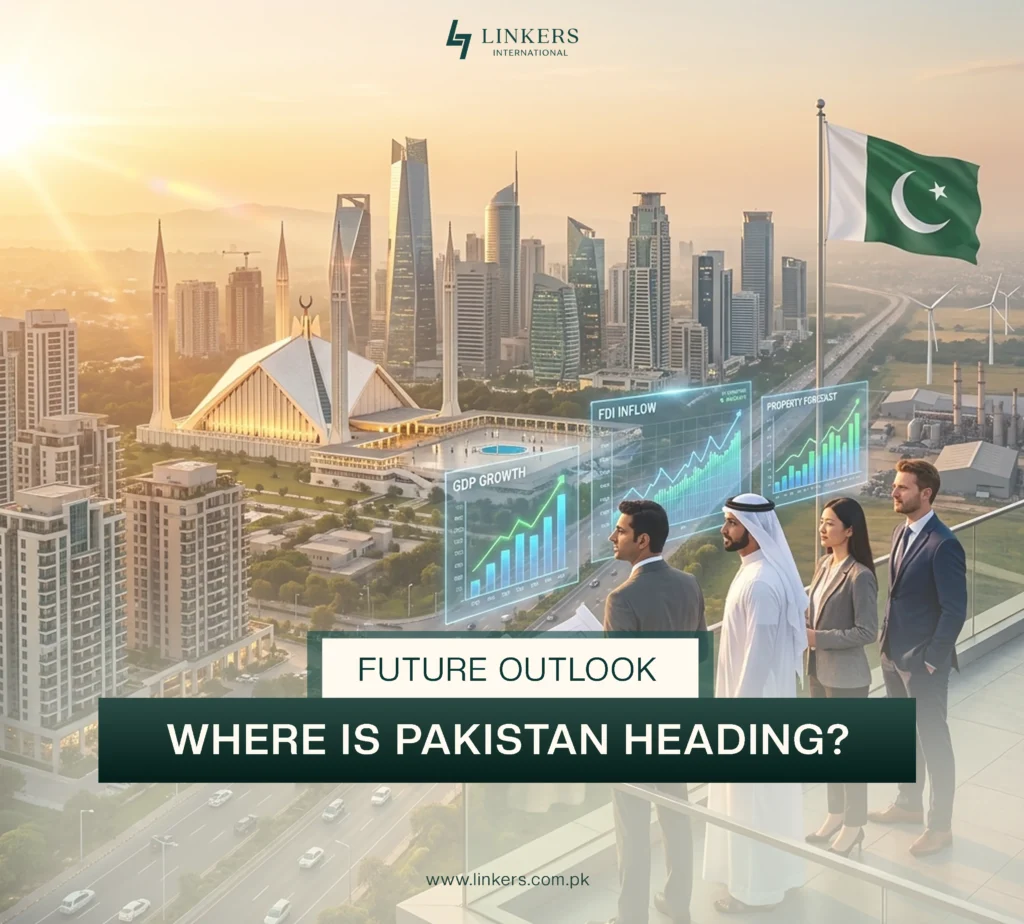
The future of foreign investment in property sector of Pakistan will largely depend on structural reforms and macroeconomic stability. Positive developments such as improved political consistency, IMF-supported economic reforms, supportive legislation such as the abolition of Article 7E, digitization of land and property records, and the establishment of special investment zones could significantly enhance investor confidence.
At the same time, risks such as currency volatility, regulatory unpredictability, and weak urban planning enforcement continue to pose challenges. If these issues are addressed effectively, Pakistan has the potential to become a more attractive destination for institutional investors and international real estate developers.