
Walk through any big city today, and a pattern quickly emerges. Buildings are getting sleeker, taller, and increasingly wrapped in glass. To most people, this feels like a shift in design taste, a move toward something more “modern” and global.
But that surface-level observation misses the real story.
What looks like an aesthetic upgrade is actually a deeper transformation in how buildings are engineered. The modern facade is no longer just a visual statement; it is a carefully designed system that determines how a building performs, how much energy it consumes, and how comfortable it feels to live or work inside it.
Beyond Appearance: What a Modern Facade Really Does
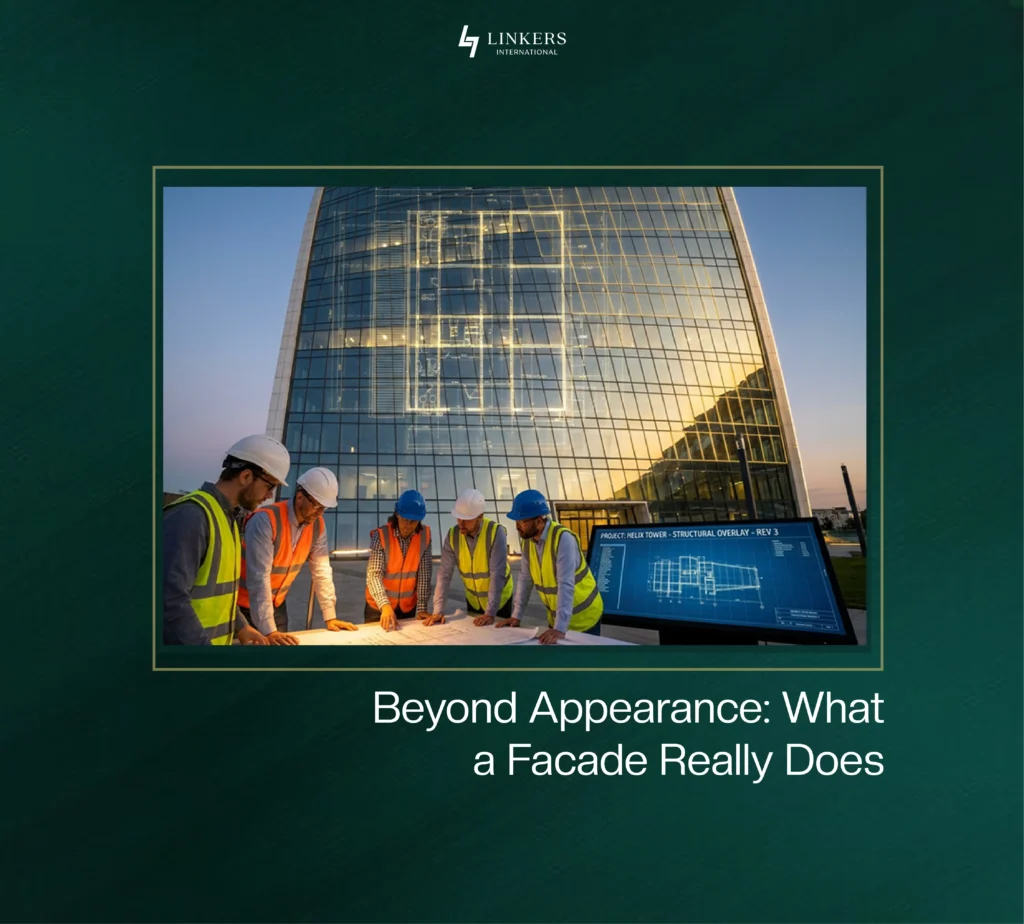
Traditionally, facades were thought of as the “front” of a building, the part that gives it identity and character. Today, that definition is incomplete.
A facade is a building’s envelope that manages everything between the inside and the outside world, including heat, light, air, moisture, and even sound.
A well-designed facade doesn’t just sit there. It actively regulates how much sunlight enters a space, how heat is absorbed or reflected, how air circulates, and how protected the structure remains from weather conditions. It is the reason one building feels cool and comfortable in peak summer, while another, just across the road, feels like a greenhouse.
This shift from passive surface to active system is the core of modern facade engineering.
The Philosophy: Control Before Consumption

At the heart of modern facade design lies a simple but powerful idea: control the environment before relying on mechanical systems like air conditioning.
In climates like Pakistan’s, where long summers and rising temperatures put immense pressure on energy consumption, this philosophy becomes even more critical. Instead of cooling overheated interiors with excessive electricity, modern facades aim to prevent that heat from entering in the first place.
This is achieved through a combination of material science, structural design, and environmental analysis. Glass, for example, is no longer just glass. It can be insulated, coated, layered, or treated to reflect solar radiation while still allowing natural light to pass through. Similarly, facade systems are designed to respond differently depending on orientation; what works on a north-facing wall may fail completely on a west-facing one exposed to harsh afternoon sun.
The goal is not to eliminate external conditions, but to manage them intelligently.
Layered Protection: The Double-Skin Concept

One of the most important shifts in facade design is the move from single-layer walls to multi-layered systems. Among these, the double-skin facade stands out as one of the most advanced approaches in modern construction.
Rather than relying on a single barrier, this system introduces two layers, typically an outer glass skin and an inner insulated wall, separated by an air cavity. This cavity acts as a thermal buffer, reducing heat transfer while enabling controlled ventilation. In hot conditions, it helps push heated air upward and out of the building; in cooler conditions, it works to retain warmth inside.
This layered approach transforms the facade from a static surface into a responsive system as it;
- Adapts to environmental conditions
- Improves energy efficiency
- Enhances acoustic insulation
When Glass is Applied Without Strategy

In cities, glass has become synonymous with modernity. Developers often use it to signal luxury, progress, and global relevance. But this is where a critical misunderstanding emerges. Glass is not inherently good or bad. Its performance depends entirely on how it is used.
When applied without proper engineering, without insulation, shading, or orientation strategy, glass facades can significantly increase heat gain. The result is predictable:
- Overheated interiors
- Higher reliance on air conditioning
- Rising operational costs
What was intended to look premium ends up functioning inefficiently. This is not just a design flaw; it is an engineering oversight. Globally, facade systems are tested and optimized based on climate data, solar exposure, and energy models. In Pakistan, however, many projects replicate the appearance of international buildings without adapting their underlying systems to local conditions. The outcome is a growing number of buildings that look modern but perform poorly.
Light Is Not Always Your Friend

A well-engineered facade doesn’t maximize light indiscriminately; it controls it. It allows natural light to enter in ways that enhance comfort while minimizing negative effects. Another common misconception is that more glass automatically means better lighting. In reality, uncontrolled daylight can create more problems than it solves.
- Excessive sunlight leads to glare
- Uneven illumination
- Increased indoor temperatures
Therefore, elements like shading devices, louvers, and selective glazing are so important. They ensure that light is diffused, balanced, and appropriate for the building’s function. The aim is not brightness, but quality.
Structure Meets Skin
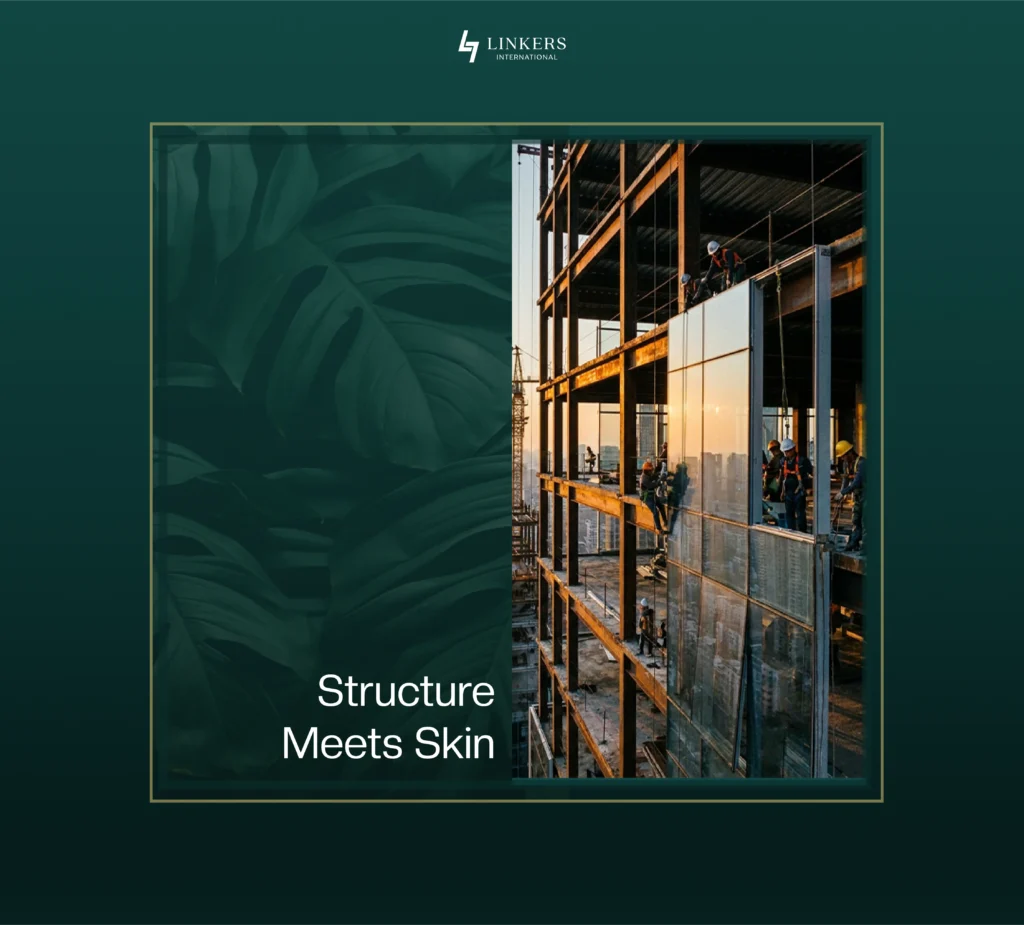
Modern facades also redefine how buildings are constructed. Systems like curtain walls commonly seen in commercial towers, are designed to be non-load-bearing. They hang off the structural frame rather than supporting it, which allows for greater flexibility in design and reduces overall weight.
But this doesn’t make them simple. These systems must still withstand wind pressure, thermal expansion, and environmental stress, all while maintaining their integrity and performance over time. Every panel, joint, and connection is engineered with precision.
Looking Ahead: Intelligent Building Skins
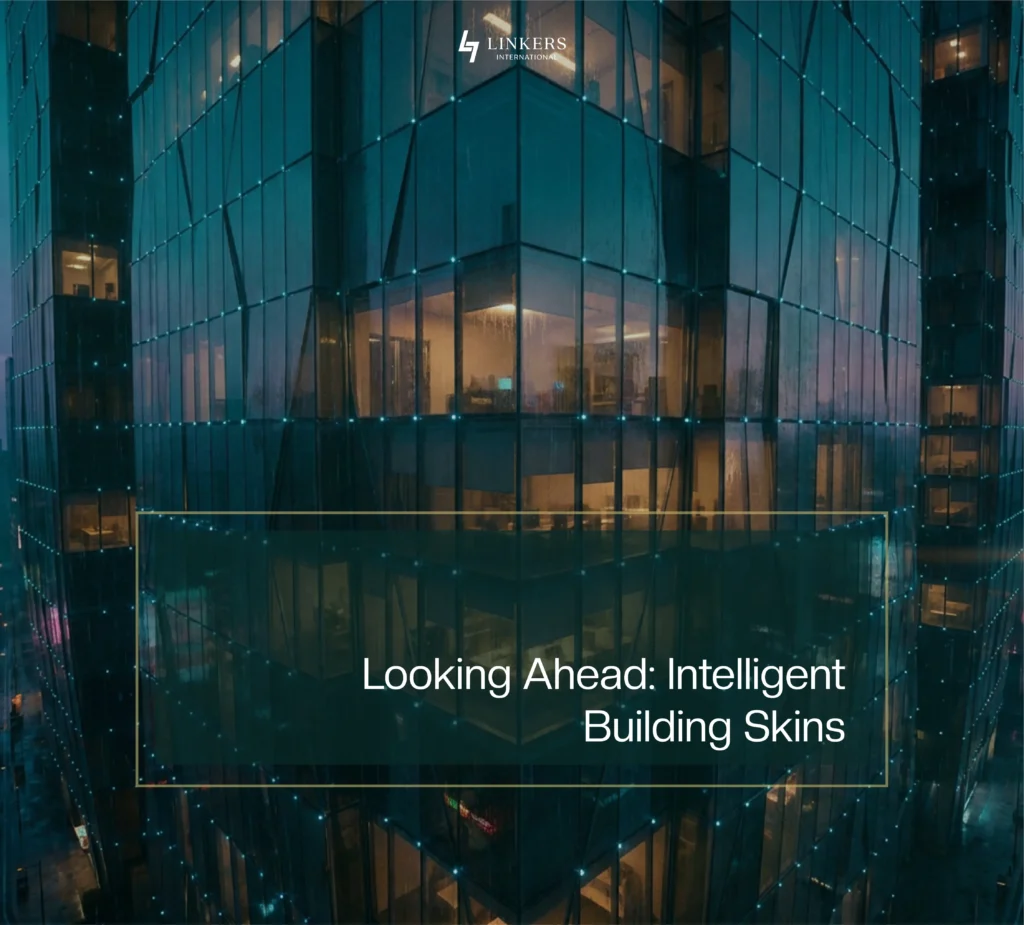
The future of facades is moving toward even greater responsiveness. Around the world, systems are being developed that can adjust in real time, changing opacity, controlling airflow, or reacting to sunlight automatically. These “smart facades” represent the next step in aligning buildings with their environments.
At the same time, there is a renewed focus on climate-responsive design, solutions that are tailored not to global trends, but to local realities. For Pakistan, this means embracing strategies that address heat, dust, and water scarcity rather than simply adopting international aesthetics.