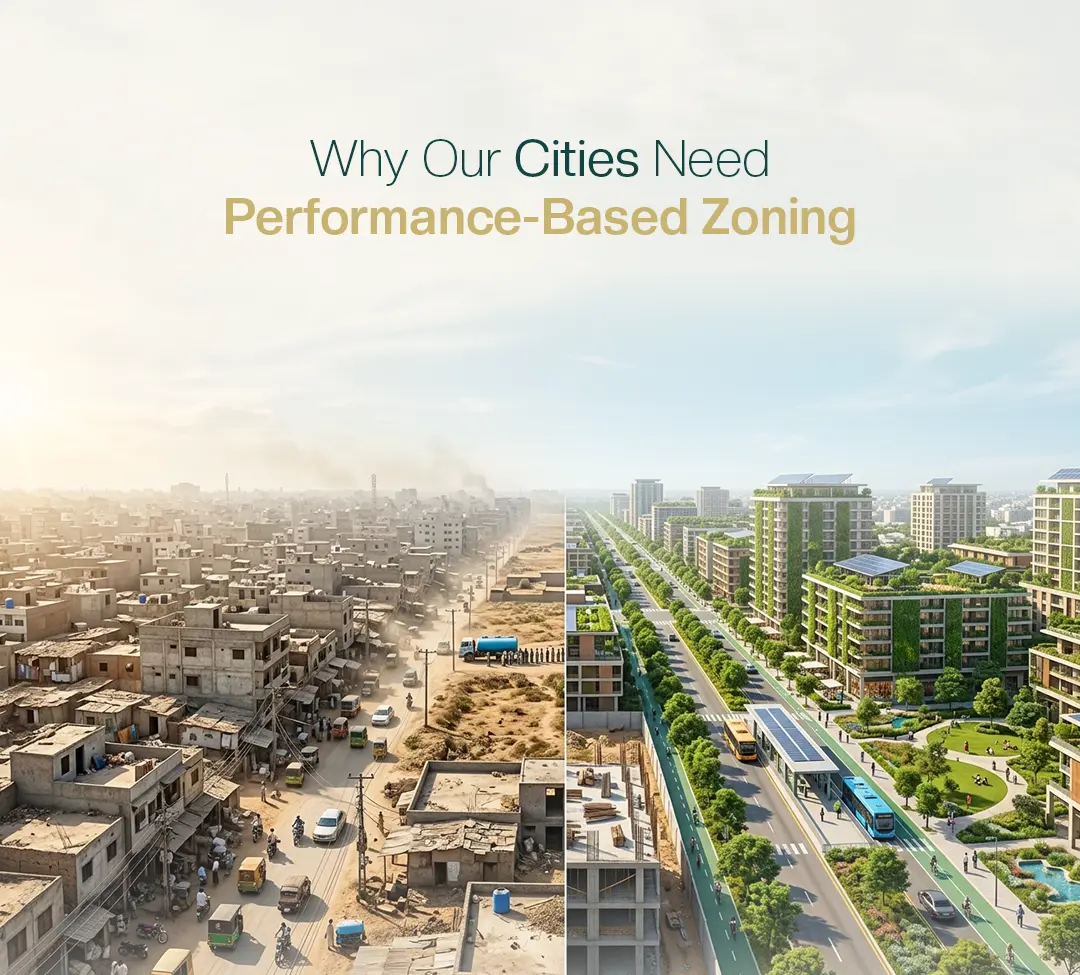
Urban development in Pakistan requires Performance-Based Zoning as the cities are changing fast, but zoning regulations have not kept pace with real needs on the ground. Traditional zoning systems are struggling to manage rapid urban growth, environmental pressures, and infrastructure constraints.
This is because many big cities in Pakistan, such as Lahore, Karachi, and Islamabad, are expanding rapidly. Talking about Islamabad, during the past three decades, the city’s urban footprint has increased to 686%, from 2,693 hectares in 1990 to 18,469 hectares in 2020.
This expansion is not aligned with the environmental and societal needs and protection, as these cities face the problems of water scarcity, congestion, pollution, and shortage of other utilities such as electricity.
Therefore, it’s important to rethink how urban growth is managed, which requires a more flexible, outcome-oriented approach for Pakistani cities to grow sustainably, equitably, and resiliently. This approach is called Performance-based Zoning. Let’s understand how it can benefit the cities.
What is Performance-Based Zoning?
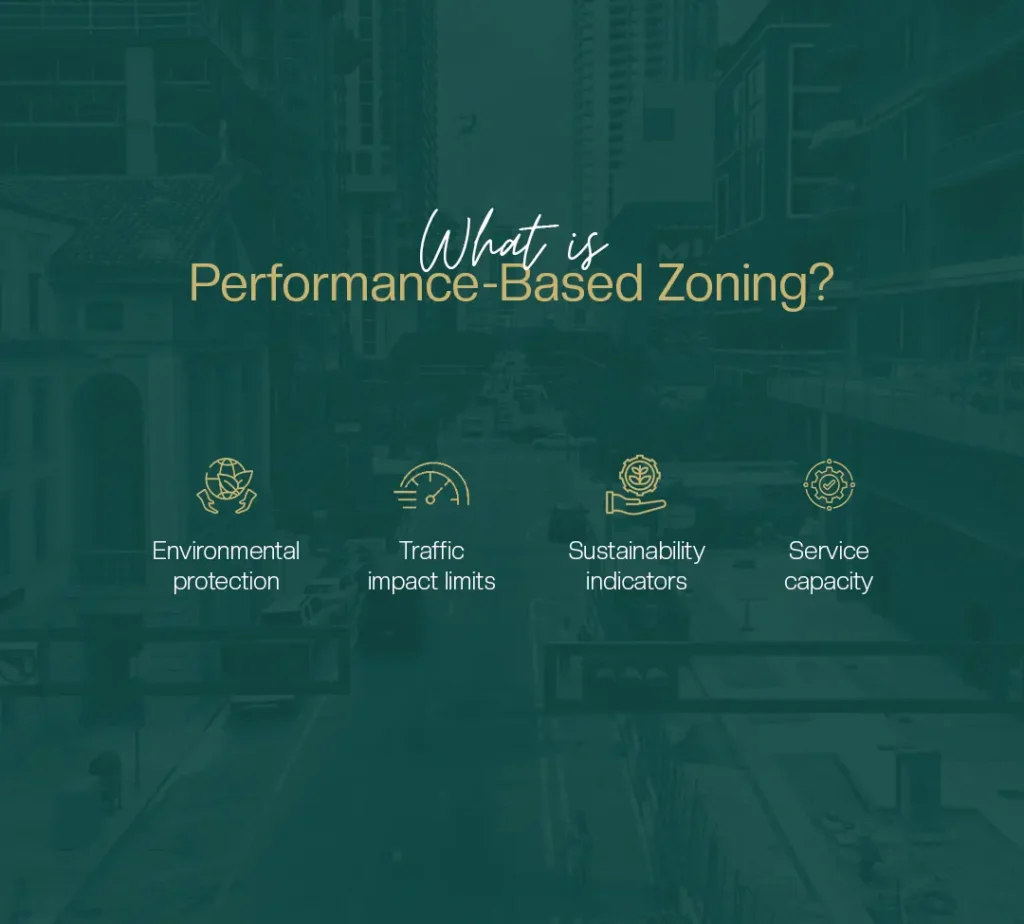
Performance-based zoning is a planning approach that focuses on outcomes and impacts rather than rigid land-use categories and standards. Under this system, development is judged against performance benchmarks, such as;
- Environmental protection
- Traffic impact limits
- Sustainability indicators
- Service capacity
Pakistan’s rapid urban expansion highlights the urgent need for performance-based zoning. Cities are sprawling outward, converting farmland, orchards, and sensitive ecosystems into housing colonies, often before basic infrastructure like roads, water networks, and power grids are in place.
How is Performance-based Zoning Different From Traditional Zoning
Traditional zoning frameworks, which focus on land-use designation rather than measurable outcomes, have proven insufficient to manage the challenges arising from unregulated growth, such as thermal stress, reduced groundwater recharge, and amplified air pollution, directly affecting health and productivity.
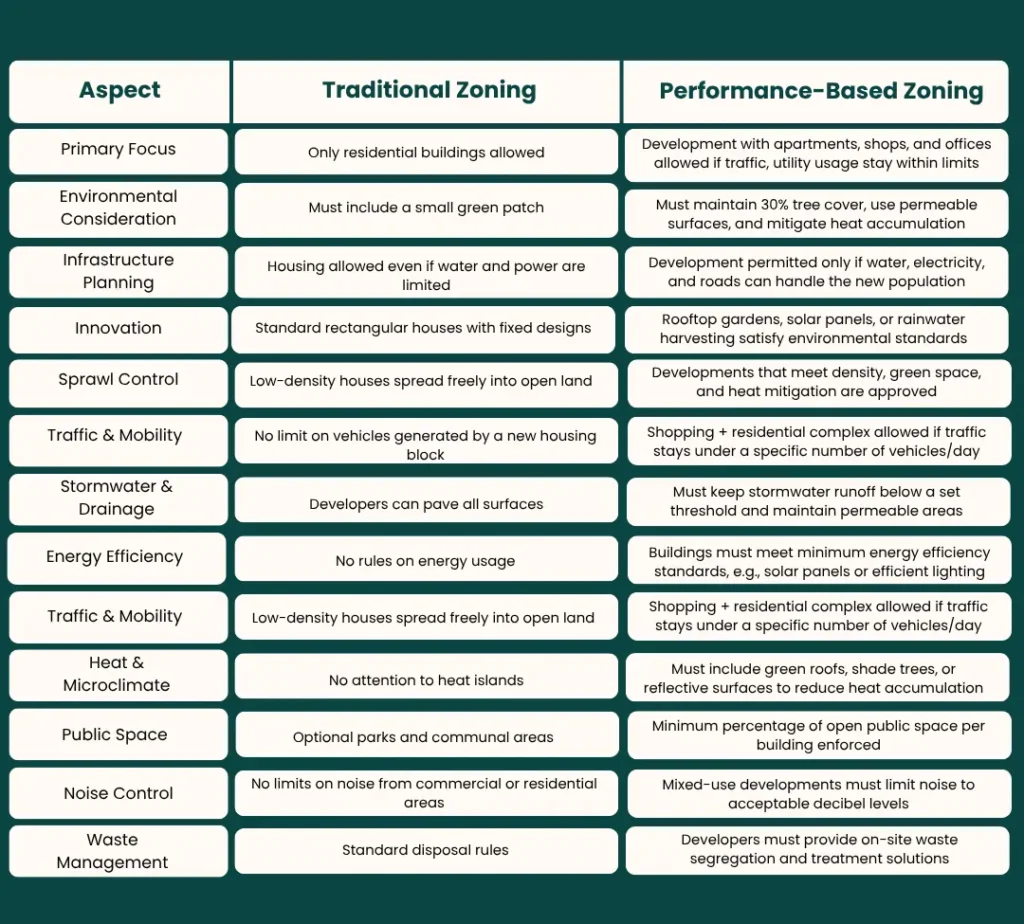
Instead of saying “this plot can only be residential,” performance-based zoning might require that a development demonstrate acceptable levels of traffic generation, stormwater management, or green space retention before approval. The emphasis is on managing impacts and meeting broader planning objectives.
What Performance-Based Zoning Offers
Pakistan’s cities mostly rely on prescriptive zoning regulations, where specific uses and rigid standards are imposed without considering local conditions or broader outcomes. Compared to the traditional zoning method in Pakistan, the Performance-based Zoning offers innovation, sustainability, and a result-oriented alternative, with long-term community impact.
Here are the features of Performance-based Zoning.
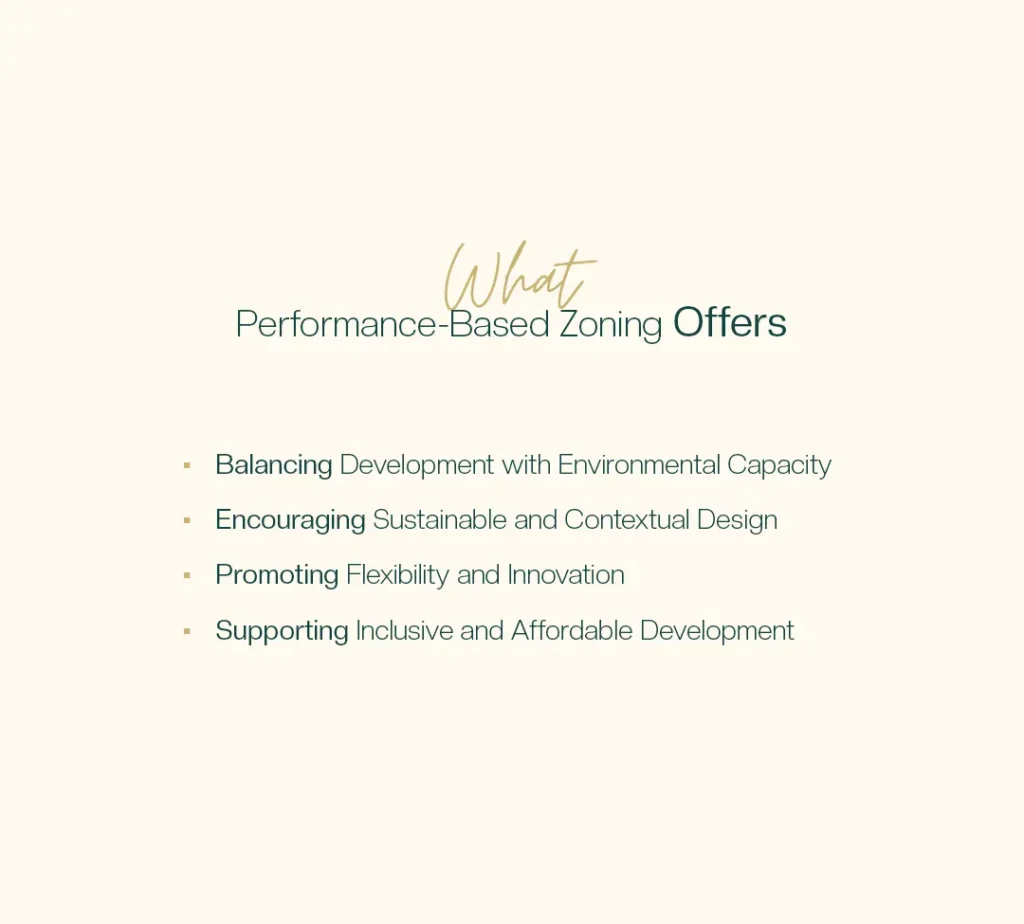
Balancing Development with Environmental Capacity
Performance zoning frameworks consider the carrying capacity of land, meaning that the scale and intensity of development must align with what the environment, infrastructure, and community can sustainably support. Rather than simply saying you can build here, performance standards ensure development doesn’t overburden resources or utilities.
Encouraging Sustainable and Contextual Design
By focusing on outcomes like reduced impervious surfaces, better stormwater management, and protection of natural features, performance zoning encourages designs that are climate responsive and environmentally sustainable. This is critical in Pakistani cities facing heat stress, floods, and water scarcity.
Promoting Flexibility and Innovation
Rather than prescribing specific building forms or uses, performance-based zoning gives developers flexibility in design as long as they meet the performance criteria. This opens space for mixed-use developments, adaptive housing types, and creative urban solutions that better respond to local market needs.
Supporting Inclusive and Affordable Development
Performance-based approaches can be used to create incentives for social goals, such as affordable housing, proximity to transit, and mixed incomes, by linking performance outcomes to development benefits like greater density or streamlined approvals. This aligns with global research showing that zoning reforms can improve housing supply and affordability.
Why This Matters in Pakistan Now
Pakistan stands at a planning crossroads. Traditional zoning no longer delivers the outcomes cities need, from affordable housing and efficient land use to environmental sustainability and resilient infrastructure.
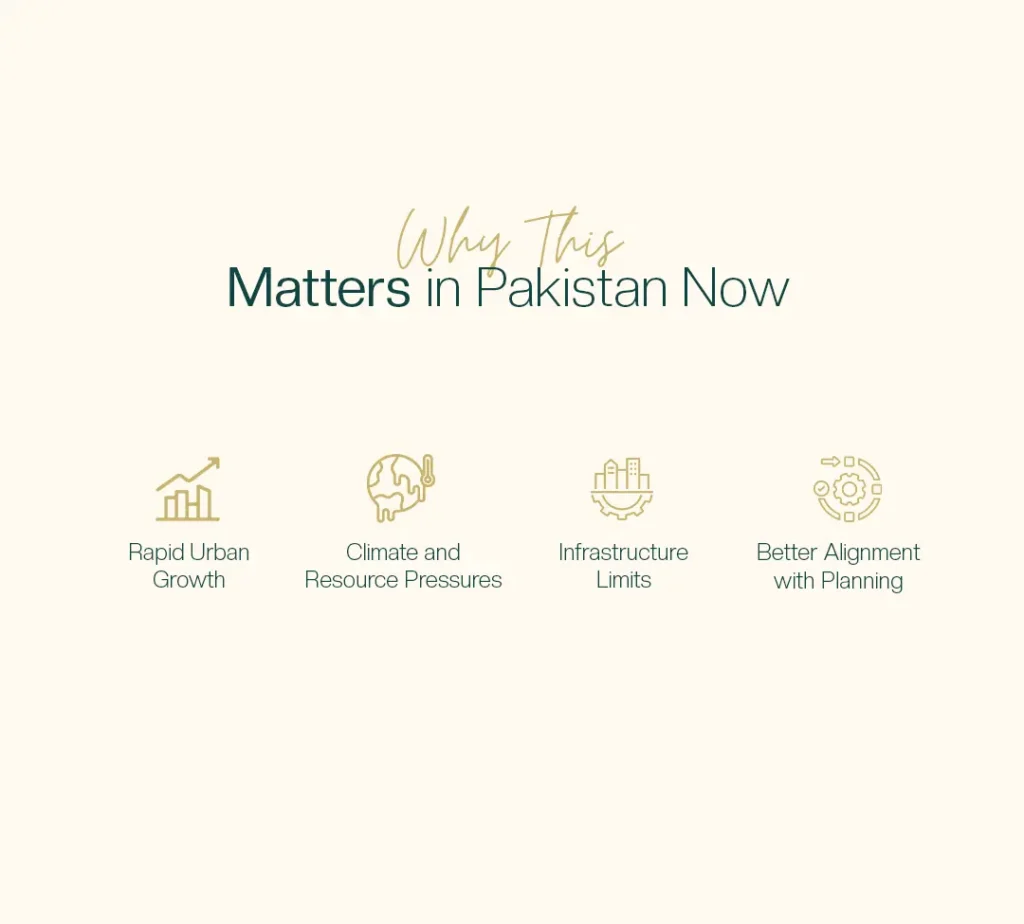
Rapid Urban Growth: Pakistan is urbanizing fast, but land use regulation has not adapted accordingly. Cities like Lahore and Islamabad have seen housing prices soar because traditional zoning constraints the supply of desirable housing near job and transport centers.
Climate and Resource Pressures: Pakistan’s cities face pressing environmental challenges, from heat waves to flooding and water scarcity. Performance-based zoning instruments can ensure that new developments respect environmental limits and promote resilience, rather than worsening risk.
Infrastructure Limits: Rigid zoning does not account for infrastructure capacity. Performance standards can require developers to demonstrate that water, sewer, transport, and other services are adequate or invest in upgrades before approval.
Better Alignment with Modern Planning Goals: Global planning practice is moving toward more adaptive and outcome-focused regulation. Performance-based approaches are part of this trend, allowing cities to pursue smart density, climate resilience, and improved livability without unnecessary bureaucratic constraints.
A Performance-oriented Focus
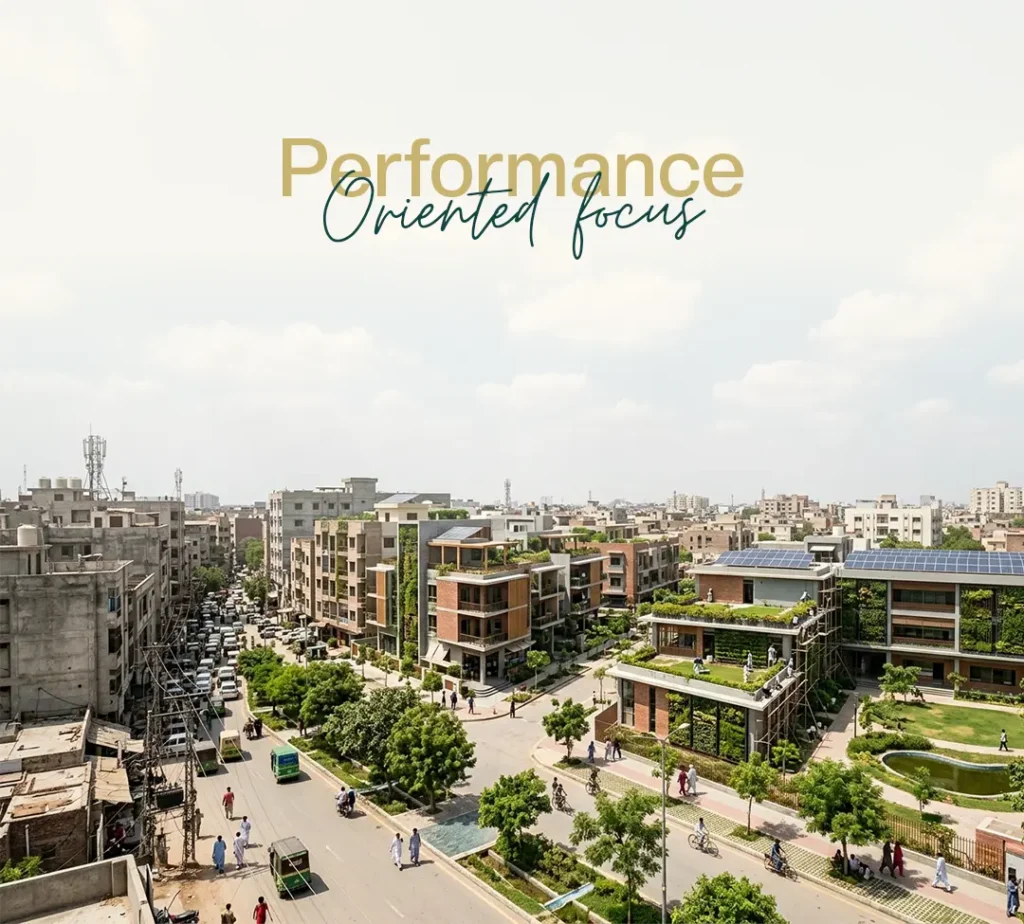
Implementing performance-based zoning in Pakistan would not stop population growth but would guide it into more resilient, liveable, and climate-adapted urban forms. It offers a modern, flexible, and outcome-oriented alternative.
By focusing on what buildings and developments do rather than what they are called, Pakistan can unlock smarter, more inclusive, and more sustainable urban growth.