
Picture a residential development on the edge of a fast-growing city. At the planning stage, everything appears perfectly aligned. The land is efficiently utilized, the unit distribution is carefully calculated, and financial projections suggest strong investor returns. On paper, it looks like a model project, structured, profitable, and future-ready.
But as construction moves forward, the early confidence begins to shift.
Material costs start rising beyond estimates. Certain design choices, while visually strong, prove more complex and resource-heavy during execution. Energy efficiency projections are revised as systems are stress-tested in real conditions. Gradually, a pattern becomes clear: the project is consuming more resources than initially anticipated to deliver the same expected value.
This quiet imbalance leads to a deeper realization, one that is increasingly relevant across the industry today: the Hidden Economics of Resource Efficiency in Real Estate. Beyond sustainability, resource efficiency can directly influence construction costs, operational expenses, asset performance, and long-term property value.
What Is Resource Efficiency?
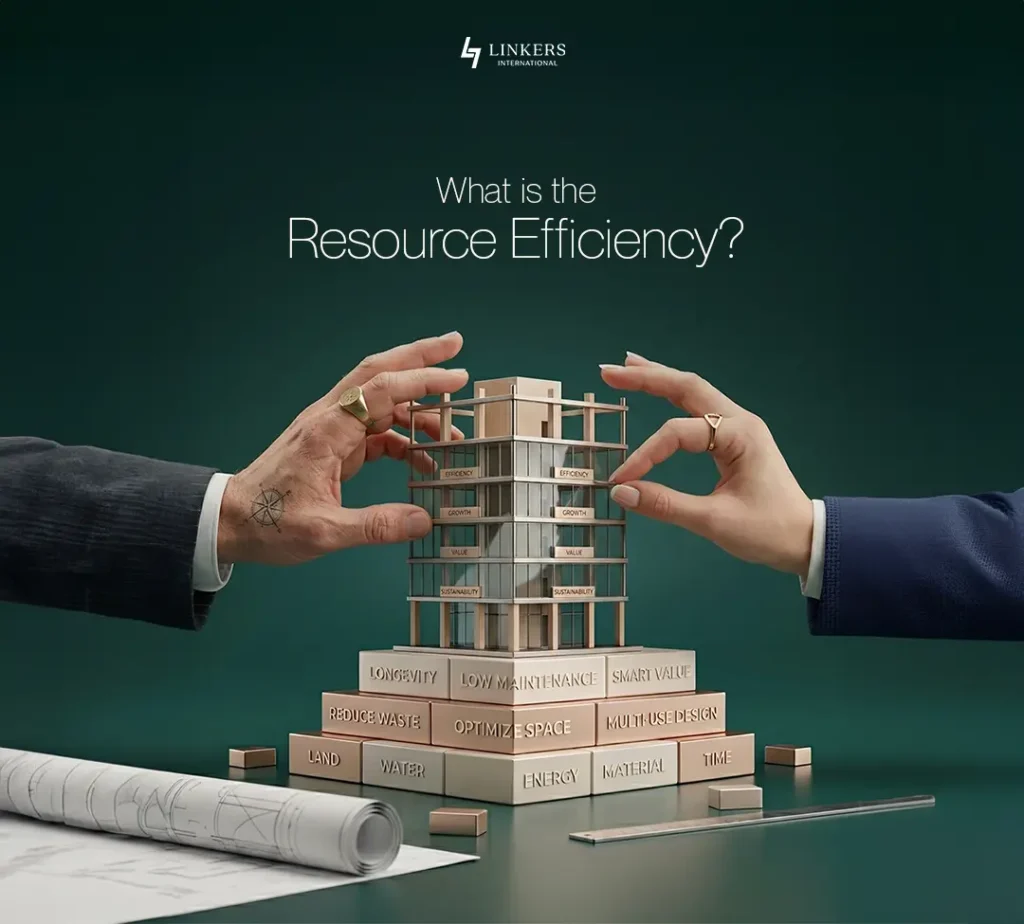
Resource efficiency in real estate is about the strategic use of resources to deliver the greatest possible value while minimizing waste. It focuses on maximizing value from every unit of land, water, energy, material, and time. In other words, it is about achieving more with less.
As cities grow, resources become scarcer, and investors become more conscious of long-term value, resource efficiency is rapidly transforming from a sustainability initiative into a business necessity. In real estate, this includes:
- Using less energy to operate buildings
- Reducing construction waste
- Optimizing land utilization
- Conserving water
- Designing spaces that serve multiple purposes
- Extending building lifespans
- Lowering maintenance requirements
At first glance, these may sound like environmental goals. But they are equally economic goals. Every wasted material, every unnecessary square foot, every excess unit of energy eventually translates into costs that someone has to bear. The future of real estate may not belong to the biggest developments. It may belong to the smartest ones.
Resource Efficiency Starts at the Design Stage
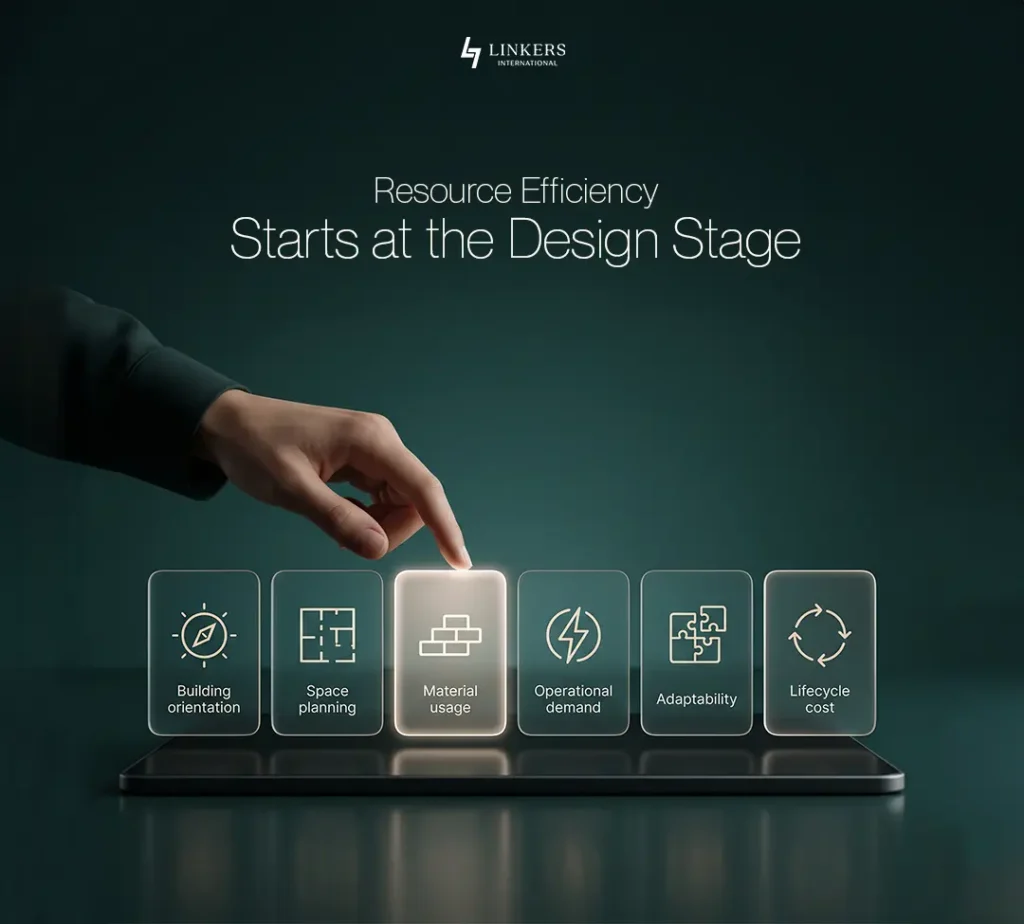
When people think about resource efficiency, they often think about energy-efficient appliances, smart technologies, water-smart architecture, and sustainable building materials. In reality, resource efficiency in real estate begins much earlier, at the design table. The decisions made during the design phase determine how a building will consume resources throughout its lifecycle.
A well-designed building creates efficiency in several ways:
Optimized Building Orientation
Positioning a building to maximize natural daylight and ventilation can reduce reliance on artificial lighting and cooling systems throughout its lifespan.
Efficient Space Planning
Thoughtfully designed layouts eliminate underutilized spaces, ensuring that every square foot serves a purpose while reducing unnecessary construction materials.
Smarter Material Usage
Structural systems and design dimensions can be optimized to minimize waste, reduce offcuts, and make better use of available resources during construction.
Lower Operational Demand
Design choices related to insulation, shading, glazing, and airflow can significantly reduce energy consumption for heating and cooling.
Future Adaptability
Flexible designs allow spaces to evolve with changing needs, extending a building’s useful life and reducing the need for resource-intensive renovations.
Reduced Lifecycle Costs
Buildings designed with efficiency in mind often require less maintenance, fewer repairs, and lower operational expenses over time.
Resource efficiency in real estate is not something that can simply be added at the end of a project. It must be embedded into the design process from the very beginning. Because once a building is constructed, many inefficiencies become permanent. The most resource-efficient developments are not necessarily those with the most advanced technology, they are the ones designed to require fewer resources in the first place.
Resource-Efficient Square Foot Serves Multiple Purposes
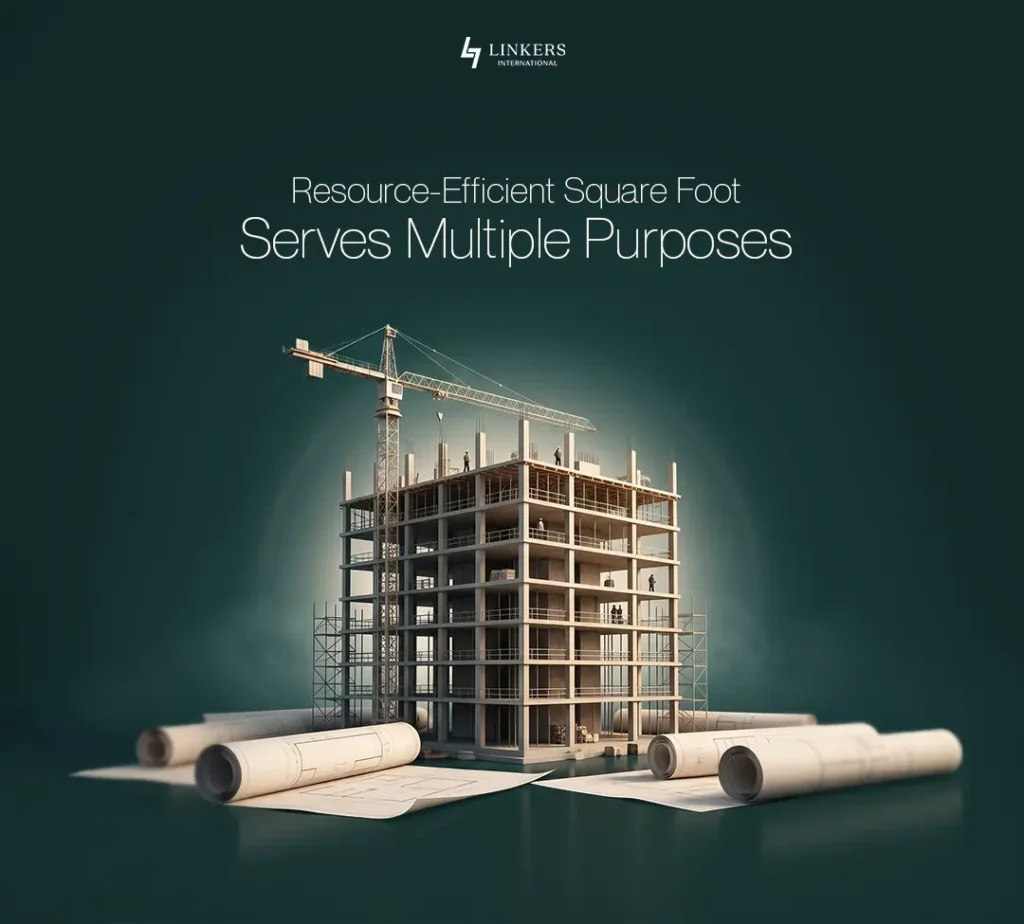
In modern real estate, efficiency is no longer about maximizing space. it’s about maximizing the value of that space. The most resource-efficient square foot is one that can adapt and serve multiple functions over time.
Some of the key benefits of multi-purpose spaces include:
Reduced Material Consumption: Fewer dedicated rooms mean fewer resources required during construction.
Better Space Utilization: Every square foot contributes actively to the needs of occupants.
Lower Operational Costs: Smaller, more efficient spaces consume less energy for lighting, cooling, and maintenance.
Greater Adaptability: Spaces can evolve as lifestyles, work patterns, and user requirements change over time.
Enhanced Long-Term Value: Flexible environments remain relevant for longer, reducing the need for costly renovations or expansions.
As cities become denser and resource efficiency in real estate becomes more valuable, flexible design will play a critical role in creating efficient developments. The future belongs not to spaces that are bigger, but to spaces that work harder.
Water: The Resource Real Estate Cannot Ignore
When people think about resource efficiency, energy often receives the spotlight. Water deserves equal attention. According to global estimates, urban populations continue to expand while freshwater resources face increasing pressure from climate change and population growth. For real estate developers, this raises a critical question: What happens when water becomes more valuable than location?
Properties that incorporate efficient plumbing systems, rainwater harvesting, greywater reuse, and landscape designs requiring less irrigation will likely hold a significant advantage in the future. Water efficiency is not simply an environmental issue. It is becoming an asset protection strategy.
Technology Can’t Fix an Inefficient Design
Smart technologies are often presented as the answer to resource efficiency challenges, and they certainly play an important role. From smart lighting and energy management systems to automated water controls and predictive maintenance tools, technology can significantly improve a building’s performance.
However, technology should enhance good design, not compensate for poor design. A building that is poorly oriented, inefficiently planned, or overly resource-intensive will continue to consume more resources, regardless of how many smart systems are added to it. In contrast, a thoughtfully designed building naturally reduces demand through efficient layouts, passive cooling, natural lighting, and optimized material use.
Simply put, good design reduces resource consumption, while technology helps optimize it. The most successful developments are those that combine both from the very beginning.
Resource Inefficiency is expensive
Consider a building that consumes excessive energy because of poor orientation and design. For decades, developers could simply compensate with larger air-conditioning systems. The problem wasn’t solved. It was hidden. Similarly, buildings with inefficient layouts often require more materials, higher maintenance, and greater operational expenses throughout their lifecycle. The result?
- Higher costs for developers
- Higher utility bills for residents
- Higher environmental impact for cities
The challenge is that most of its costs remain invisible until years later. But resource efficiency can become a competitive advantage. Historically, buyers evaluated properties based on three primary factors: location, price. And amenities. Today, a fourth factor is emerging: Performance.
People are beginning to ask:
- How much energy does this building consume?
- How much water does it require?
- How expensive will it be to maintain?
- How resilient will it remain over the next decade?
Developments that answer these questions effectively gain a significant competitive advantage. Resource efficiency is no longer just about reducing costs. It is about increasing long-term value.
Optimizing Resources: A Defining Factor in Real Sector
The 20th century was defined by expansion. The 21st century may be defined by optimization. The future of real estate will be shaped by a series of critical questions: How can we consume less water? How can we minimize material waste? How can we reduce energy demand without compromising comfort? And how can we create more livable communities while using fewer resources?
The answers to these challenges will define the next generation of architecture, construction, and urban development. Developers who successfully address them will do more than create environmentally responsible buildings; they will create developments that are more resilient, more efficient, and ultimately more valuable in the long run.