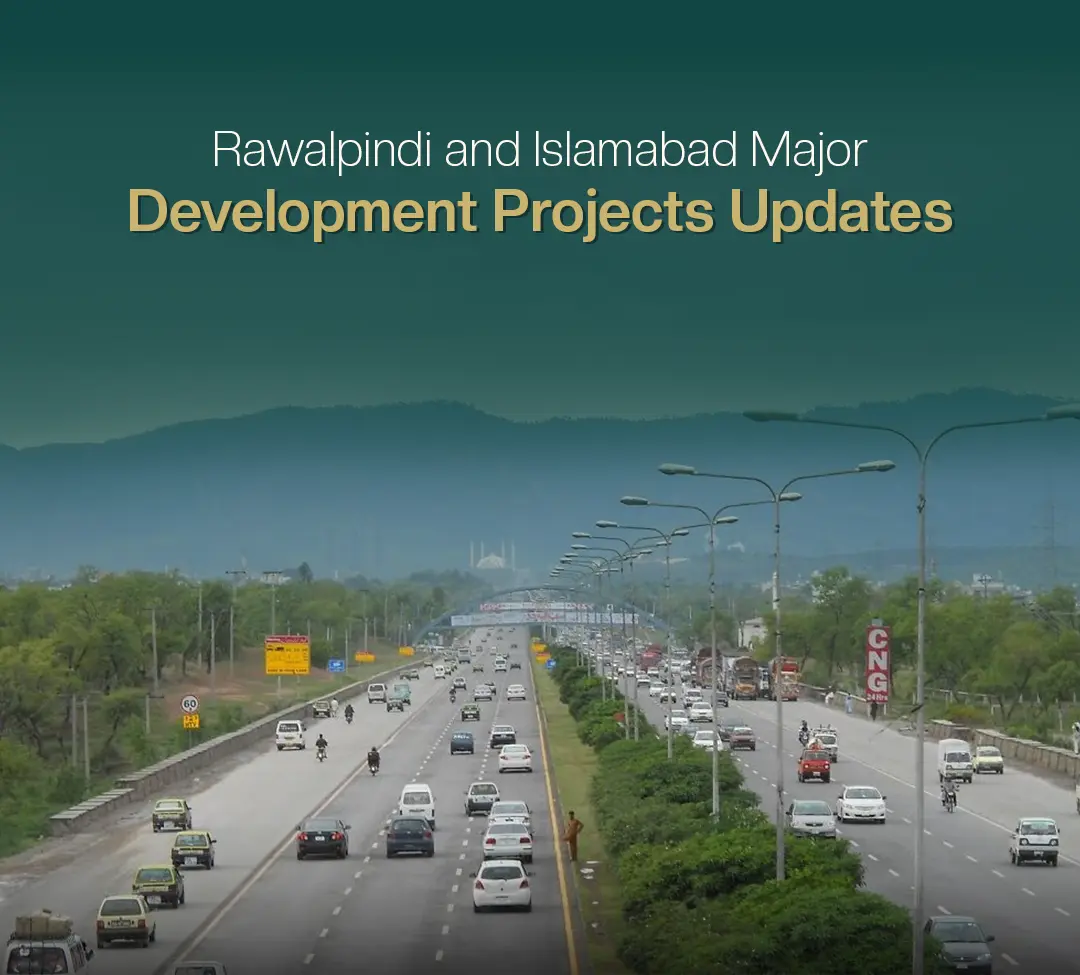
Rawalpindi and Islamabad major development projects are entering a new phase of urban transformation. If you’ve recently driven through Charing Cross, Park Road, Murree Road, or near Kachehri Chowk, you must have noticed cranes, diversions, and construction work in full swing. Major road infrastructure, signal-free corridor development, flyover construction, underpass projects, and road beautification initiatives are actively reshaping Rawalpindi and Islamabad.
Key Punjab infrastructure projects 2025, such as Kachehri Chowk Rawalpindi remodeling, the strategic Ring Road Rawalpindi corridor, and the Margalla Enclave underpass traffic diversion plan are central to this metropolitan upgrade.
Kachehri Chowk Remodeling: Ease for 2 Lac Daily Vehicles
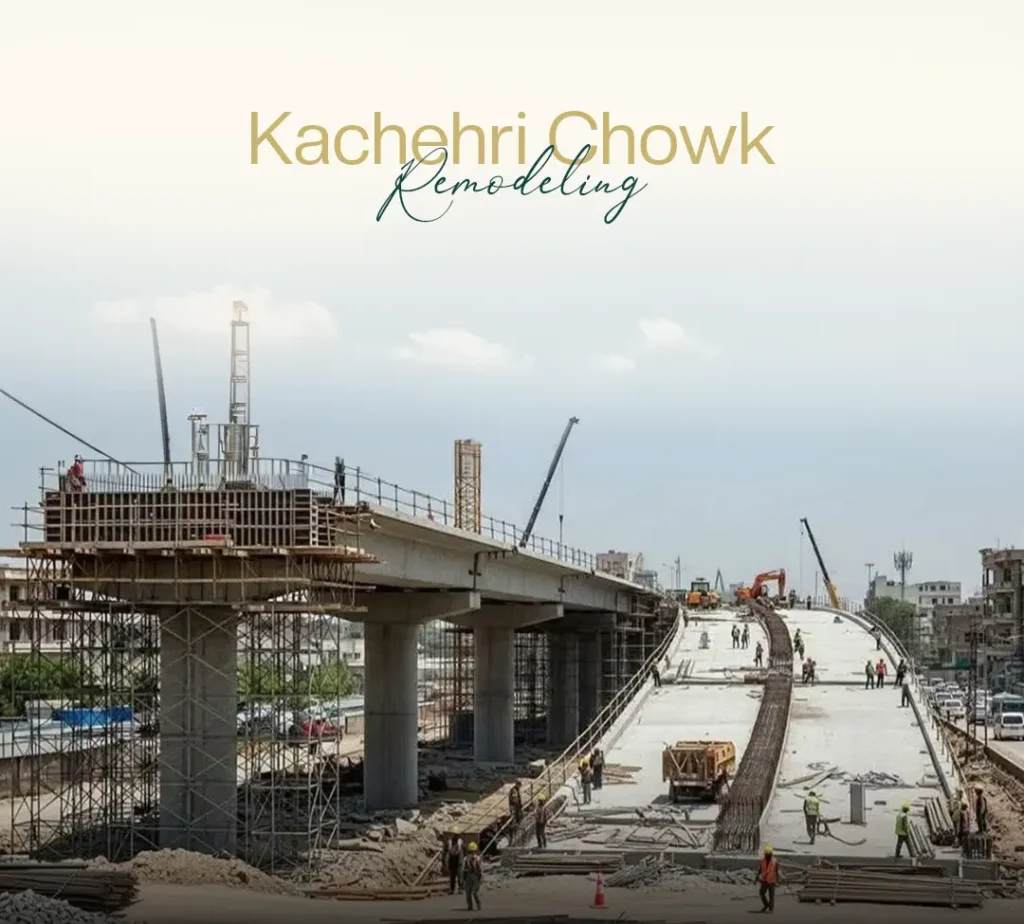
One of the most talked-about projects in Rawalpindi is the Kachehri Chowk renovation project, a major rebuild of one of the city’s busiest intersections from Kacheri Chowk to Motorway Chowk. This city center remodeling project covers a total of 31 kanals of land, aims to eliminate chronic congestion by building 3 flyovers and 3 underpasses that connect Police Annex Chowk, University Chowk, and the surrounding junctions.
Why is Kachehri Chowk Remodeling important?
Over 200,000 vehicles pass this junction every day, and the current signal-based setup causes heavy delays during peak hours. Therefore, a traffic management system upgrade is a major requirement. Kachehri Chowk is a central junction that connects;
- Jinnah Park Road
- Rashid Minhas Road
- Iftikhar Janjua Road
- Mall Road
- Jhelum Road
This revamp will help traffic move smoothly and almost without stopping. This Rawalpindi Development project includes a long flyover of about 878 m and a 530 m underpass, with major earthwork and piling already underway.
Kacheri Chowk Rawalpindi Project Timeline and completion date are expected in June 2026. Throughout construction, the chowk is fully closed to vehicles, with detailed traffic diversion plans guiding motorists via alternate routes
From Rawat / Jhelum Road to Old Airport:
Use Bahria Phase 1 and High Court Road as the primary diversion.
From Jhelum Road to Peshawar Road / New Airport:
Follow Morgah Turn → Attock Oil Refinery → Education Board Office → Defence Road → Khawaja Corporation Chowk → Tulsa Road → Tahli Mohri Chowk → Kalma Chowk → Bakra Mandi → 22 Number Chowk.
From Jhelum Road to Saddar / Murree Road:
Use New Lalazar → Foundation University → COD Chowk → Burki Chowk → Convent Chowk → Family Ward Chowk → 22 Number Chowk.
From Old Airport to Murree Road / Saddar:
Follow Rawal Road → Fauji Tower → Tipu Road → Rahimabad Flyover route → Moti Mahal.
Ring Road Rawalpindi 80% Completion
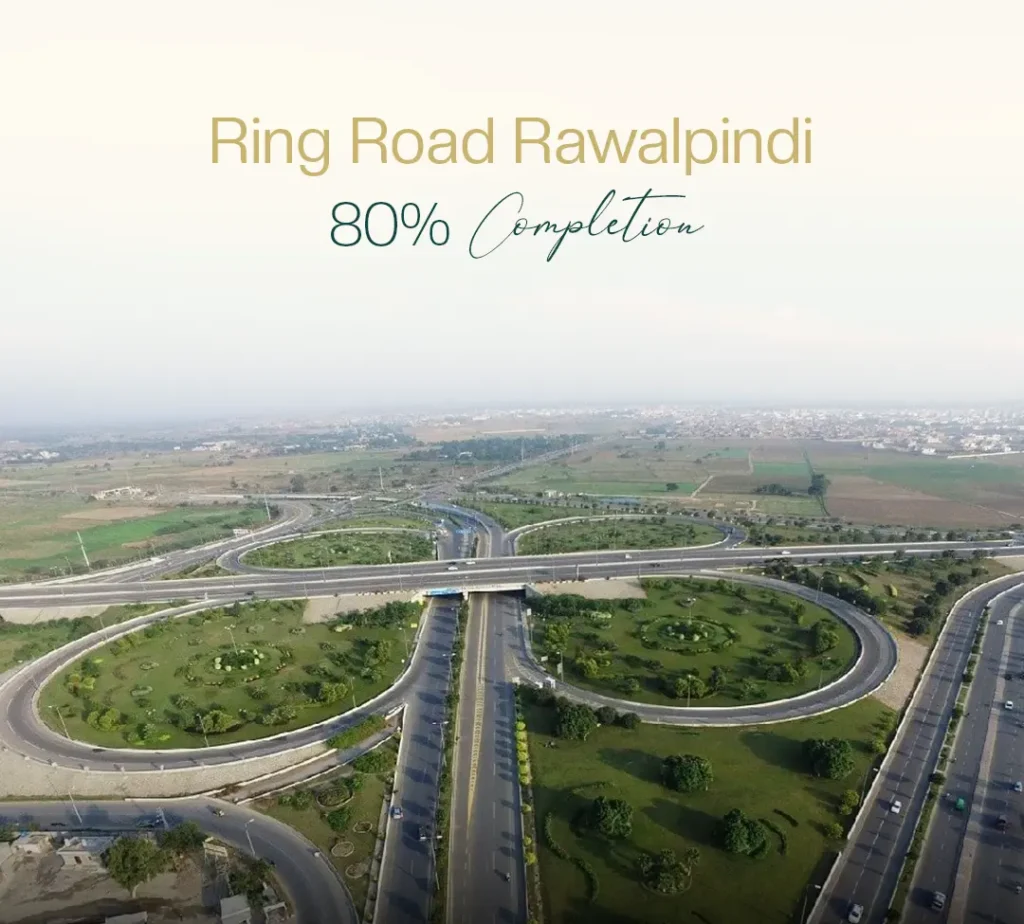
The Rawalpindi Ring Road is one of the most transformative roads to reshape traffic, economy, and connectivity between Rawalpindi, Islamabad, and the national motorway network. It is a 38 km, 6-lane, controlled-access highway designed to bypass heavy traffic through Rawalpindi city. The location of Ring Road Rawalpindi starts from National Highway (N-5), at Baanth near Rawat and terminates at the M-2 Thaliyan Interchange.
This new highway project will connect Adyala Road, Chakri Road, and Chak Beli Khan Road, easing the congestion in the key area. The Ring Road construction progress has reached 80% overall completion, whereas 90% of the structural work is finished, including all bridges, such as the Railway Bridge, and the asphalt work on a 22-km-long stretch is also complete.
Land acquisition has started for the Thalian Interchange, which will provide the final link between the Rawalpindi Ring Road and the M-2 Motorway. The new interchange will replace the current connection via Girja Road with a modern design featuring proper traffic loops to improve regional connectivity and manage heavy traffic more efficiently. The Ring Road completion date is by the end of April or the start of May 2026.
Why is Rawalpindi Ring Road important?
Once finished, the Rawalpindi bypass road project will allow heavy traffic and long-distance vehicles to bypass city centers, cutting congestion on GT Road, Peshawar Road, and other inner arteries. It will also connect to key motorways and facilitate access to the New Islamabad International Airport and surrounding economic hubs.
Margalla Enclave Underpass: Islamabad’s Traffic Relief
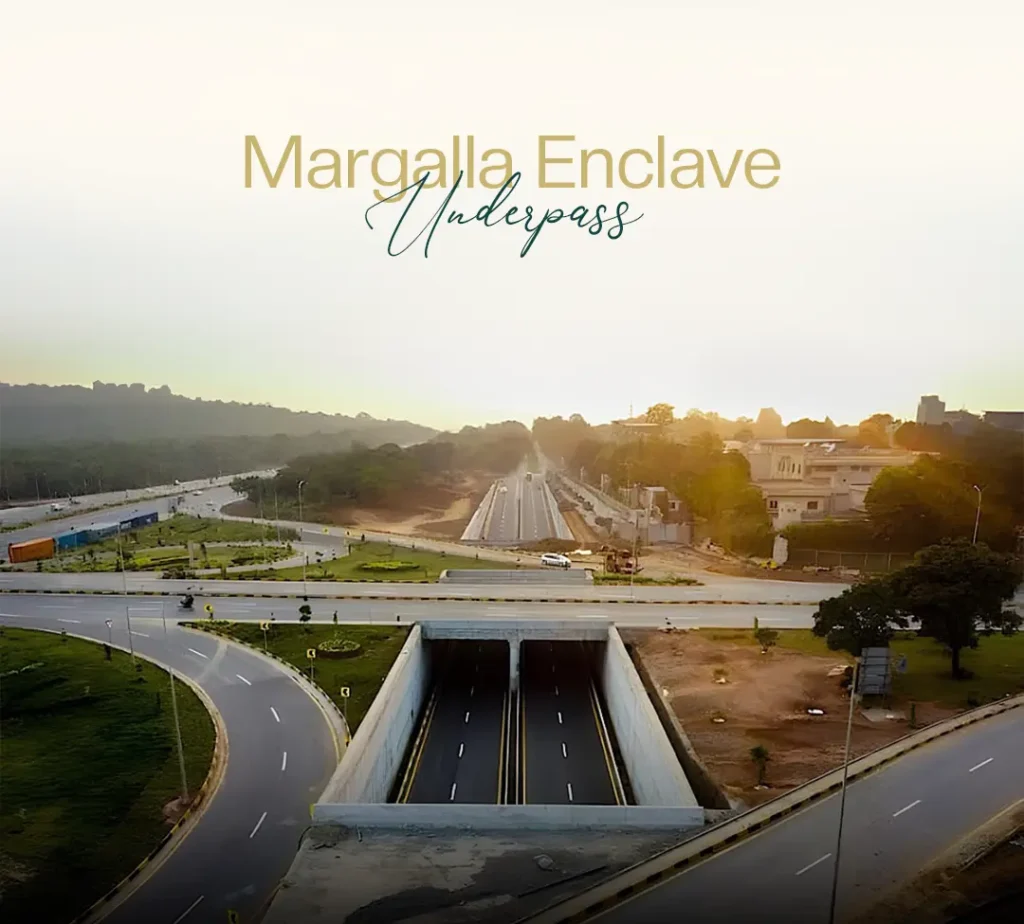
Islamabad road infrastructure projects have included the Margalla Enclave underpass on Park Road, aimed at reducing congestion, improving safety, and smoothing traffic flow in a busy residential-commercial corridor. The construction of the Park Road underpass Islamabad has led the Islamabad Traffic Police to issue traffic diversion plans, rerouting vehicles through NIH Road, Mohra Noor, and temporary side roads to maintain flow during work.
Those traveling from Rawal Dam Chowk toward Tramri are directed via alternate routes, and vehicles from Tramri toward Rawal Dam are guided through Chai Khana and CDA Nursery roads before rejoining Park Road.
Why is the Margalla Enclave Underpass important?
The CDA underpass project on Park Road is an important infrastructure project because Park Road functions as a key traffic corridor linking Rawal Dam Chowk, Tramri, Bani Gala, and several rapidly expanding residential areas.
In recent years, increased housing development and commercial activity in Margalla Enclave and surrounding localities have significantly raised daily traffic volume, leading to congestion and long waiting times at the signalized intersection, especially during peak hours.
By introducing a grade-separated underpass, authorities aim to ensure uninterrupted traffic flow on the main carriageway, reduce bottlenecks, improve road safety, and accommodate future traffic growth in Islamabad’s southern sector.
Murree Road Expansion Plan
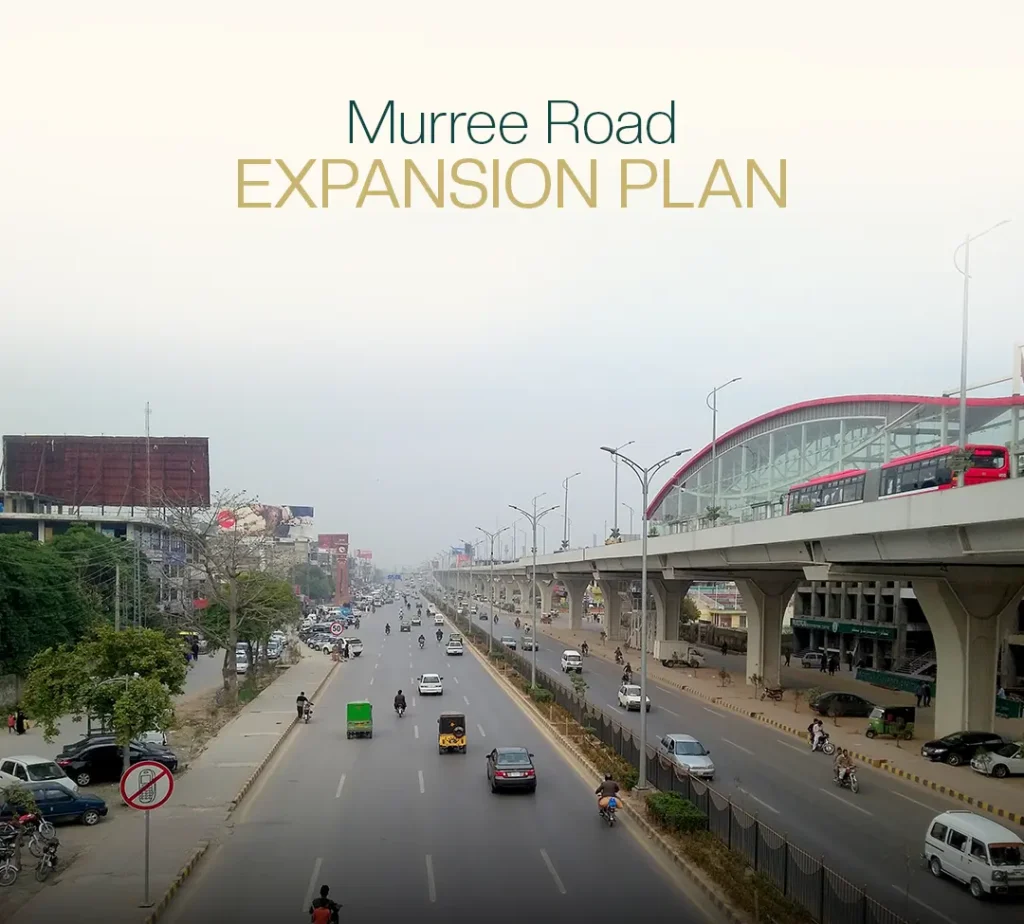
The Murree Road Expansion Plan proposes widening Murree Road from Liaquat Bagh to Chandni Chowk to improve traffic flow and reduce congestion along this busy corridor. The Murree Road expansion scheme includes the construction of service roads on both sides across a 3-KM stretch, expanding the roadway by 20 feet and requiring the acquisition of approximately 48 kanals of land.
Upon completion of the service lanes in this urban transport improvement project, the main carriageway is expected to become signal-free from Marrir Chowk to Faizabad, ensuring smoother transit, reduced travel time, and enhanced connectivity between key commercial and residential areas.
GT Road Beautification Project
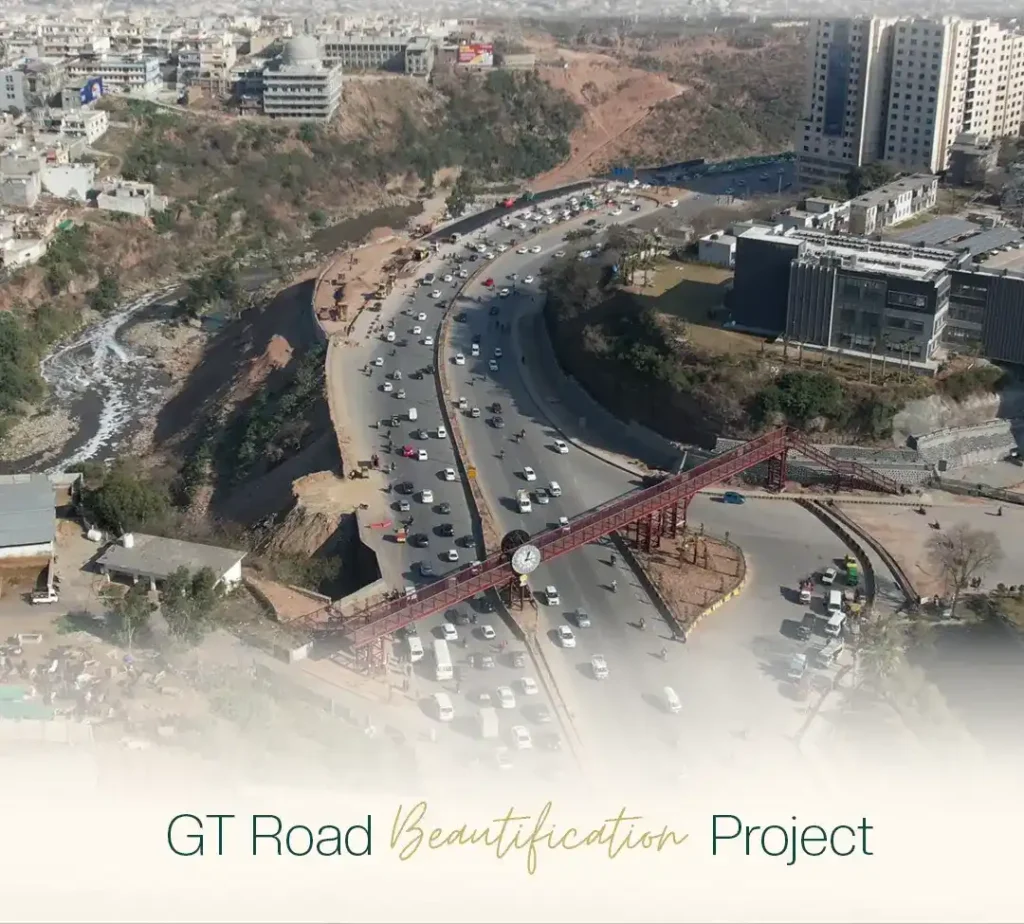
The iconic GT Road corridor, especially along DHA Phases 1 & 2, and in front of the Bahria Town, is also part of RDA’s latest projects on sustainable urban development. This GT Road beautification project includes green belts, installation of pools, plantation, and paintings. pavement improvements, road safety measures, and beautification in high-traffic zones.
The RDA GT Road beautification project is aimed at improving the traffic experience of the travelers and transforming the urban outlook on one of the most important highways of Rawalpindi and Islamabad.
This urban upgrade project by the Rawalpindi Development Authority (RDA), spanning DHA Islamabad Phases 1 and 2 and Bahria Town Rawalpindi, will significantly enhance the overall travel experience for residents accessing nearby commercial, residential and community destinations.
Charing Cross Underpass Project
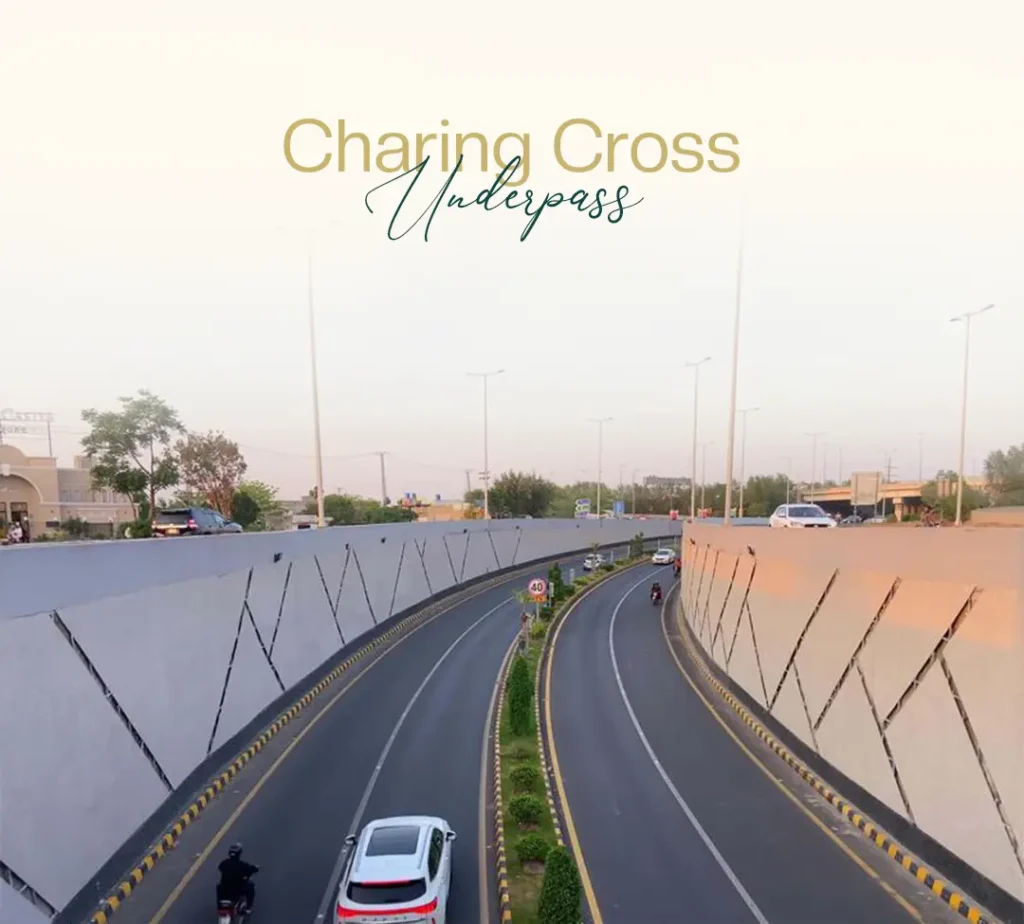
Charing Cross underpass is one of the 3 major underpasses under construction on the Peshawar Road. It is part of the major signal-free corridor initiative. The other 2 underpasses includes Race Course underpass and the Army Graveyard Underpass.
The Charing Cross underpass budget is estimated at Rs. 2.9 billion, it will be a 2-lane, single-barrel underpass with integrated U-turn facilities and will enhance the GT road access for the travelers. The Charing Cross underpass project completion is expected to be in June 2026.
Why Are Charing Cross, Race Course, and Army Graveyard Underpasses Important?
All of these underpasses will transform the travelling experience of more than 2 million residents and 250,000 daily commuters. It will be a smooth and signal-free movement along the Peshawar Road from the Ammar Chowk to the Motorway Entrance at Chungi No 26. These improvements aim to reduce bottlenecks on a historically busy city route.
Importance of Infrastructure Upgrade
The ongoing infrastructure upgrades across Rawalpindi and Islamabad reflect a broader effort to modernize the region’s urban transport network and prepare for future growth. These Projects are not only easing traffic congestion but also strengthening connectivity between key urban and suburban areas and will enhance mobility, support economic activity, and improve the overall quality of life for residents, positioning the twin cities for more sustainable and efficient urban growth in the years ahead.