
Islamabad may be one of Pakistan’s youngest major cities, but its place names tell a much older and more interesting story. From carefully planned sectors such as F-7, G-9 and H-8 to familiar names such as Aabpara, Karachi Company, Jinnah Super and Zero Point, islamabad area names reflect the city’s planning history, local communities, commercial activity and cultural identity.
Unlike organically developed cities, Islamabad was designed according to a carefully structured master plan. The city’s sectors were planned as independent neighbourhood communities, while commercial centres, roads and public spaces were assigned specific functions. Yet alongside this formal planning system, informal names became part of everyday language. Today, asking for islamabad places names such as Karachi Company or Jinnah Super is often more natural for residents than using the corresponding sector and markaz designation.
Islamabad Name Origin and History
To understand Islamabad’s name origin, it is important to look at the city’s history before the modern capital was developed. Pakistan decided to establish a new capital in the area in the late 1950s, and the new city was planned during the 1960s. The master plan was developed under the direction of Greek planner and architect Constantinos A. Doxiadis, giving Islamabad its distinctive grid, sectors, green spaces and carefully organized road network.
The name Islamabad was finalized in 1960 after suggestions were invited for the new capital. Qazi Abdur Rehman, a teacher, poet and writer from Amritsar, is credited with proposing the name, which was subsequently selected by the federal government.
Islamabad Old Name: Did Islamabad Have Another Name?
There was no single established city called Islamabad that was simply renamed when Pakistan’s new capital was created. Instead, the area selected for the capital contained numerous villages, agricultural land and existing settlements before modern Islamabad was built. Historical settlements in and around today’s capital included places such as Saidpur, Malpur and other village communities.
Therefore, it is more accurate to say that modern Islamabad was built over an area that already had historic settlements, rather than saying Islamabad itself had one universally recognized old name. This distinction is important because names such as Saidpur and Malpur continue to preserve parts of the area’s pre-capital history.
Islamabad Etymology: What Does Islamabad Mean?
The word Islamabad combines Islam with the Persian suffix -abad. The suffix -abad is used in many South Asian place names and refers to an inhabited, settled or developed place. As a result, Islamabad is commonly translated as “City of Islam” or “Abode of Islam.” The name was particularly appropriate for Pakistan’s new federal capital and became the official name of the city in 1960.
Islamabad Areas Names List
The Islamabad places names commonly used today can be divided into several categories. Some come directly from the city’s master-planning system, such as F-6, F-7 and G-9. Others developed from the history of the land, important personalities, commercial functions or names adopted by residents.
This creates an interesting contrast. On an Islamabad map, a place may appear as a sector number, while residents may know the same location by an entirely different name. G-9 Markaz, for example, is widely known as Karachi Company, while F-7 Markaz is commonly called Jinnah Super.
If you are looking for an Islamabad sectors names list, the city contains a mixture of formally designated sectors, commercial centres, historic villages, residential neighbourhoods and well-known landmarks.
Some of the most commonly recognized Islamabad areas names list include:
- F-6
- F-7
- F-8
- F-10
- F-11
- G-5
- G-6
- G-7
- G-8
- G-9
- G-10
- G-11
- H-8
- H-9
- H-10
- I-8
- I-9
- I-10
- E-7
- E-11
- D-12
- G-13
- G-14
- Bahria Town Islamabad
- Saidpur Village
- Aabpara
- Blue Area
- Karachi Company
- Jinnah Super
- Super Market
- Zero Point
- Diplomatic Enclave
- F-6 Markaz
- F-7 Markaz
- G-9 Markaz
The official sector system is much broader than this list, particularly as Islamabad continues to develop new sectors and areas. CDA documentation identifies sectors across different zones of the Islamabad Capital Territory, while development work continues in areas such as G-13, D-12 and E-12.
The result is a city where official planning terminology and everyday place names exist side by side.
Karachi Company (G-9 Markaz)
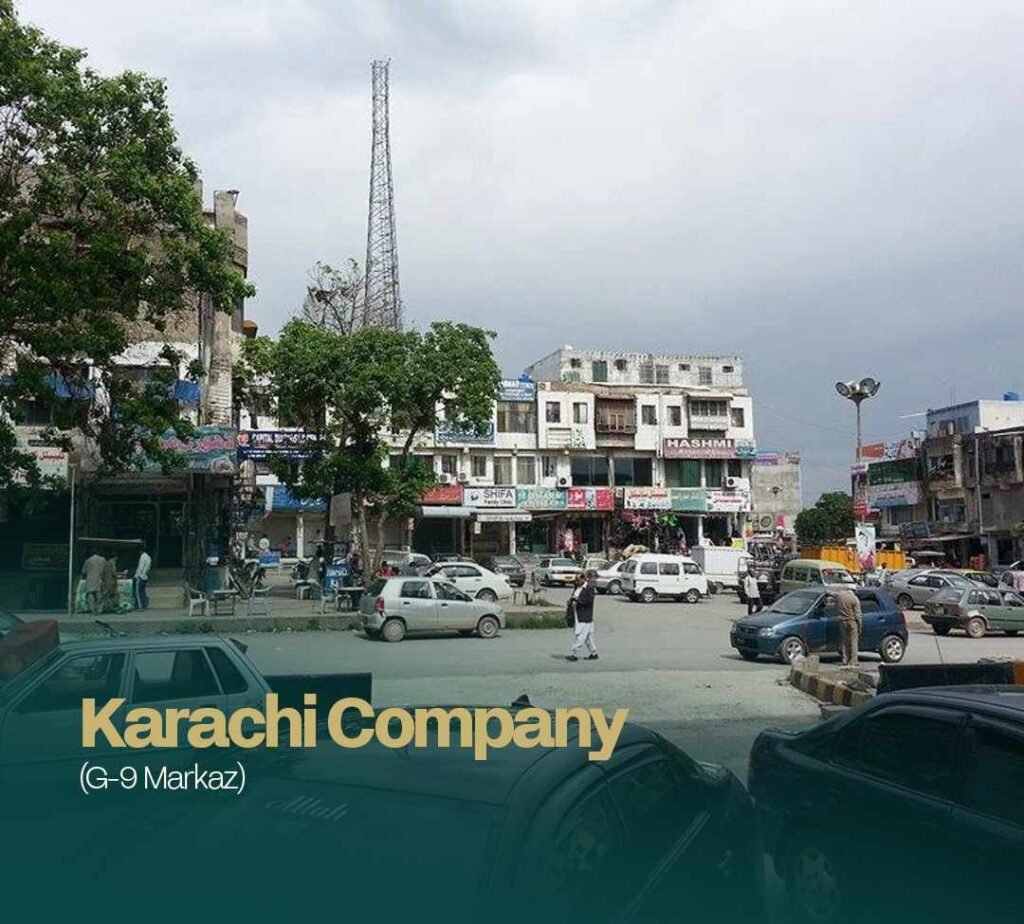
At first glance, the name Karachi Company in Islamabad’s G-9 sector seems out of place. Why would a market in the capital bear the name of another city?
The story traces back to the early days of Islamabad’s development, when this area was still under construction. The construction company assigned to the project happened to be based in Karachi. Naturally, laborers and workers associated the site with the company’s origin.
When commuting, these workers would tell the local wagon drivers to drop them off at the Karachi Company, a term that quickly caught on. Over time, the nickname became so commonly used that it overshadowed the official name, G-9 Markaz, and today, it’s known citywide as Karachi Company.
Sitara Market (G-7)
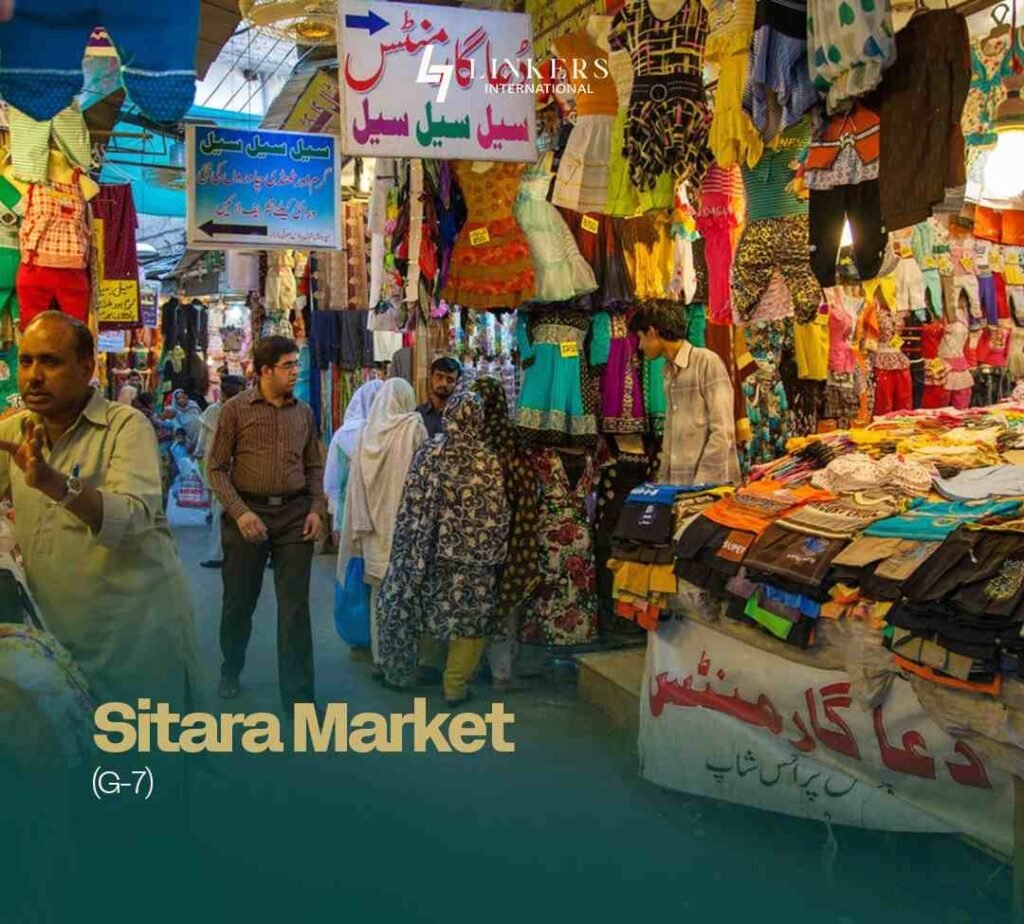
Sitara Market is nestled in G-7, a sector near the government quarters and old residential zones. The word “Sitara” means star in Urdu, but the exact origin of the name is unclear, possibly named after a local business or simply as a poetic, aspirational title.
Sitara Market is known for its affordable clothing, shoes, tailors, and street food. It serves a primarily working-class population and has a vibrant, old-school charm.
Aabpara Market (G-6)
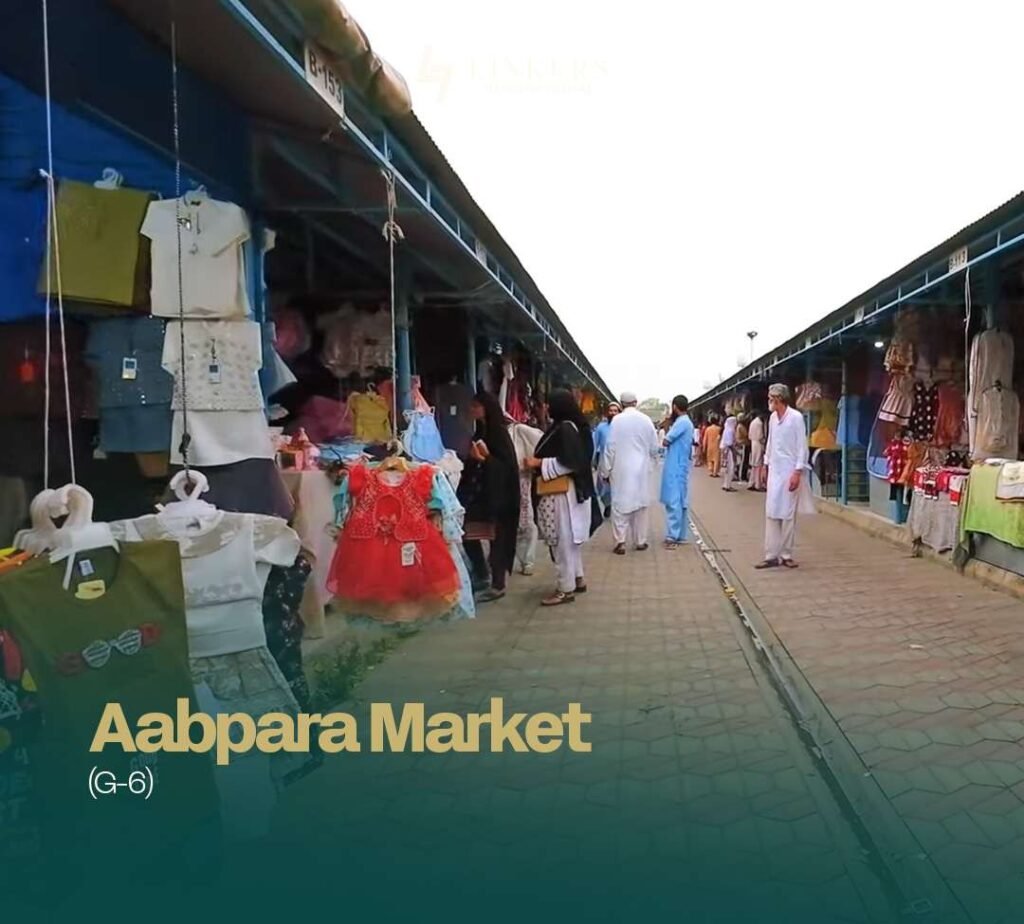
Aabpara is one of the most recognizable Islamabad place names and is closely associated with the early development of the capital.
Before Islamabad developed into the planned city we know today, the surrounding landscape consisted of villages, agricultural land and settlements. Aabpara subsequently became one of the capital’s early commercial centres.
The exact story behind this Islamabad places names, has been the subject of different local accounts. One widely circulated explanation connects the name with a girl named Aabpara, although versions of the story differ. The name eventually became firmly established in the city’s vocabulary.
Blue Area Islamabad Sectors F-8 to G-8
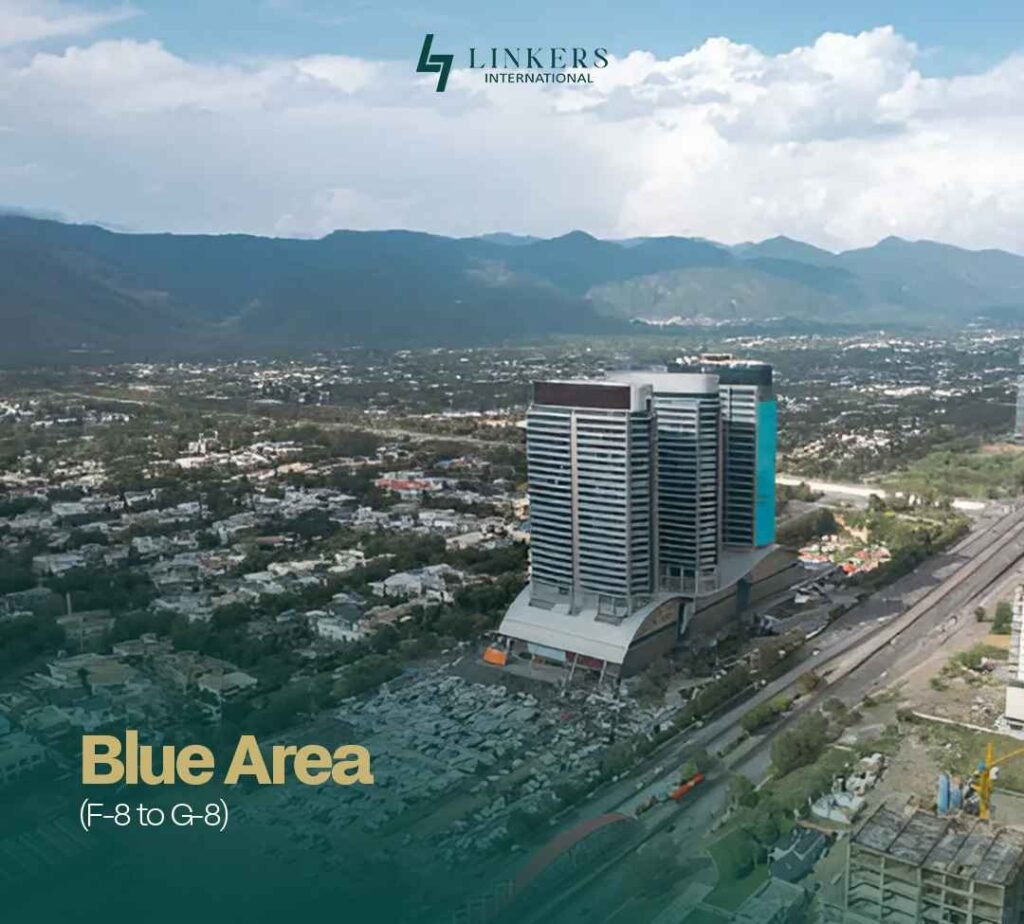
If you’ve ever driven down Islamabad’s main business corridor, you’ve passed through the famous Blue Area. But why “blue”?
During the city’s Master Planning Phase, by Greek architect Constantinos Doxiadis, the commercial zones were color-coded on maps. This particular strip along Jinnah Avenue was shaded blue to designate it as the central business district. It was also meant to differentiate between residential (green) and industrial (yellow).
The name stuck and became official. Today, it’s home to corporate offices, banks, high-rises, government institutions, and shopping plazas.
Super Market (F-6 Markaz)
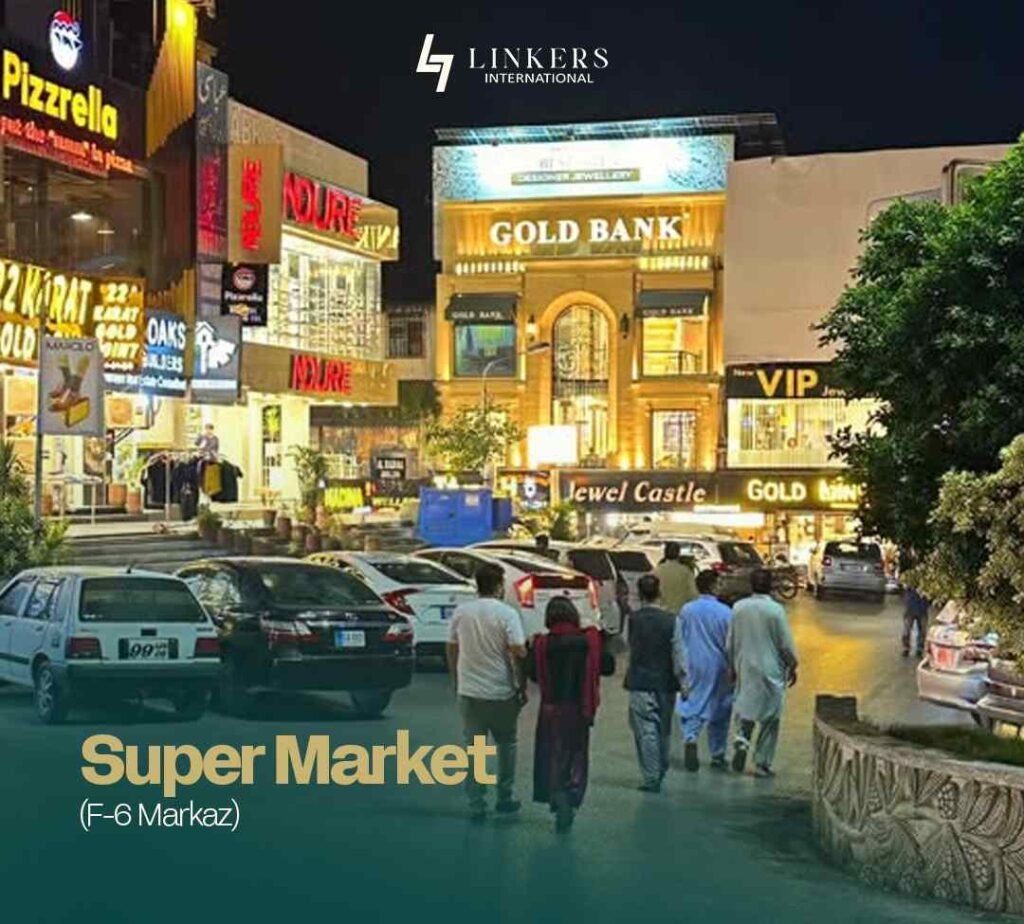
Before “supermarket” became a retail format, Islamabad had its own Super Market, an upscale commercial center in F-6 Markaz. The term “Super” here simply meant “bigger” or “better” than a standard market, and it was one of the first well-planned shopping districts in the city.
Today, it remains a favorite for diplomats, artists, writers, and long-time residents. Quaint bookstores, bakeries, and craft shops give it an old-world charm.
Jinnah Super (F-7 Markaz)
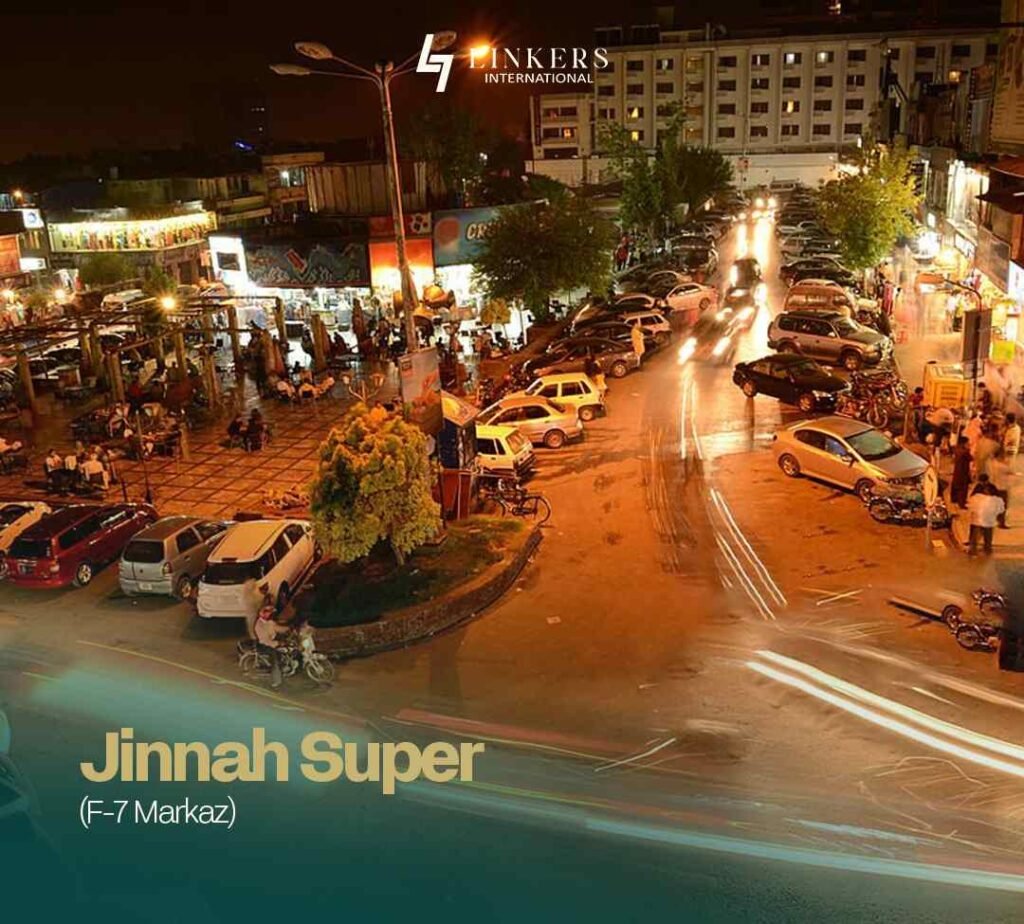
A posh and popular market located in F-7 Markaz, Jinnah Super is one of Islamabad’s trendiest commercial areas. The name is a tribute to Quaid-e-Azam Muhammad Ali Jinnah, Pakistan’s founding father. The “super” part signifies its status as a larger, upscale market compared to others. Some locals also said that the name was given by the traders to show that this market was superior to the Supermarket of F-6 Markaz.
With boutique clothing stores, cafes, international chains, and bookstores, Jinnah Super blends elite shopping with youthful energy.
Zero Point Islamabad Sectors Name Origin
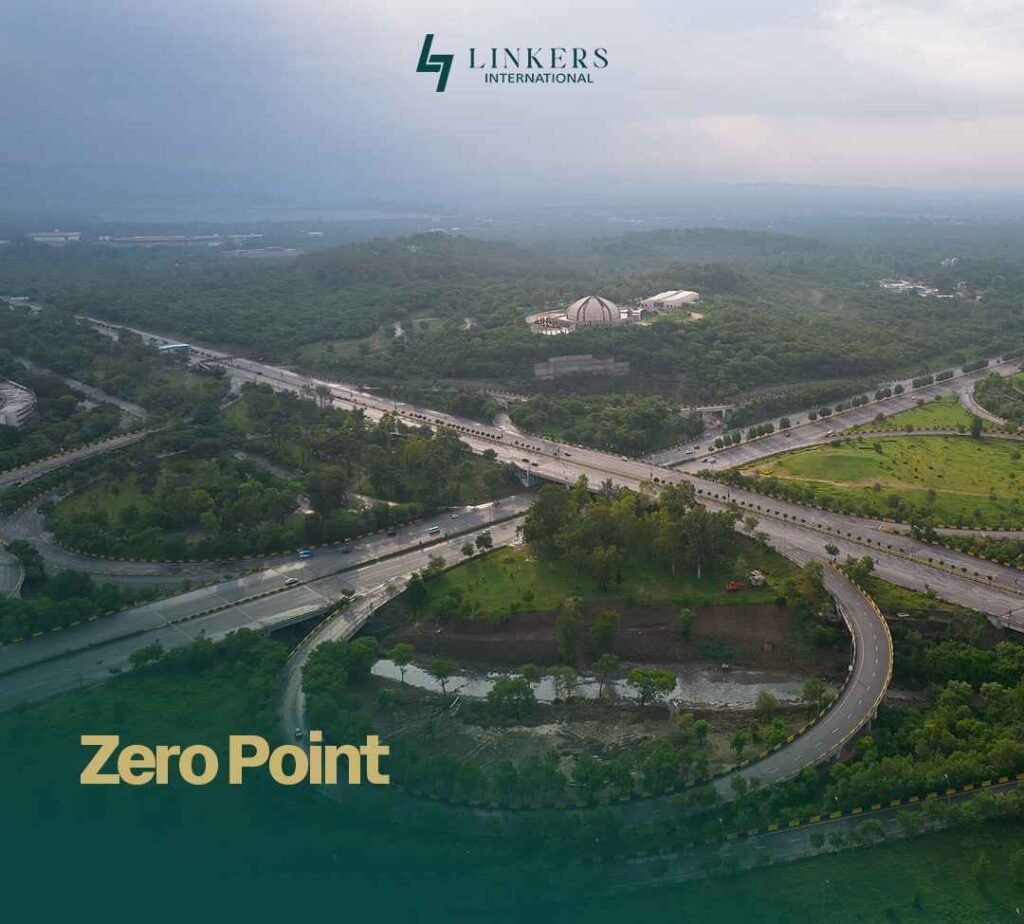
The name Zero Point might sound technical, but in the story of Islamabad, it’s far more symbolic than sterile. As the name suggests, Zero Point marks the geographic and planning origin of the capital, the spot from which all roads, distances, and directions radiate. In other words, it’s the starting point of Islamabad.
When the city was being designed in the early 1960s by Greek architect Constantinos Doxiadis, Zero Point served as the reference location for mapping out the city’s grid. It was quite literally ground zero, the point from which the entire layout of sectors, roads, and zones expanded outward in a precise, organized fashion.
Why These Names Matter
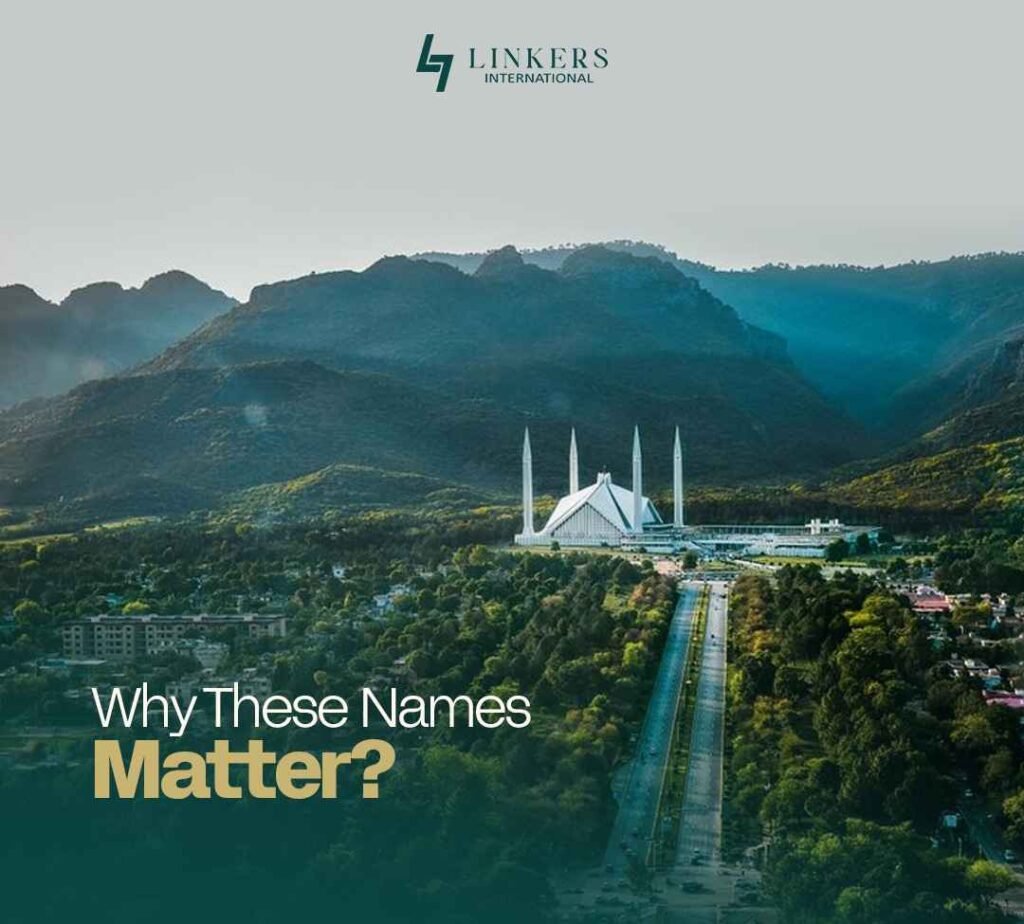
These informal-yet-official Islamabad places names show how Islamabad’s character is shaped as much by its people as by its planning. Despite its strict grid layout and sector codes, the city breathes through these personalized places that tell stories of migration, identity, aspiration, and daily life.
They also reflect how Islamabad has matured, from a sterile capital city built from scratch to a vibrant urban hub where culture, commerce, and community intersect.
Frequently Asked Questions
What is Islamabad’s old name?
Islamabad did not have one single old name. Before becoming the capital, the area consisted of villages and settlements such as Saidpur and Malpur. The name Islamabad was finalized in 1960.
What does Islamabad mean?
Islamabad combines “Islam” and the Persian suffix “-abad,” meaning a settled or inhabited place. It is commonly understood as “City of Islam.”
What did Islamabad used to be called?
The area was home to several villages and settlements before the modern city was built, rather than having one name for the entire area.
How many sectors are there in Islamabad?
Islamabad has numerous planned sectors, identified by letters and numbers such as F-7, G-9 and I-8. The exact number depends on whether developing and planned sectors are included.
Why is Islamabad divided into sectors?
Islamabad was designed as a planned city, with each sector intended to provide residential, commercial, institutional and recreational facilities.
What are the most famous places in Islamabad?
Popular places include Blue Area, Aabpara, Jinnah Super, Super Market, Karachi Company, Zero Point, Saidpur Village, Daman-e-Koh and Margalla Hills.
What are the main Islamabad areas?
Popular areas include F-6, F-7, F-8, F-10, F-11, G-5, G-6, G-7, G-8, G-9, G-10, G-11, I-8, I-9, I-10, E-7, E-11, D-12 and G-13.
Why is Karachi Company called Karachi Company?
Karachi Company is the popular name for G-9 Markaz. The name is believed to have originated during Islamabad’s early construction period and became popular among workers and locals that came from Karachi.
Why is Islamabad called Islamabad?
The name was selected for Pakistan’s new capital in 1960. It combines “Islam” with “-abad,” meaning a settled place, and is commonly translated as “City of Islam.”
What are some popular Islamabad town names?
Some well-known Islamabad town names and residential areas include Bahria Town, Margalla Town, Gulberg Greens, Bani Gala, Chak Shahzad, and Barakahu. The city and its surrounding areas also include numerous CDA sectors and private housing communities, offering a mix of residential, commercial and lifestyle options.