
When buying commercial or residential property, one of the first numbers buyers look at is the total square footage. A larger unit often feels like a better deal because it offers more space for the money. But there is a question that matters just as much: How much of that space can you actually use?
A 1,000-square-foot property may look attractive on paper, but if a significant portion is taken up by corridors, structural columns, awkward corners, or poorly planned layouts, the usable area may be much smaller than expected.
This is why usable square footage matters when comparing properties. Modern construction trends increasingly focus on smart layouts, efficient space planning, and functional design. Understanding these trends helps buyers look beyond size and evaluate how effectively a property serves its purpose.
What Is Usable Square Footage?
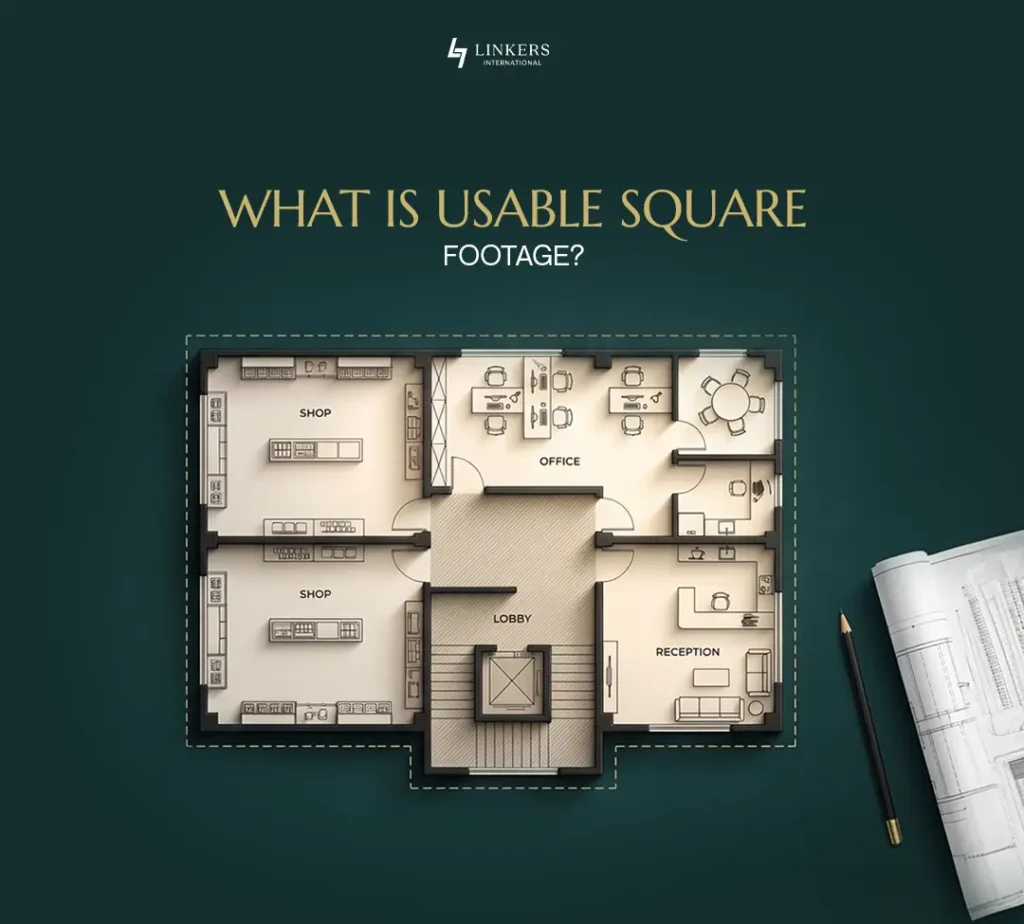
Usable square footage is the area inside a property that can practically be used for its intended purpose, whether that means placing furniture, operating a business, arranging workstations, displaying products, or creating comfortable living spaces. It is different from the total area advertised by a developer or seller.
Qualified developers like Linkers International focus on smart layouts and efficient space planning in their projects, helping buyers get more usable space from the total area. In commercial shops and offices for sale in Islamabad, a well-planned layout can make a real difference by maximizing functional space for business activities.
Three terms are particularly important:
- Gross area: A broad measurement that may include internal space, walls, and, depending on the definition, other areas.
- Net or usable area: The space available for practical use, as defined by the applicable measurement method.
- Common area: Shared spaces such as lobbies, corridors, staircases, and certain service areas.
These terms are not used identically in every market or property agreement. Always check the developer’s stated measurement method rather than assuming that every quoted square foot is usable.
Why Does Usable Area Matter in Commercial Property?
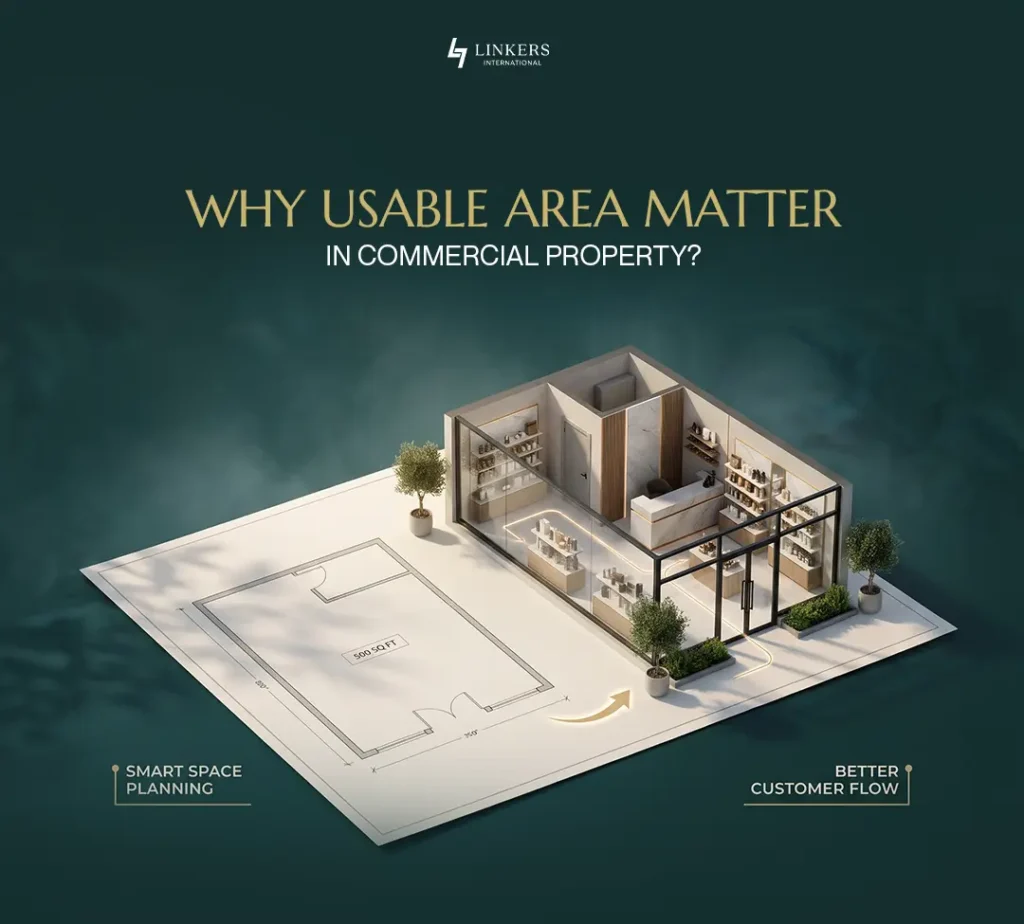
In commercial real estate, space directly affects how a business operates. Every square foot should contribute to functionality, customer experience, storage, circulation, or revenue-generating activity.
It Determines How Much Business You Can Fit Into a Space
Consider a 500-square-foot retail unit.
If its layout is efficient, the owner may have sufficient room for product displays, a checkout counter, storage, and customer movement.
But if structural columns interrupt the floor plan or the entrance creates awkward circulation, the same area may accommodate fewer displays and less inventory. The difference is not necessarily the size of the unit. It is the efficiency of the layout.
2. It Can Affect Rental Potential
Imagine two office units with the same advertised area and similar locations.
One comfortably accommodates eight workstations and a small meeting room. The other fits only six workstations because of its layout. The first unit may appeal to a wider range of businesses, depending on their needs and the rental market.
However, usable area alone does not guarantee higher rent. Location, building quality, parking, accessibility, maintenance, and tenant demand also influence rental value.
3. It Influences the Customer Experience
For a café, showroom, clinic, or retail store, space must do more than fit furniture. Customers need clear pathways, comfortable movement, appropriate waiting areas, and easy access to products or services.
A poorly planned 700-square-foot space may feel cramped, while a thoughtfully designed space of the same size can feel open and functional. Good design makes the available area work harder.
Where Does Usable Space Get Lost?

- The amount of usable space is not determined by the floor area alone. Architectural and structural decisions can significantly influence how efficiently a property functions.
- Structural columns: Columns are essential to a building’s structural system, but their placement can affect furniture arrangements, display layouts, and circulation.
- Corridors and circulation: People need room to move safely and comfortably. The objective is not to eliminate circulation space, but to plan it efficiently.
- Irregular layouts: Angled walls, narrow corners, and unusual shapes can make some areas difficult to furnish or use effectively.
- Doors and entrances: Poorly positioned doors can obstruct furniture, reduce display space, or interrupt the movement of customers and staff.
- Service areas: Electrical panels, plumbing shafts, HVAC equipment, and other building services need appropriate space. Their placement can affect the usable layout.
- Natural light and ventilation: A space may have a large floor area but still feel uncomfortable if lighting, ventilation, or window placement is poorly considered.
A well-designed building balances structural requirements, services, safety, and everyday usability. The aim is not to maximise usable area at any cost, but to make the space functional without compromising essential building requirements.
Does More Usable Space Always Mean a Better Investment?

Not necessarily. Usable area is an important comparison metric, but it should not be the only factor in a property decision.
For example, a 450-square-foot office in a well-connected commercial building may be more attractive to tenants than a 600-square-foot office in a poorly accessible location.
Similarly, a larger apartment may offer greater privacy, better natural light, or a more practical bedroom layout, even if its usable-area ratio is slightly lower.
Investors should evaluate several factors together:
- Usable area and layout efficiency
- Purchase price per usable square foot
- Location and accessibility
- Expected rental demand and realistic operating costs
- Construction quality and building maintenance
- Legal documentation and the area stated in the sale agreement
- Suitability for the intended tenant or end user
The best property is not always the one with the highest usable-area percentage. It is the one that offers the right combination of functionality, quality, location, and cost for the buyer’s objectives.
Final Thoughts: Measure the Space You Can Actually Use
Square footage is an important starting point, but it does not tell the complete story of a property. Two units with identical advertised areas can deliver very different experiences because of their layouts, structural elements, circulation, and functionality.
For buyers, the lesson is simple: look beyond the number on the brochure. Understand what is included, examine the floor plan, calculate the effective price per usable square foot, and assess how well the space supports your actual needs.
Because the real measure of a property’s space is not just how much you buy, but how effectively you can use it.
Frequently Asked Questions
What is the difference between total square footage and usable square footage?
Total square footage is a broader area figure whose exact inclusions depend on the measurement method. Usable square footage refers to the area available for practical use, as defined by the applicable standard.
How do you calculate the price per usable square foot?
Divide the total purchase price by the property’s usable square footage. This allows you to compare the effective cost of the space you can actually use.
Why does usable square footage matter in commercial property?
It helps determine how efficiently a business can arrange workstations, product displays, storage, customer areas, and other essential functions.
Does a higher usable-area ratio mean a better property?
Not automatically. Location, layout, building quality, accessibility, rental demand, maintenance, and the property’s intended use also matter.
Can two properties with the same area have different values?
Yes. Their layouts, structural column placement, natural light, access, building facilities, location, and overall functionality can create substantial differences in practical value.
6. What should I ask a developer about a property’s area?
Ask for the dimensioned floor plan, the definition of the advertised area, the treatment of common areas, and the measurement method stated in the sale agreement.