
A Khasra number is useful when buying land, checking inherited property, or verifying land documents in Punjab. It helps you identify the exact land mentioned in official records and reduces the risk of confusion during a property purchase.
Before buying, always check the land records carefully. The Khasra number alone does not prove ownership, so you should also verify the owner’s details and legal documents. If you are investing in a housing society in Islamabad, verify its CDA approval status and ensure the relevant NOC and approved layout plan are valid before purchasing.
What Is a Khasra Number?
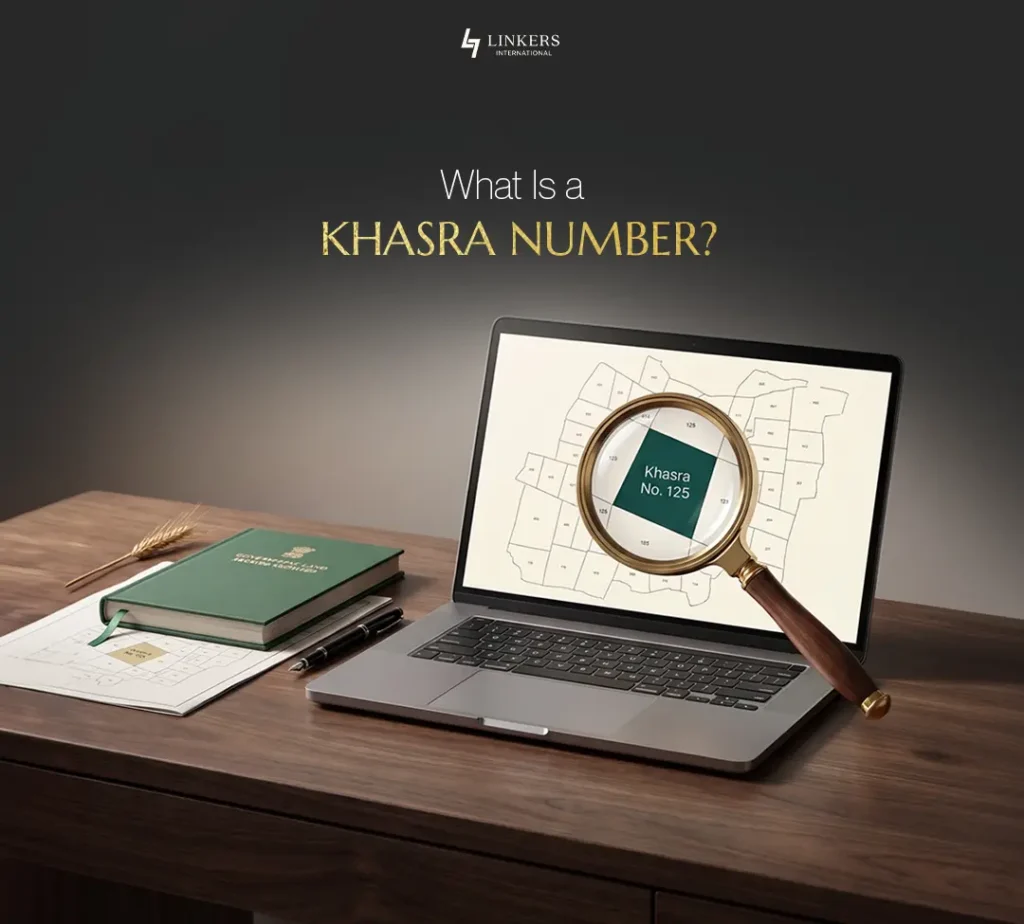
A Khasra number is an identification number given to a specific piece of land in government records. It helps distinguish one piece of land from another.
Example: Imagine a village where a piece of land is listed as Khasra No. 125. This number helps identify that particular land in official records. The owner’s name and other details are recorded separately.
Khasra numbers are mostly used for agricultural land and land in villages. In housing societies and planned areas, properties are usually identified by plot numbers, street numbers, or sector numbers.
How To Check Khasra Number Online in Punjab?
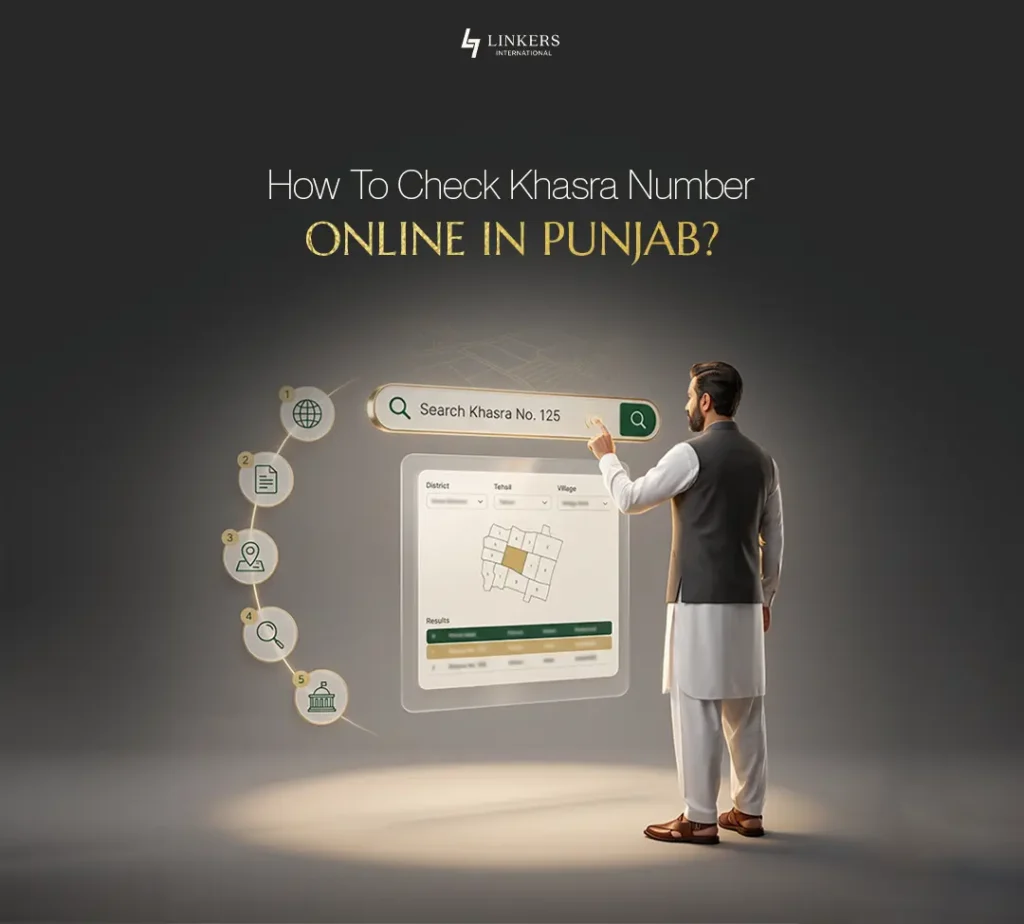
In Punjab, Pakistan, you can use the official Punjab Land Records Authority (PLRA) website to access available digitised land records and request a Fard.
Follow these steps:
- Visit the official Punjab Zameen website.
- Open the available land record or Fard service.
- Enter the required details, such as your district, tehsil, village, ownership information, or other property identifiers, depending on the service.
- Review the available record to locate the Khasra number and related ownership details.
- If the record is unavailable online or the details do not match, contact the nearest Arazi Record Centre or the relevant revenue official.
How to Find Khasra No. in Punjab Without Internet?
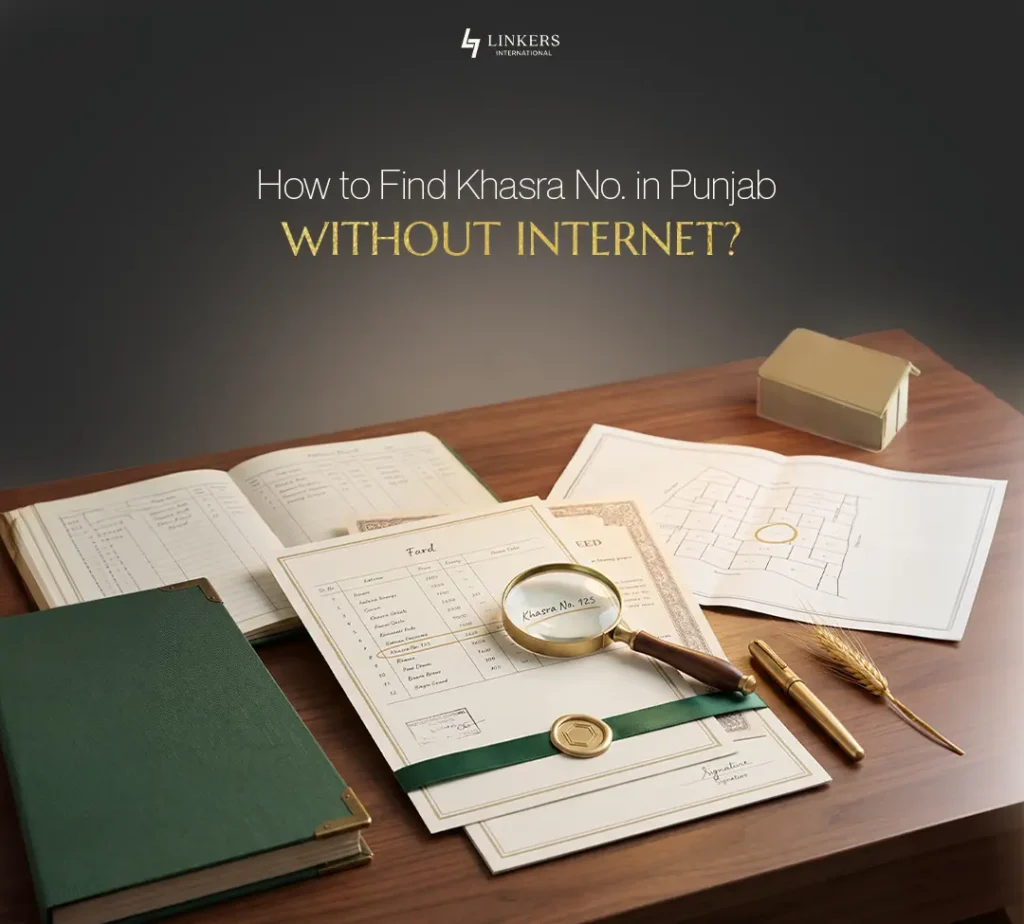
If you cannot find your Khasra number online, you can check your Fard, registry, or ownership documents. You can also contact the local Patwari or visit an Arazi Record Centre to access the relevant land records.
- Check your Fard: It may contain the Khasra number and associated ownership details.
- Review your registry: Existing property documents may mention the relevant land identifiers.
- Contact the Patwari: The relevant Patwari can help locate the parcel in the revenue record.
- Visit an Arazi Record Centre: Request assistance in identifying the land and obtaining the relevant record.
For example, if you are buying five kanals of agricultural land in a village, ask the seller for the Khasra number and a recent Fard. Compare these details with the land being offered for sale.
When Can the Khasra Number Change?
A Khasra number may change when official land records are revised or land parcels are reorganised. Common reasons include:
- Land subdivision: One parcel is divided into smaller parcels for sale, inheritance, or partition.
- Consolidation of land: Multiple parcels may be reorganised under a consolidation scheme.
- Resurvey or settlement: Updated surveys or revenue settlement operations may lead to changes in parcel identification.
- Correction of records: An official correction may change an incorrectly recorded identifier.
For example, if Khasra No. 125 is divided into two separate parcels, the resulting parcels may receive new numbers or sub-numbers under the applicable revenue procedure.
A sale or ownership transfer does not automatically mean the Khasra number will change. Buyers should confirm the current identifier against updated revenue records.
How Much Land Is in One Khasra?
There is no fixed size for one Khasra. A Khasra identifies a parcel of land; it does not represent a standard measurement. For example, one Khasra might cover two kanals, while another might cover several acres. The actual area must be confirmed through the relevant land record and survey.
What Should Buyers Verify Before Purchasing Land?

Before purchasing land, it is important to check the property details and confirm that the seller has the legal right to sell it. Verifying the Khasra number, ownership documents, and land boundaries can help you avoid disputes and make a safer investment.
Before paying a token or signing a sale agreement, check the following:
- The Khasra number and recorded land area.
- The seller’s ownership details and Fard.
- The latest mutation (Intiqal) and relevant registry documents.
- The actual site boundaries and access.
- Any co-ownership, disputes, mortgages, or other encumbrances.
- Whether the physical land matches the official record.
A Khasra number helps identify land, but it does not independently establish clear title or guarantee that the seller has the right to transfer it. For high-value transactions, seek verification from the relevant revenue office and a qualified property lawyer.
Final Words
A Khasra number helps identify a specific piece of land in official revenue records. In Punjab, you can find it through online land records, which are easier to understand. Before buying land, alwr Fard, registry documents, or the local Patwari. Understanding the difference between Khasra, Khatauni, and Khewat also makes land easier to verify; verify the Khasra number, ownership details, recorded area, and legal documents to avoid property disputes.