
Planning to buy property in Islamabad? Before you look at the payment plan, discount, or promised return, check one thing first: Is the property actually approved?
A beautiful brochure can make a project look convincing. A prime location can make the investment seem attractive. And a salesperson may tell you that a project is “CDA approved.” But what does that actually mean?
For property buyers in Islamabad, checking the Capital Development Authority (CDA) record is an important part of due diligence. CDA provides online information on private housing and commercial schemes, including their Layout Plan (LOP) and No Objection Certificate (NOC) status. It also offers an Initial Property Verification Service (IPVS) for checking property-specific information.
So, before you put your money into a plot, apartment, office, shop, or high-rise project, here’s how to check its approval status online.
LOP Approval & NOC Issuance by CDA Are Not Same
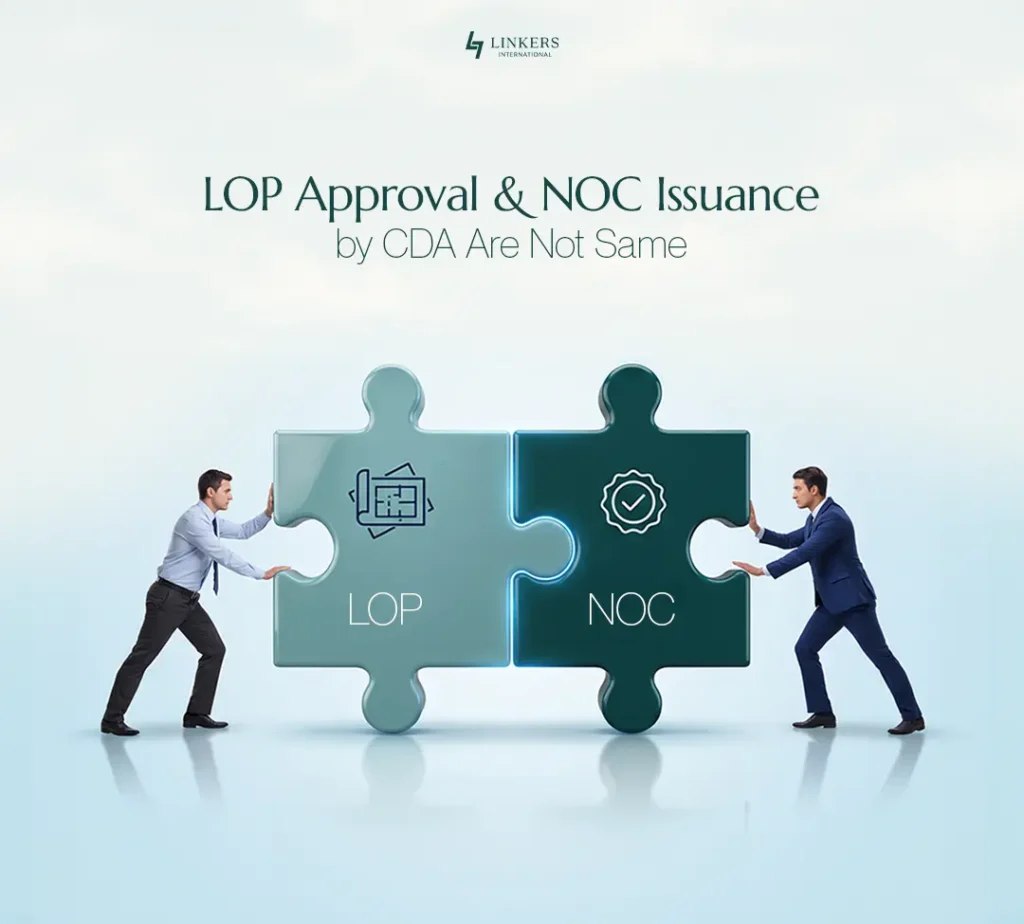
What does CDA approval actually mean? This is where many buyers get confused. A project can have different stages of approval, and LOP approval and NOC issuance are not the same thing. For private housing schemes, CDA follows a process in which the Layout Plan (LOP) is approved first.
After the required formalities are completed, an NOC for development is issued. CDA may subsequently issue a Completion Certificate once development has been completed according to the approved plans and specifications.
In simple terms:
- LOP Approved → The project’s layout plan has been approved
- NOC Issued → CDA has issued the NOC for development
- NOC Not Issued → The development NOC has not been issued
- NOC Cancelled → A previously issued NOC has been cancelled
- LOP Cancelled → The layout plan approval has been cancelled
The important takeaway: Don’t simply ask, “Is it CDA approved?” Ask “What is its current LOP and NOC status?”
CDA Approval Online Steps To Follow
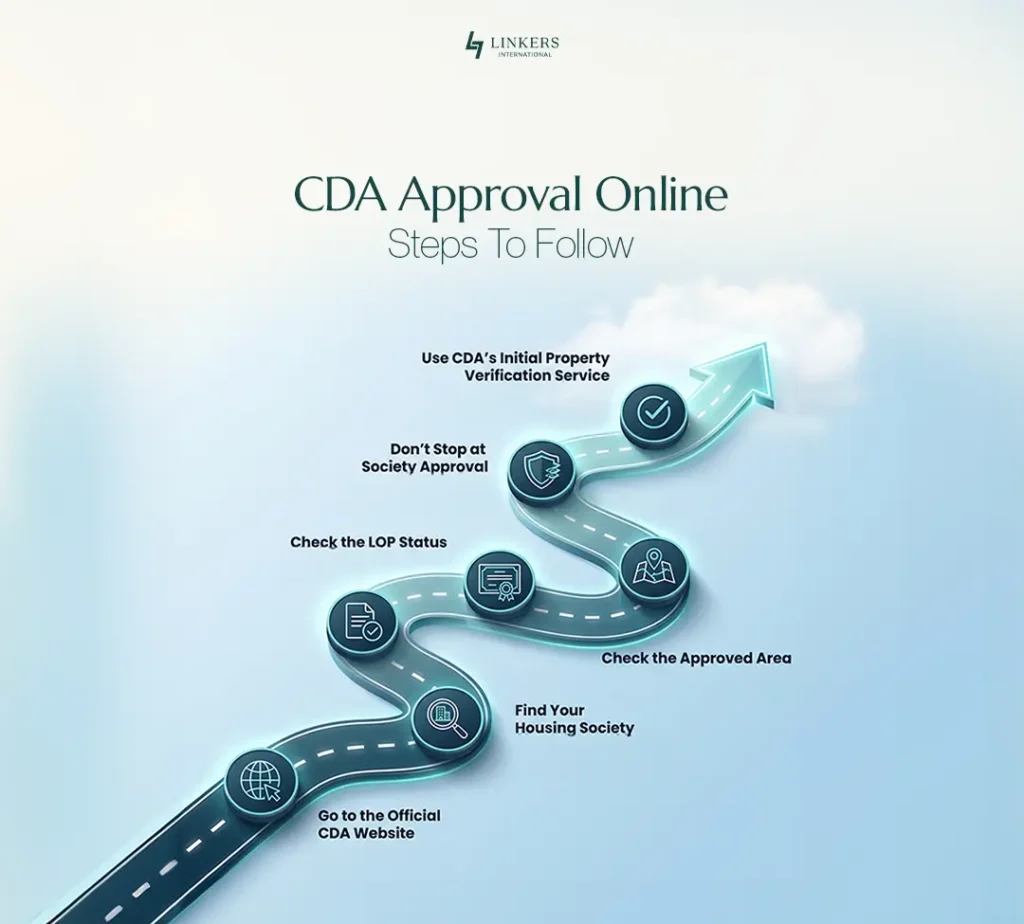
- Step 1: Go to the Official CDA Website
- Step 2: Find Your Housing Society
- Step 3: Check the LOP Status
- Step 4: Check the NOC Status
- Step 5: Check the Approved Area
- Step 6: Don’t Stop at Society Approval
- Step 7: Use CDA’s Initial Property Verification Service
Buying property in Islamabad is a major financial decision, and checking the price or location is only part of the process. Legal and regulatory approval matters just as much. Before booking a plot, apartment, shop, or office, buyers should confirm whether the project appears in CDA’s official records and understand its LOP and NOC status.
This quick online check can help you spot potential issues early and make a more informed investment decision. Here’s how you can check CDA property approval online.
Step 1: Go to the Official CDA Website
Start with the official CDA website, rather than relying on a property dealer, social media post, or developer’s marketing material.
The Housing Schemes section provides information about private housing schemes in Islamabad, including their approval status. Always check the information directly from CDA because project status can change over time.
Step 2: Find Your Housing Society
Search for the name of the housing society you’re considering. CDA’s directory provides information such as:
- Scheme name
- Zone
- Road
- Total area
- LOP status
- NOC status
Once you find the project, don’t stop at the name. This is where the real checking begins.
Step 3: Check the LOP Status
You’ll see an LOP status associated with the scheme. LOP stands for Layout Plan. Think of it as the project’s approved blueprint showing how the development is planned, including things such as residential areas, roads, commercial areas and amenities. But here’s the important part:
LOP Approved ≠ NOC Issued
A project having an approved layout plan does not automatically mean that it has received an NOC for development. So, move to the next step.
Step 4: Check the NOC Status
Now look for the NOC status.This is one of the most important things a potential buyer should check. CDA’s records distinguish between schemes where an NOC has been issued, where it has not been issued, and where an NOC may have been cancelled.
Before investing, verify whether the NOC has been issued, is still valid, and specifically covers the area being marketed to you, because simply hearing “NOC available” is not enough.
Step 5: Check the Approved Area
Here’s a detail many buyers overlook. A project may have an approved area, but that doesn’t automatically mean every piece of land being marketed under the project’s name has the same approval status. Compare the property being offered to you with the approved layout and area recorded by CDA.
Look for:
- Approved total area
- Approved layout
- Location of the property
- Residential/commercial designation
- Roads and public amenities
- Whether the marketed area falls within the approved plan
This is especially important when you’re considering a project that has expanded over time.
Step 6: Don’t Stop at Society Approval
Imagine you’re buying a luxury apartment in a high-rise. The salesperson tells you: “the society is CDA-approved.” That sounds reassuring, but there’s another question:
Is the specific building and unit approved?
For vertical projects, CDA’s Initial Property Verification Service can provide information relating to matters such as sanctioned building area, approved number of units, building layout plans and Building Completion Certification.
So for apartments, offices and high-rise commercial projects, you should look beyond the society’s NOC.
Step 7: Use CDA’s Initial Property Verification Service
CDA also provides an Initial Property Verification Service (IPVS). This service is particularly useful when you want to investigate a specific property, rather than simply checking whether a society appears on the CDA list. According to CDA, the service can provide property-related information for housing schemes, vertical projects and commercial projects
Step 1. Register for IPVS
Create your Initial Property Verification Service (IPVS) account by providing the required information. You’ll receive a verification email at your registered email address. Click the link in the email to complete your account registration.
Step 2. Log In to Your Account
Once your account is verified, log in to the IPVS portal using the credentials you provided during registration.
Step 3. Enter Property Details
Search for the property or address you want to verify using the search bar. You can also zoom in on the map and select the relevant property or address.
Step 4. Select Your Service
From the menu on the left, choose the specific verification service you require.
Step 5. Request Your Initial Property Verification Report
Click “Get your Initial Property Verification Report (OPVR)” to submit your request. A confirmation message will appear once your request has been successfully submitted.
Step 6. Receive Your Report
Your Initial Property Verification Report will be delivered electronically to your account, allowing you to review the available property information.
What Can You Discover Through CDA Property Verification?
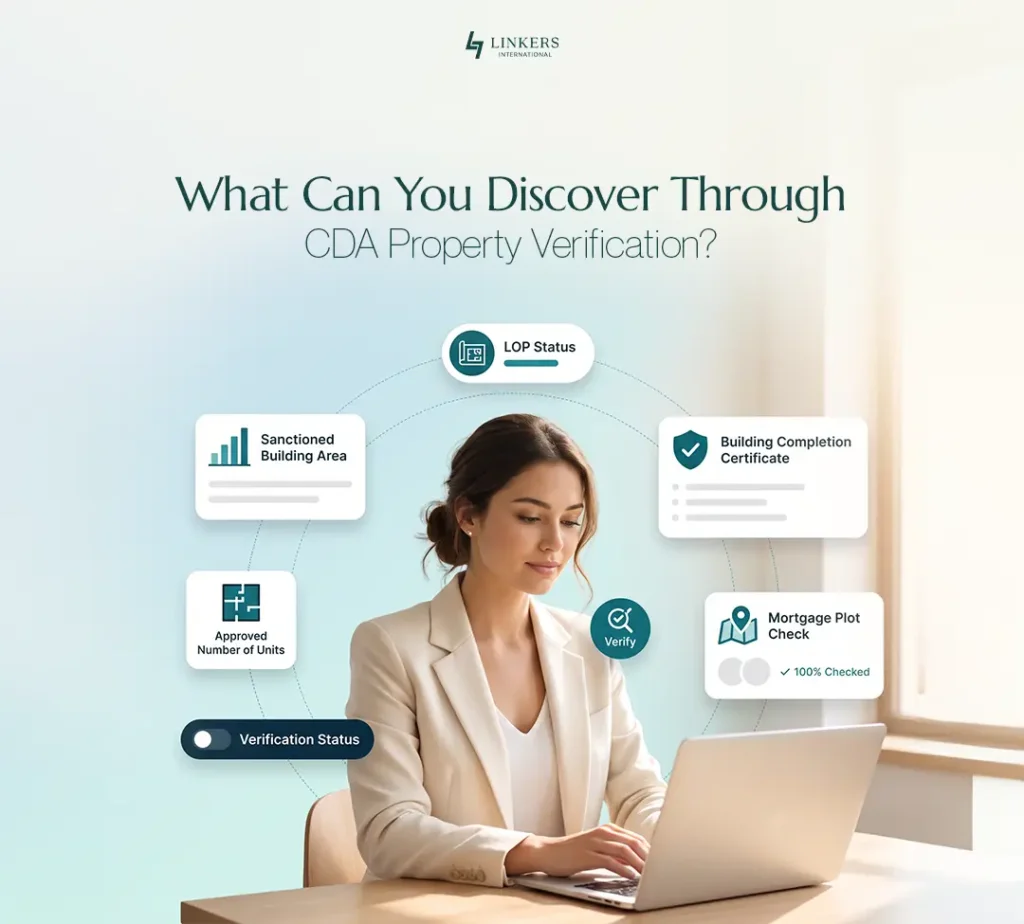
This is where online property verification becomes more valuable than simply looking for an “approved” label. CDA approval of a project does not always tell the complete story about an individual property or building. A development may have an approved plan, while certain areas, units, building specifications, or land uses may differ from the approved record.
CDA’s verification service can help buyers identify these details and spot potential issues before making an investment.
CDA’s verification service can highlight issues including:
- Changes from the approved LOP
- Illegal conversion of residential areas into commercial areas
- Public amenities being used contrary to the approved plan
- Mortgage plots
- Building Completion Certification requirements
- Sanctioned building area
- Approved number of units
- Building layout information
What If You’re Buying Commercial Property?
Don’t assume the housing-scheme directory covers everything. CDA also maintains information on private commercial schemes. This is particularly relevant if you’re buying a commercial plot, shop, office or investment unit.
CDA Private Commercial Schemes
You can check information such as:
- Commercial scheme name
- Zone
- Road
- Area
- LOP status
- NOC status
What About Apartments and High-Rise Buildings?
High-rise investments require a slightly different approach because checking whether the overall project is CDA approved is not always enough. Buyers should also verify whether the specific building has been approved, how many units have been sanctioned, and whether the apartment, office, studio, or commercial unit they are purchasing falls within the approved building plan.
CDA’s property verification information can provide building-specific details such as the approved building layout, sanctioned area, number of approved units, and Building Completion Certification, making this an important step for anyone investing in a high-rise or vertical development.
CDA Approval Doesn’t Automatically Mean You Own the Property
Even if a society has an NOC, you still need to verify that the seller actually has the legal right to sell the particular property. Here’s another important distinction:
Project approval ≠ proof of ownership.
Your due diligence should therefore cover:
- Seller’s ownership
- Property documents
- Transfer/allotment records
- Property identification
- Outstanding dues
- Mortgage or encumbrance
- Whether the property falls within the approved area
CDA notes that allotment and transfer of plots in private housing schemes are handled by the respective sponsors rather than by CDA itself.
The Bottom Line
A property’s brochure tells you what is being sold. CDA records help you understand what has actually been approved. Before investing in Islamabad real estate, don’t make your decision based only on location, price, promised returns or marketing claims.
Take a few extra minutes to check the project’s LOP, NOC, approved area and, where applicable, building-level information through CDA’s official resources.